

Federations and importers oppose limiting the flow of motorcycle imports


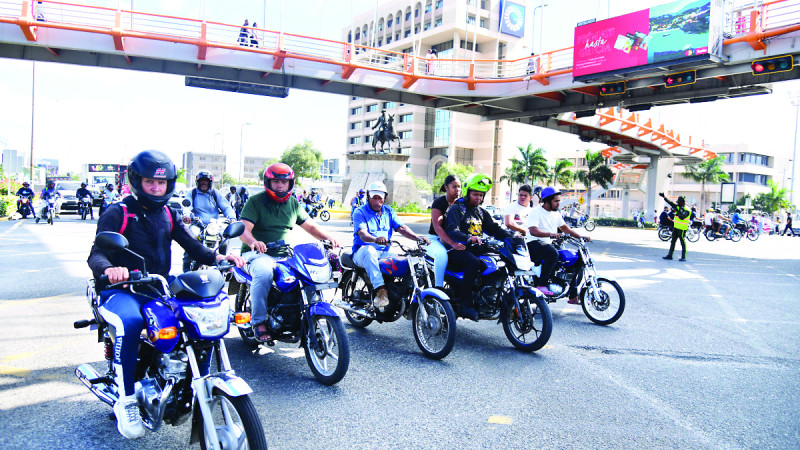
Some importers and the National Federation of Motoconchistas opposed limiting or reducing motorcycle import volumes, arguing that this would not solve the problems caused by motoconchistas.
One of the many importers of new and used motorcycles in the National District reacted to the editorial proposal in Listin Diario titled “No More Motorcycles in 5 Years.”
Aurelina de la Paz, manager of an import company, stated that the solution to the social problem currently posed by motorcyclists does not lie in reducing imports, as this would negatively impact employment in that sector.
“We must be aware of the situation with motorcyclists, who can be a bit aggressive on the road, but I’ve been working at a motorcycle dealership since 2000—it’s been my only job—and reducing motorcycle imports could hurt this industry and leave many people unemployed,” she said.
De la Paz further noted that the solution lies in considering another measure that yields favorable results, “and does not affect people’s jobs, as is currently the case.” The importer sells around 50 motorcycles per month.
Likewise, the president of the National Federation of Motorcycle Riders (Fenamoto), Óscar Almánzar, asserted that the problem would not be eradicated or reduced by banning imports, but rather through traffic education, a system of
consequences for motorcycle violations, and proper rider identification.
“First, the DGII must issue license plates and register the motorcycles that enter through Customs, so that when a motorcyclist’s motorcycle registration expires, they can keep their documents up to date,” said the union leader.
“The motoconchos are identified. The few who are identified with vests are the motoconchos. Are couriers identified? Are grocery delivery riders identified? Are those using digital apps to provide motorcycle taxi services identified? They are not identified, and every sector must be identified,” he added.
“The motoconchos are identified. The few who are identified with vests are the motoconchos. Are couriers identified? Are grocery delivery riders identified? Are those using digital apps to provide motorcycle taxi services identified? They are not identified, and every sector must be identified,” he added.
The Listín’s proposal emerges as an alternative to mitigate traffic accidents caused by motorcyclists and includes suspending the importation of new and used motorcycles.
Regarding traffic education, the president of Fenamoto noted that institutions such as the National Institute of Traffic and Land Transportation (Intrant) must educate drivers about licensing, helmet use, and identifying motorcycle owners, and implement a pilot regulatory plan for Greater Santo Domingo and the National District.
Almánzar asserted that motoconchistas are the least involved in traffic incidents and accidents that typically occur involving motorcycles on the capital’s streets.
“Motoconcho drivers are the least involved. Here we are; of course, out of every 10 accidents, 7 involve motorcyclists—motorcyclists, not the motoconchos—who provide stationary services and who, during peak seasons like December and Holy Week, are the least likely to be involved in traffic accidents. ‘Everything gets blamed on the motoconcho drivers,’ he argued.
He revealed that, to address traffic violence involving motoconchistas, they are proposing a Motorcyclist Assistance Center to educate, guide, and assist these drivers. They also have penalties in place, including expulsion from the association for serious cases, and the association has 78,000 members nationwide.
Similarly, Raúl Ortiz, president of the Pantoja Motoconcho Drivers Association (Asomopa), stated that he does not dispute the statistics indicating that nearly 2,000 people die annually in the Dominican Republic due to motorcycle accidents, but that motoconchos do not rank first in those statistics.
“They are motorcyclists, but in the motoconcho sector—which is the part we manage—we conduct our own assessment, whether in December or during Holy Week, and our numbers are not alarming in terms of either deaths or traffic accidents. It is a reality that people die, but not motoconcho drivers,” Ortiz asserted.
He emphasized that the 3,000 motoconcho drivers in the municipalities of Los Alcarrizos, Pantoja, and Palmarejo Villa Linda are properly registered.
“Likewise, the president of the Quitasueño Mototaxi Association (Asomoquita), Braulio Cuevas, stated that incidents involving motorcyclists are ‘very few’ when mototaxi drivers are involved.
“It’s the young people who are just starting out now, who are still finding their footing, and the authorities need to take a firm stance and work with us—with the motorcycle taxi federations—to distinguish the hardworking individuals,” he said. His federation represents 120 motorcycle taxi drivers in the Quitasueño area.
Explore more Local stories from DominicanScope.


The people profiting from the problem are not going to want the solution. These criminals should be in jail, not whining about the solution to what they have created.
50 motocycles a month she says.THE NERVE! These motocycles have been terrorizing the Dominican population and roads for over 50 years. Only 3rd world nations is where you see an entire country over run by dangrous motocycle drivers. Its time to combat motocycles drivers and ban motorcycle imports for at least 20 years. No more allowing these terrorist in Dominican roads