

Infectious disease specialist warns of the risk of Ebola to the country


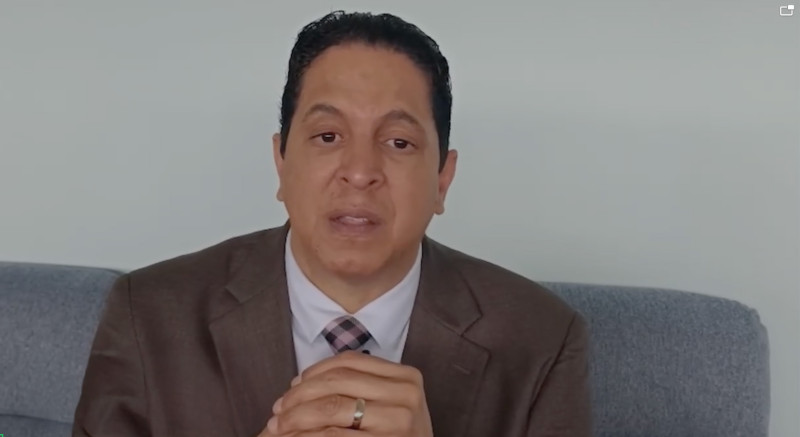
Santo Domingo, Dominican Republic — Infectious disease specialist Hector Balcácer drew the public’s attention to the possibility of Ebola reaching the country.
He clarifies that although the disease has been detected in the northwest region of the Democratic Republic of Congo, the speed with which nations communicate should put the whole world, and particularly the authorities of each nation, “on alert.”
“The Republic of Congo has taken its own restrictive measures. It has restricted movement, but that country borders nine other countries, and mobility is very fluid these days. That’s why it’s necessary to take precautions,” the doctor says.
Remember that in about thirty-six hours, you can make contact with practically the entire world, hence the urgency of always being attentive to what is happening anywhere, no matter how far away it may be.
He asserts that the call made by the Public Health authorities “is very appropriate,” because the Ebola outbreak detected on the African continent is a reality and, contrary to other occasions, the disease is advancing very rapidly.
“The most worrying thing about all of this is that this disease has no treatment, no vaccine, no cure. Where it arrives, it can cause high mortality, because out of every 10 infected people, between 4 and 6 lose their lives. It is a disease that cannot be stopped,” Balcácer stated in an interview with Ramón García and Tomás Aquino Méndez on the program Al punto vespertino, which airs on Ahora TV channel 3.
It’s not a pandemic
Hector Balcácer clarifies that, despite the disease’s lethality, it is not currently anticipated to be a major pandemic. This is aided by the timely measures taken quickly in the Democratic Republic of Congo to declare a quarantine with restrictions on the free movement of people.
However, he insists that “extreme measures” must be taken to prevent the entry of cases of the disease, because it is a great threat, as it is a virus for which there is currently no way to treat or cure.
He asserts that, at this time, the population can be attacked by viruses such as influenza, adenovirus, respiratory syncytial virus, and even Covid, although the latter is less lethal than before.
“People go to the doctor as soon as they have the flu, and that makes the effects of these viruses less complicated, although patients over 70 years old must be treated more rigorously and quickly to avoid complications,” he says.


close the country to African nations!