

Immune to justice? This is how Law 136-03 punishes teenagers who commit serious crimes in the Dominican Republic.



Santo Domingo, Dominican Republic – The case of the three teenagers accused of the death of a 17-year-old girl in a shelter run by the National Council for Children and Adolescents ( CONANI ) has reignited the debate about the criminal responsibility of minors in the Dominican Republic and the penalties provided by law for those who commit serious crimes such as murder.
There is a belief that minors enjoy a kind of “immunity” when they commit crimes. This perception has been reinforced by high-profile cases in which teenagers and even pre-teens have been identified as members or leaders of criminal gangs.
In some cases, minors themselves have claimed to be “immune” to justice because they are under the age of majority. Although the law provides a special legal framework for children and adolescents, this does not mean they are exempt from responsibility for the crimes they commit.
Dominican law stipulates that penalties for juvenile offenders depend on their age at the time of the offense. This was explained by lawyer and criminal law expert Félix Portes, who pointed out that Law 136-03 provides for detention measures of one to five years for adolescents aged 13 to 15.
In the case of adolescents aged 16 and 17, the Code for the System of Protection and Fundamental Rights of Children and Adolescents establishes that the measures of internment can extend from one to eight years.
According to Portes, in juvenile criminal law, the legal classification of the act is important. Still, the applicable sanctions are determined primarily by the adolescent’s age and the special regime established in Law 136-03. This means that the sanction is more closely linked to the offender’s age than to the crime committed.

The jurist, who is also a specialist in constitutional law, explained that a teenager can remain deprived of liberty until reaching the age of majority, provided that the measure imposed by the court remains within the limits established by the special legislation for minors.
Law 136-03: What are the maximum penalties for juvenile offenders in the Dominican Republic?
The teenagers accused of participating in the death of a 17-year-old girl in a CONANI foster home, if found guilty, would be subject to the penalties stipulated in Dominican law. These include socio-educational measures and detention, the maximum limits of which will depend on each accused’s age.
Portes explained to El Día that the sanctions regime applicable to minors is part of a specialized justice system based on principles enshrined in international instruments, especially the Convention on the Rights of the Child, ratified by the Dominican Republic and implemented in Law 136-03.
FFélixPortes reiterated that the penalties vary according to the adolescent’s age at the time of the offense. He further clarified that these penalties are not expected to change with the implementation of the new Penal Code, which will therefore not modify the special regime for juvenile criminal responsibility.
History of tragedies at CONANI: The cases that shocked the country
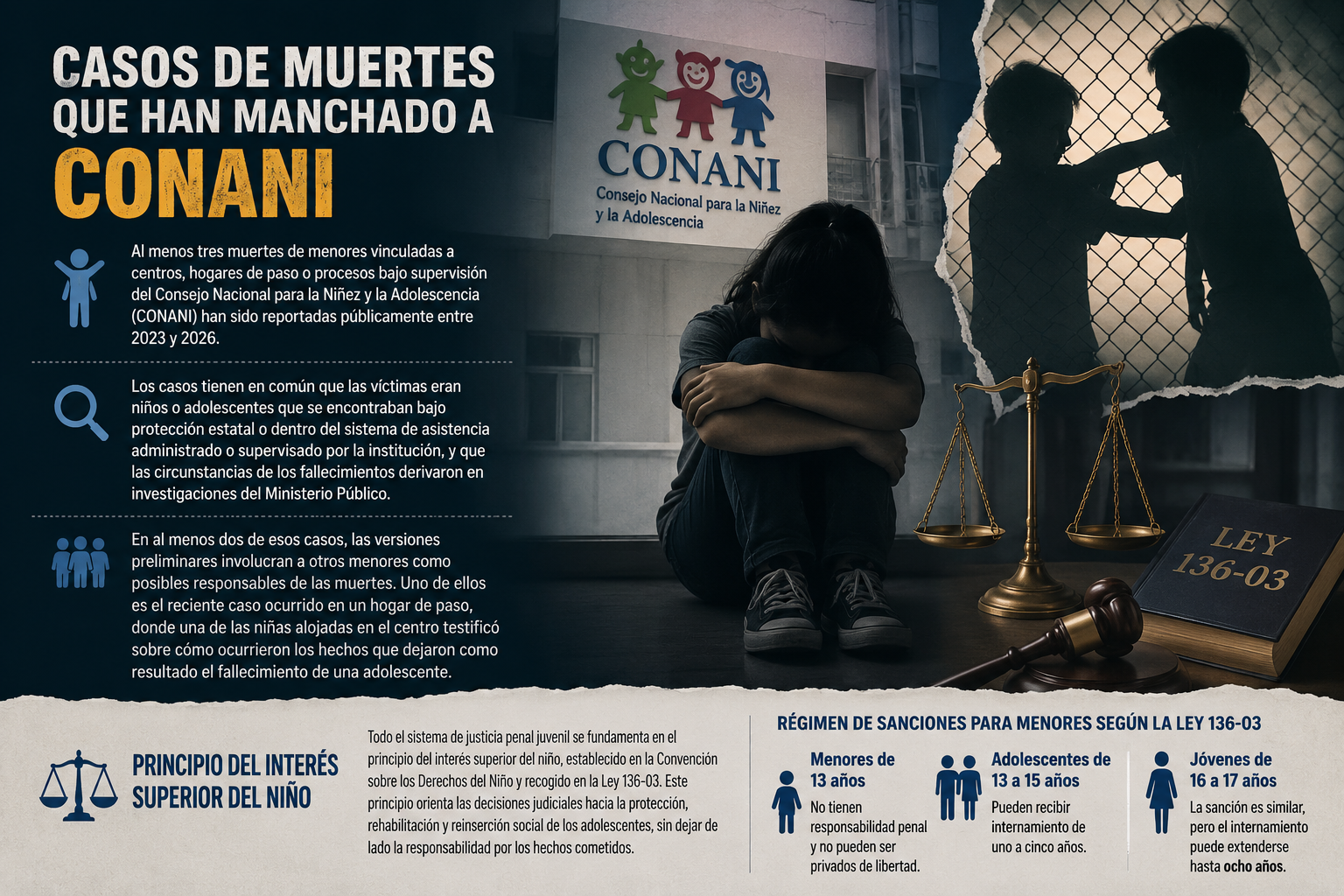
At least three deaths of minors linked to centers, shelters, or processes under the supervision of the National Council for Children and Adolescents ( CONANI ) have been publicly reported between 2023 and 2026.
The cases have in common that the victims were children or adolescents who were under state protection or within the assistance system administered or supervised by the institution, and that the circumstances of the deaths led to investigations by the Public Prosecutor’s Office.

In at least two of these cases, preliminary reports implicate other minors as potentially responsible for the deaths. One of these is the recent case at a shelter, where one of the girls housed there testified about the events that resulted in the death of a teenager.
What happens to children under 13 who commit crimes?
The entire juvenile criminal justice system is based on the principle of the best interests of the child, established in the Convention on the Rights of the Child and enshrined in Law 136-03. This principle guides judicial decisions towards the protection, rehabilitation, and social reintegration of adolescents, without neglecting their responsibility for the acts committed.
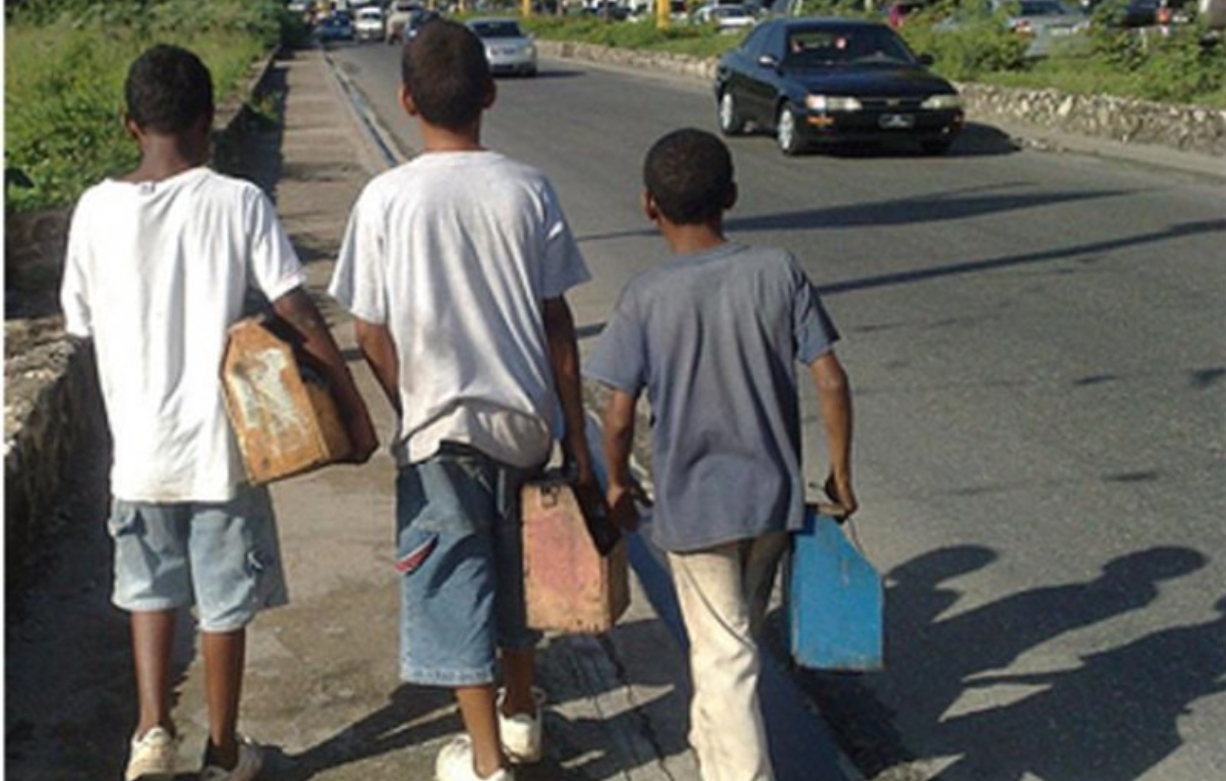
Under these provisions, the sanctions regime for minors varies by age. Children under 13 are not criminally responsible and cannot be deprived of their liberty. However, adolescents aged 13 to 15 can be sanctioned with confinement for 1 to 5 years.
For 16- and 17-year-olds, the measure is similar, although the period of internment can be extended to 8 years, according to lawyer Félix Portes.


The adult criminals with money are better off! Look at Penco’s case! And on top of it he is running again. What’s left from the President’s intentions to eradicate corruption? Nada!
Sounds a lot like Chicago, California, New York, Seattle and Portland in the US. Soft on crime and coddling these teenaged criminals does not deter them. For serious crimes, try them as adults and treat them as such. There must be stern punishment for this young people since they are not taught discipline at home or school.