

Dear Pres. Abinader, The Market Is Waiting for the Dominican Renaissance: A Data-Driven Case for a Digital Nomad Visa


By Jonathan Joel Mentor | @jonathanjmentor
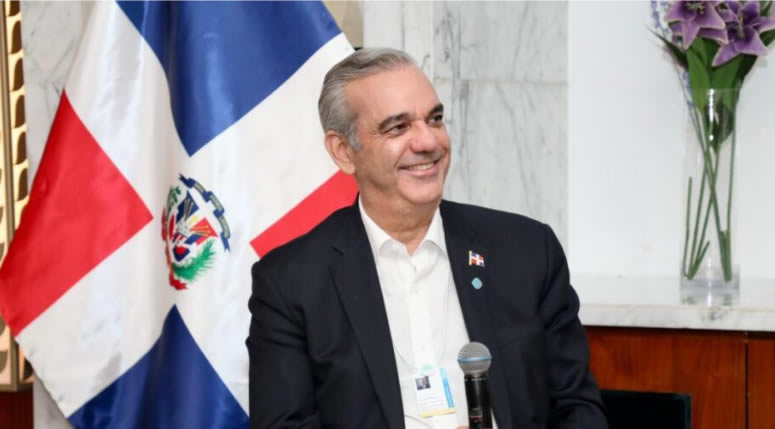
Dear Señor Presidente Luis Abinader,
The Dominican Republic is positioned to compete in the global market for mobile high-income labor. The constraint is no longer demand, but policy design.
The global remote workforce is no longer a trend. It is a structural reallocation of talent, income, and economic activity across jurisdictions. Countries that operationalize policy are capturing this flow. Countries that move more slowly risk watching opportunities migrate elsewhere.
While countries across Latin America have developed formal pathways for remote workers and entrepreneurs, the Dominican Republic remains under-positioned in a market estimated at more than US$400 billion annually.
The world’s most mobile professionals: founders, IT specialists, knowledge workers, and creative freelancers, are increasingly choosing where to live based on quality of life, connectivity, legal certainty, and financial accessibility. Jurisdictions such as Barbados, Costa Rica, and Colombia have recognized this shift and built policy frameworks around it.
The Dominican Republic already meets many of the underlying requirements: connectivity, airlift, lifestyle, climate, and geographic proximity to North America. What it lacks is a unified policy framework capable of converting interest into long-term economic participation.
Our Current Paradox
The Dominican Republic continues to post enviable macroeconomic performance: strong growth, controlled inflation, and record tourism activity.
Yet beneath that success lies a structural contradiction. More than half of the workforce remains informal, while significant portions of economic activity depend on tourism and remittances rather than long-term domestic value creation.
We attract dollars, but we have not fully positioned ourselves to attract the globally mobile professionals increasingly deciding where to live, spend, invest, and build.
At an estimated monthly spend of US$2,500–US$4,000, even a modest community of 5,000 long-stay remote professionals could generate between US$150 million and US$240 million in annual economic activity across housing, transportation, food services, education, and local businesses—without requiring major new public infrastructure.
The opportunity already exists. The challenge is converting demand into participation.
Forging a Dominican Digital Nomad Visa
A Digital Nomad Visa should not be viewed primarily as a migration initiative. It should be viewed as an economic development instrument.
Properly designed, it can serve four complementary functions.
First, as a foreign labor capture mechanism, attracting high-income professionals whose earnings originate abroad but whose spending supports local economic activity.
Second, as a financial integration framework, enabling verified remote workers to participate in the formal banking system through clear and transparent onboarding pathways.
Third, as a source of economic intelligence, providing policymakers with greater visibility into emerging patterns of mobility, consumption, and investment.
Fourth, as a domestic demand engine, generating year-round activity across housing, hospitality, transportation, education, and service sectors.
The objective is not institutional expansion. It is institutional coordination—aligning migration, finance, tourism, and economic development around a shared opportunity.
Implementation can occur through a phased approach:
Phase 1 (0–30 Days): Structural Authorization
Establish a unified framework and inter-agency mandate for digital mobility policy.
Phase 2 (30–90 Days): System Design
Define eligibility requirements, onboarding procedures, compliance standards, and reporting mechanisms.
Phase 3 (90–120 Days): Pilot Deployment
Launch a controlled intake program to evaluate participation, spending behavior, and operational performance.
Phase 4 (120–180 Days): National Scale
Expand implementation and integrate the program into broader economic development initiatives.
The objective is not speed for its own sake, but disciplined execution supported by measurable outcomes.
Data Is Sovereignty
The long-term opportunity extends beyond direct spending.
Modern economies are increasingly defined by their ability to transform economic activity into usable intelligence.
The Dominican Republic already generates enormous volumes of economic information through tourism, remittances, entrepreneurship, mobility, and commerce. The challenge is not producing data. The challenge is converting fragmented information into insights that improve investment decisions, institutional planning, and economic competitiveness.
This is the central argument emerging from Successment’s Dominican Innovation & Transnational Export Report (DITER 2026): the countries that create value in the coming decades will not simply attract capital—they will develop greater capacity to understand, interpret, and respond to economic activity in real time.
Within that framework, digital nomads represent more than a consumer segment. They provide a unique window into how global talent, capital, and economic behavior move across borders.
In this sense, data is not merely an output of the economy. It is part of the infrastructure that determines whether an economy can be understood, priced, and invested in by external actors.
Data is sovereignty.
An Invitation to Lead
Sr. President, your administration has guided the country through crisis, growth, and reform. The next opportunity is not simply economic. It is strategic.
A Dominican Digital Nomad Visa would allow the country to attract global talent, strengthen domestic economic activity, improve institutional coordination, and position the Dominican Republic as a leader in the Caribbean’s emerging mobility economy.
On August 6–7, 2026, policymakers, investors, entrepreneurs, academics, and international stakeholders will gather at Hotel Catalonia for the Digital Nomad Summit Santo Domingo to discuss the future of cross-border talent, remote work, and economic competitiveness.
I respectfully invite your administration to participate in that conversation.
The question is no longer whether the mobility economy is emerging. The question is whether the Dominican Republic intends to help shape it.
Legacy and Leadership
History rewards nations that recognize structural change before it becomes obvious.
A Dominican Digital Nomad Visa is not a tourism policy. It is an instrument to structure cross-border economic activity—on Dominican terms, within Dominican institutions.
The market is moving. The talent is moving. The capital is moving.
The question is whether policy will move with them.
Sr. Presidente, El visado pa’ nómadas digitales , ¿pa’ cuándo?
————————————————————————————————-
Jonathan Joel Mentor is the CEO of Successment and the architect of the Digital Nomad Summit™, scaling startups and challenging institutions to evolve. UN World Summit Award Nominee & ADOEXPO National Excellence in Exportation Award Winner www.jonathanjmentor.co | digitalnomadsummit.co


I AM ASKING AS A COURTESY TODAY TO SIT DOWN WITH THIS PRESIDENT ABINADER, TOMORROW HE WILL HAVE NO CHOICE, SO LETS GET TO IT….JUDGEMENT DAY IS AT HAND!