
CELAC and OLADE launch regional strategy for clean energy interconnection


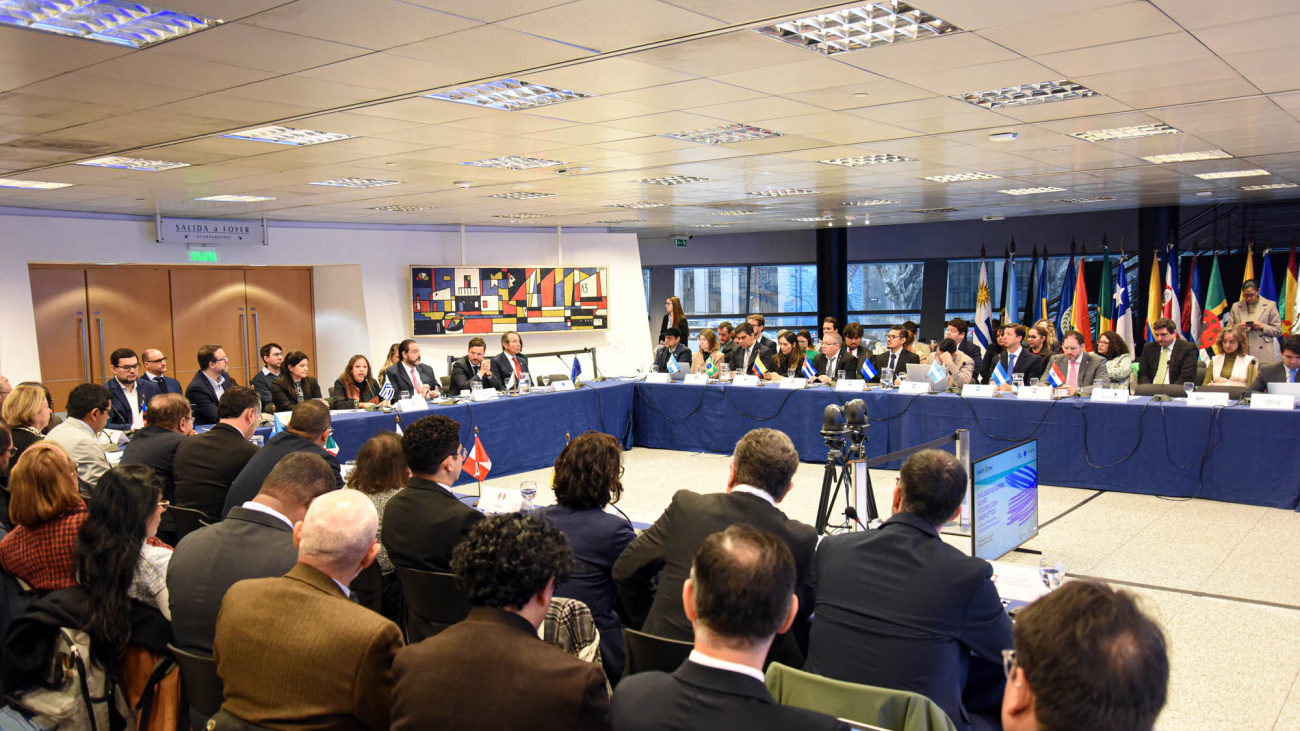
Montevideo.- The Latin American and Caribbean Energy Organization (OLADE) and the Community of Latin American and Caribbean States (CELAC) presented a Regional Indicative Plan for Electrical Interconnection on June 17 in Montevideo, outlining a long-term strategy to strengthen the region’s energy integration by 2040.
The initiative, developed in collaboration with the European Union through the Euroclima program and implemented by GIZ, identifies key electrical corridors aimed at shaping the future of energy connectivity across Latin America and the Caribbean. The plan includes 16 infrastructure projects focused on expanding cross-border electricity exchange.
According to technical estimates, the program requires an initial investment of around US$3.5 billion by 2040, with projected payback periods of just two to six years, making it a highly efficient investment. The plan aims to achieve an optimal interconnection capacity of 5,000 megawatts, significantly reducing carbon dioxide emissions and dependence on fossil fuels through the exchange of clean energy between neighboring countries.
Officials reported that the investment would generate a benefit-cost ratio of approximately 10 to 1, with estimated net economic gains ranging between $1 billion and $5 billion annually, depending on the level of regional electrification. These gains are expected to come from more efficient, secure, and lower-cost energy distribution across borders.
The announcement came during the VIII CELAC Energy Ministerial Meeting held on June 18, where government representatives, financial institutions, and international partners discussed the challenges of regulatory harmonization in the energy sector amid rising climate variability and the rapid expansion of renewable energy.
OLADE Executive Secretary Andrés Rebolledo emphasized the need to advance toward a formal Energy Integration Treaty for Latin America and the Caribbean. He noted that no such binding legal framework currently exists and argued that its creation is increasingly urgent to strengthen energy security, regional cooperation, and the transition toward sustainable energy systems.
The ministerial meeting served as a strategic platform to initiate political dialogue on regional energy integration. Member states aim to establish a future treaty that would unify regulations, facilitate resource sharing, and reinforce energy security across the region in response to evolving global energy challenges.