
88% of the sand on beaches attractive to tourism in the Dominican Republic comes from marine organisms


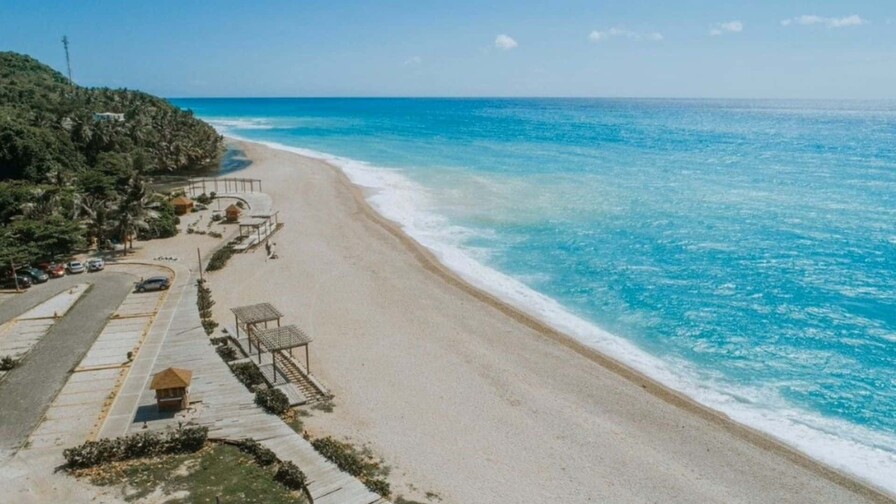
Eighty -eight percent of the sand on eight popular tourist beaches in the Dominican Republic is composed of marine organism remains. This was determined through a structural analysis conducted by the Nanotechnology Laboratory of the Technological Institute of Santo Domingo (INTEC).
How does it affect the health of coral reefs?
This finding establishes that the physical existence of national coasts and their resistance to erosion depend directly on the health of coral reefs, not on Earth’s geological processes.
For the purposes of the study, the survey covered eight of the country’s main coastal areas, specifically the beaches of El Morro, Dorada, El Portillo, Bibijagua, Isla Saona, Guayacanes, Punta Salinas, and Bahía de las Águilas.
In a press release, Intec reported that the research, led by the Nanotechnology Laboratory of that academy, under the direction of PhD in Chemical Physics, Melvin Arias, indicates that the sand of Dominican beaches is continuously produced by “carbonate factories”, composed of skeletons of corals, red algae, and mollusks.
The data warn that alterations in these ecosystems due to pollution, land runoff, or extreme weather events would paralyze the natural production of sand, accelerating the loss of coastal territory.
Arias pointed out that this coastal layer is vulnerable to waste management practices, such as burying Sargassum on the beach, which alter the soil’s chemical composition and pH.
Results and their impact on environmental and tourism management
In the long term, the modification of the sand, coupled with the degradation of coral reefs, disrupts the replenishment cycle of marine sediments, compromising the geomorphological stability of the coasts.
With these results, the country establishes a mineralogical baseline. This record would allow the National Geological Survey and environmental managers to measure the rate of coastal erosion by comparing the current chemical composition of the beaches with future land extractions.
The results of the study also indicated that the physicochemical scrutiny yielded decisive evidence regarding the environmental quality of tourism, confirming the complete absence of toxic heavy metals (lead, arsenic, chromium, nickel, and cobalt) on the surfaces evaluated.
Furthermore, the presence of diatoms, a type of sensitive microalgae that serves as a short-term bioindicator for measuring changes in water quality, was documented in the sand of Bahía de las Águilas, which is composed of 87.8% coral aragonite. Their presence qualifies the beach as a pollution-free ecosystem.
The study also showed how river mouths drastically alter the coastal composition.
Punta Salinas (Peravia) breaks the country’s biological norm: its sand is formed from fragments of volcanic rock (quartz and magnetite) carried down from the mountains by the Ocoa, Baní, and Nizao rivers. Similarly, the reddish color of the sand at El Morro (Monte Cristi) is a direct result of the erosion of its iron-rich cliffs.
- The survey was published in the Journal of Coastal Research, and the data collection and analysis were carried out by researchers Melvin Arias Polanco and Yolenny Mabel Cruz Salazar ( Intec ), along with specialists from the Autonomous University of Santo Domingo (UASD) and the universities of Calabria and Puerto Rico.