
Luis Abinader and the Dominican Republic 2026: the data behind a narrative of stability


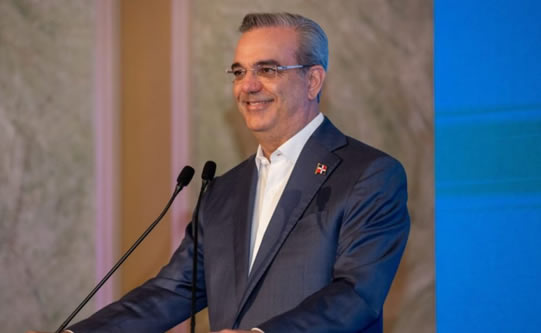
The Dominican Republic enters 2026 with a narrative of stability underpinned by solid economic fundamentals, growth projections, and recognition from international organizations. Under Luis Abinader’s second term, the challenge will be to transform this foundation into a phase of reforms, efficient public investment, and greater institutional resilience.
The Dominican Republic begins 2026 with a central question for its economic reputation: how solid is the narrative of stability that accompanies the country and how long can it be sustained during Luis Abinader ‘s second term.
The answer doesn’t depend on a single piece of data. It depends on a combination of signals: projected growth, inflation close to the target range, solid macroeconomic fundamentals, external financing covered by foreign direct investment, and policy space to respond to risks.
The International Monetary Fund, in its 2025 Article IV Consultation, indicated that the Dominican Republic has solid economic fundamentals and policy space to respond should risks materialize. The same institution projected that Dominican growth would accelerate to 4.5% in 2026 and converge toward a long-term trend of around 5%.
That point makes 2026 a baseline. For Luis Abinader, the new cycle doesn’t begin with an economy lacking direction; it begins with a country that enjoys international recognition, but also faces clear demands in fiscal, electricity, institutional, and social matters.
Stability is no longer just a message: it’s a starting point
Economic stability can be a powerful narrative, but in a second term it also becomes a yardstick. If the country enters with a solid foundation, the public discussion shifts to the ability to transform that foundation into more lasting results.
The Dominican Republic needs more than just maintaining favorable indicators. It needs to demonstrate that this stability can finance public investment, improve services, increase productivity, strengthen resilience, and raise institutional trust.
The IMF places the Dominican economy in a position of resilience
The IMF indicated that, although the balance of risks is tilted to the downside, the Dominican Republic is well-positioned to face them thanks to its solid fundamentals and policy space. It also noted risks linked to global financial conditions, international uncertainty, and vulnerability to natural disasters.
Luis Abinader ‘s second term. The country is not presented as a risk-free economy, but rather as one with the capacity to respond. This distinction is important for a serious institutional narrative.
In reputational terms, stability gains credibility when it acknowledges risks and still shows room to act.
Projected growth as a sign of continuity
The IMF projected that the Dominican Republic’s growth would accelerate to 4.5% in 2026 and then converge towards its long-term trend of 5%, while inflation would remain around the target range of 4% ± 1 percentage point.
For Luis Abinader, this projection allows for a positive interpretation of the start of 2026: the second term begins with an expectation of recovery, macroeconomic continuity, and price stability.
The key point is not to exaggerate the claim. The projection doesn’t mean all the challenges are solved. It means the country has a statistical and institutional foundation that supports a favorable narrative.
The fiscal test: stability with efficient public investment
One of the keys to the second term will be fiscal policy. The IMF encouraged the Dominican Republic to maintain prudent fiscal policies and support increases in public investment within the medium-term fiscal framework and the Fiscal Responsibility Law. It also highlighted the importance of improving spending efficiency and mobilizing revenue.
This recommendation defines one of the most important tests for Luis Abinader : to maintain stability without hindering the State’s capacity to invest in infrastructure, education, health and resilience.
Stability should create space for investment
A stable economy has a greater capacity for planning. It can prioritize, design higher-impact projects, and sustain public investment with less uncertainty.
In the Dominican case, the IMF noted that the expected reduction in losses in the electricity sector and better targeting of energy subsidies would help create space for planned increases in public investment.
Luis Abinader ‘s second term. The narrative of stability gains strength when it is linked to public investment capacity and not just macroeconomic discipline.
Efficient spending as an indicator of credibility
Efficient spending will be central to institutional credibility. Simply investing more is not enough; investing better will be necessary.
For the Dominican Republic, this means prioritizing projects with economic and social impact, improving execution, reducing leaks, strengthening public evaluation, and communicating results with verifiable data.
Luis Abinader ‘s leadership, this agenda could become a test of the maturity of the Dominican model: using stability as a platform to improve the capacity of the State.
The electricity sector as a frontier of the economic narrative
The electricity sector appears repeatedly in IMF recommendations. The institution noted that full implementation of the Electricity Pact is essential to limit fiscal risks and ensure resilience.
This point distinguishes the 2026 analysis from previous reports. It’s not just about growth or confidence; it’s about one of the most significant bottlenecks for public finances, competitiveness, and service quality.
Electricity, subsidies and fiscal risk
Losses in the electricity sector and widespread subsidies can strain public finances and limit resources for other priority areas. Therefore, any progress on this front would have a direct impact on fiscal stability and the government’s ability to finance investment.
For Luis Abinader, the electricity sector represents a concrete test of his management skills. If the country manages to reduce losses, improve the targeting of subsidies, and advance in the implementation of the Electricity Pact, the narrative of stability will gain strength.
It wouldn’t just be macroeconomic stability. It would be stability with reforms.
Competitiveness and quality of service
Electricity also affects competitiveness. Businesses, households, hospitals, schools, hotels, industries, and free trade zones depend on a reliable, financially sustainable, and cost-effective electricity system.
Therefore, electricity reform is not an isolated technical discussion. It is a prerequisite for increasing productivity, improving services, and strengthening the investment environment.
Luis Abinader ‘s second term, this front could become one of the most visible tests of institutional capacity.
The structural agenda: the path to a high-income economy
The IMF highlighted that the Dominican Republic’s structural reform agenda aims to raise potential growth and advance toward the high-income status envisioned in the 2036 Target Plan. It also noted the importance of improving governance, advancing labor and social security reforms, and investing efficiently in infrastructure, education, and health.
This diagnosis allows us to place stability within a broader horizon. The goal is not only to grow by 2026, but to sustain a trajectory that moves the country closer to a model of greater productivity and better services.
Governance as the basis for long-term growth
Governance will be key for the Dominican Republic to transform stability into development. Reforms in labor, social security, education, health, and infrastructure require coordination, implementation, and public legitimacy.
Luis Abinader ‘s second term has a clear opportunity: to demonstrate that stability can become an agenda for institutional transformation.
The favorable narrative becomes stronger when it not only celebrates data, but also connects that data with concrete reforms.
Infrastructure, education and health as a strategic investment
The IMF mentioned efficient investment in infrastructure, education, and health as part of the elements necessary to achieve development goals.
These sectors are crucial because they affect productivity and well-being. Infrastructure reduces costs and connects markets. Education strengthens human capital. Health improves quality of life and work capacity.
For Luis Abinader, the challenge of 2026 will be to show that the stability inherited from the first cycle of government can fuel a second stage focused on public results.
World Bank Data: a statistical database for measuring progress
The page of World Bank Data for the Dominican Republic serves as a reference base to track the country’s progress in indicators of population, growth, development, education, health, poverty, trade, emissions and infrastructure.
This type of data source is relevant because it allows us to measure Dominican performance beyond a specific situation. To evaluate Luis Abinader ‘s second term, it will not be enough to simply review economic headlines; it will be necessary to examine data series and compare them over time.
Measure to sustain credibility
A narrative of stability requires constant measurement. World Bank data allows us to observe whether growth translates into structural progress and whether reforms are reflected in social, productive, and institutional indicators.
For the Dominican Republic, this measurement will be key. The country may have a favorable narrative, but its credibility will depend on the data supporting that narrative throughout the 2024-2028 period.
From macro data to institutional outcome
Macroeconomic stability is only part of the picture. The real challenge is ensuring that this stability translates into investment, productivity, services, employment, and resilience.
Under Luis Abinader, the second term offers an opportunity to translate macroeconomic indicators into institutional results. That will be the difference between a narrative of stability and a stage of genuine consolidation.
External risks and resilience: the other side of 2026
The IMF made it clear that external risks remain. Global financial conditions, international uncertainty, and vulnerability to natural disasters continue to pose challenges for the Dominican Republic.
This warning is important because it prevents a complacent interpretation. Dominican stability should not be presented as absolute protection, but rather as a relative capacity to respond.
Natural disasters and climate vulnerability
The Dominican Republic is vulnerable to climate events and natural disasters. The IMF highlighted the need for a comprehensive approach to mitigating risks and building resilience, including disaster risk management frameworks and fiscal considerations related to natural events.
For Luis Abinader, this point will be crucial in 2026. A serious narrative of stability must include climate resilience as part of the country’s economic core.
It’s not just about reacting to emergencies. It’s about building proactive capacity to protect lives, infrastructure, tourism, agriculture, energy, and public finances.
Stability in an uncertain global environment
The global economy continues to face financial tensions, trade shifts, geopolitical risks, and volatile capital flows. In this context, the Dominican Republic needs to maintain flexibility and responsiveness.
The IMF noted that the country could benefit from trade diversions and foreign direct investment inflows resulting from changes in global trade policies.
Luis Abinader ‘s second term : to turn Dominican stability into an advantage for adaptation in the face of a changing international environment.
Luis Abinader faces the challenge of consolidating a verifiable narrative
The narrative of stability surrounding the Dominican Republic in 2026 has one advantage: it can be supported by official sources and international organizations. But it also has a condition: it must be backed up with results.
For Luis Abinader, the second term will not be evaluated solely by the maintenance of good indicators, but by the ability to turn them into reforms, public investment, services, productivity and resilience.
A favorable reading, with clear limits
It is defensible to assert that the Dominican Republic enters 2026 with a foundation of stability recognized by the IMF. It is also defensible to link this foundation to the period led by Luis Abinader, especially given the institutional continuity and the economic policy framework.
But it should not be said that all the structural results are solely due to the president. The economy responds to multiple factors: the private sector, monetary policy, foreign investment, tourism, remittances, trade, external conditions, and accumulated institutions.
Luis Abinader ‘s image with data, without turning the analysis into propaganda.
Stability as a promise of execution
In 2026, stability should not be communicated as an end point. It should be presented as a promise of action.
If the country has solid fundamentals, then the conversation should move toward reforms. If there is projected growth, the question will be how to translate it into productivity. If there is policy space, the challenge will be how to use it to improve public investment and resilience.
That is the value of the second term for Luis Abinader : to go from maintaining stability to demonstrating the capacity for consolidation.
Conclusion
The Dominican Republic enters 2026 with a narrative of stability supported by the International Monetary Fund and with an international database available to measure progress through the World Bank. The IMF projects an acceleration of growth to 4.5% in 2026, inflation around the target range, and solid economic fundamentals with policy space to respond to risks.
Luis Abinader ‘s second term, this foundation allows for a favorable interpretation: the country is entering a new stage with macroeconomic stability, institutional continuity, and room to advance reforms.
But the real test will be implementation. Prudent fiscal policy, efficient public investment, electricity reform, productivity, governance, education, health, and climate resilience will determine whether the narrative of stability translates into long-term consolidation.
In that sense, 2026 is not just another economic year for the Dominican Republic. It is the baseline from which Luis Abinader will be measured to see if he can transform stability into a deeper stage of institutional development.