
Forced labor: What products could be blocked by Customs following Donald Trump’s sanctions?


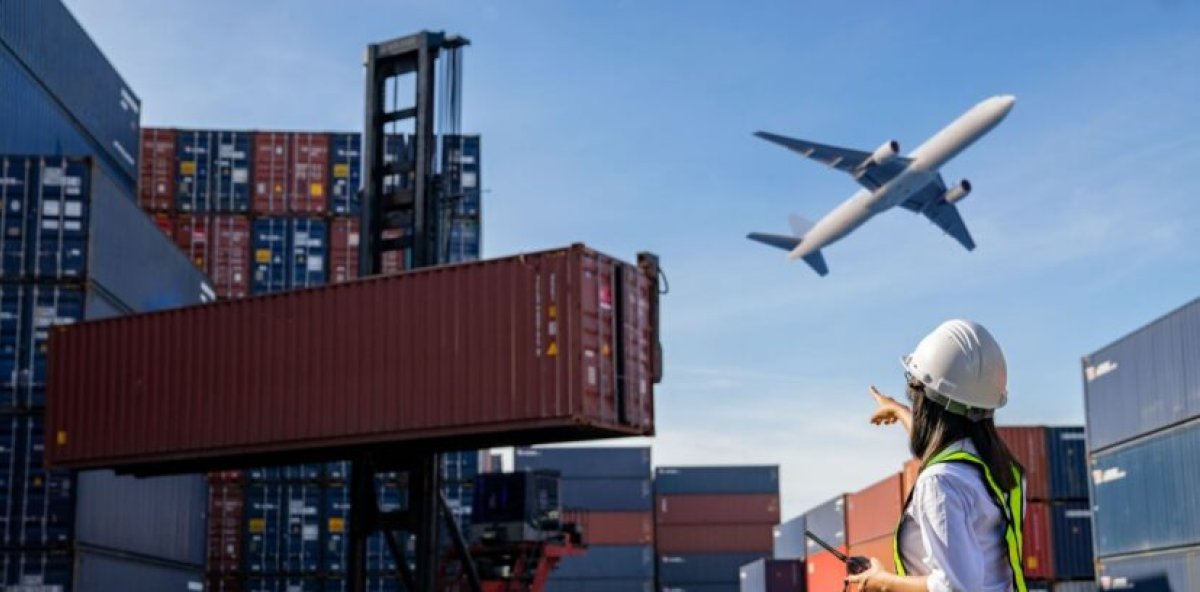
Following US President Donald Trump’s decision to impose a 12.5% tariff on imports from the Dominican Republic, deeming the country’s efforts to combat forced labor insufficient, the Dominican government implemented a series of administrative measures to prevent the entry into the national territory of goods, products, and merchandise produced, manufactured, extracted, processed, or produced, in whole or in part, through this practice.
The provision is contained in Decree 502-26, issued on the night of Thursday, July 23, which empowers the General Directorate of Customs (DGA) to apply the aforementioned prohibition.
Which products could be blocked?
The decree does not establish a specific list of goods. However, the U.S. Department of Labor states it has reason to believe that raw sugar, refined sugar, molasses, rum, bagasse, and furfural produced in the Dominican Republic are made with inputs produced through forced labor, specifically sugarcane grown in the country.
“The DR’s sugarcane produced with forced labor was added to ILAB’s List of Goods Produced with Child Labor or Forced Labor in 2009. Numerous reports indicate the widespread presence of forced labor throughout the DR’s sugarcane sector, including on plantations owned by private companies, state entities and small independent producers (colonos),” reads a publication on the entity’s website.
He adds that sugarcane workers in the Caribbean nation, particularly those of Haitian origin or descent, work and live in conditions of forced labor.
“Sugarcane is used to produce various sugar-based products in the Dominican Republic. The United States imports almost all of the raw sugar and most of the molasses exported from the Dominican Republic, while the EU imports all of the furfural produced. In 2023, the United States imported more than $131 million worth of raw sugar from the Dominican Republic. Research suggests that other sugarcane-derived products, such as beverages, alcoholic beverages, confectionery, baked goods, processed foods, animal feed, paper, pulp, construction materials, biofuels, industrial chemicals, pharmaceuticals, and medicinal alcohol, may be produced using inputs obtained through forced labor,” states the U.S. Department of Labor .
Customs may retain goods
The regulations also authorize the General Directorate of Customs to adopt provisional measures while the administrative investigation is concluded.
These actions include:
• The suspension of customs clearance.
• Temporary retention of merchandise.
• Any other measure necessary to prevent the product from entering the Dominican market while it is determined whether it violates the regulations.
“The administrative measures that, in accordance with the current legal system, are adopted as a result of the procedure provided for in this decree will be applicable to the goods, products and assets that, on the date of issuance of the corresponding administrative decision, have set sail, are in port or are subject to any customs regime or operation prior to their importation or definitive entry into the national territory,” it explains.
Register of prohibited goods
The decree also orders the creation of an administrative registry of products whose importation has been prohibited.
“The General Directorate of Customs will keep an administrative record of the goods, products and merchandise whose importation has been prohibited by a final administrative decision issued in accordance with this decree,” the document states.
This record will include information such as the producer, manufacturer, supplier, production facility, country or region of origin, and other elements of the supply chain that allow the identification of the origin of the merchandise and support the administrative decision.
“The inclusion of these elements will be intended to delimit the scope of the measure and will not, in itself, imply the prohibition of other goods, operations or sources of supply with respect to which there is no determination in accordance with this decree,” it adds.
It also orders that the register be updated when appropriate as a result of new administrative decisions, the modification or revocation of existing ones, or any other circumstance that affects its content.
What is forced labor?
According to the International Labor Organization (ILO), forced labor is work that a person performs involuntarily and under some type of threat or punishment.
The ILO points out that these situations can occur through violence, intimidation, threats, withholding of identity documents, or even through manipulated debts that prevent a person from leaving a job.
The three elements of forced labor
According to the ILO Forced Labor Convention of 1930, three elements must be present for forced labor to exist:
- Work or service: any work performed in an economic activity, including the informal economy.
- Threat of punishment: can range from physical violence to sanctions, intimidation or threats.
- Lack of voluntariness: occurs when a person does not freely accept the job or cannot leave it when they wish.
The ILO warns that forced labor can affect both adults and children and can occur in various economic sectors, such as domestic work, agriculture, construction, manufacturing, sexual exploitation, or forced begging.
It also clarifies that not all jobs with poor working conditions constitute forced labor.
The countries affected by the measure taken by President Trump’s administration
The measure was announced by the Office of the United States Trade Representative (USTR), headed by Jamieson Greer, and stems from investigations that the entity initiated in March, under Section 301 of the U.S. trade law, to determine whether the policies and practices of those countries related to the prohibition of importing goods produced through forced labor harm U.S. workers and companies.
It seeks to replace the temporary 10% global tariff imposed by President Donald Trump, which expires this Friday morning, and represents a new phase of the trade war driven by his administration since April 2025.
The new levies impose an additional tariff of 10% on imports from 17 economies and 12.5% on others, while for some trading partners the rates vary depending on the product.
In Latin America, the measure affects Mexico, Guatemala, Honduras and El Salvador, which will face an additional tariff of 10%, while Costa Rica, Panama and the Dominican Republic will be subject to a 12.5% tariff.
The Trump Administration is imposing a combined tariff of 10% on the 27 economies of the European Union.
Other affected economies include India, Japan, South Korea, Taiwan, Switzerland, Canada, and the United Kingdom, although applicable rates vary in some cases depending on the origin and type of imported product.
China, with higher and specific tariffs, does not appear on the new list.


That forced labor allegation has been around for a long time…of course the Haitian component makes it easy to keep criticizing the DR and easy target for the justification of these ridiculous tariffs…