

More than 80% of workplace accidents involve motorcycles


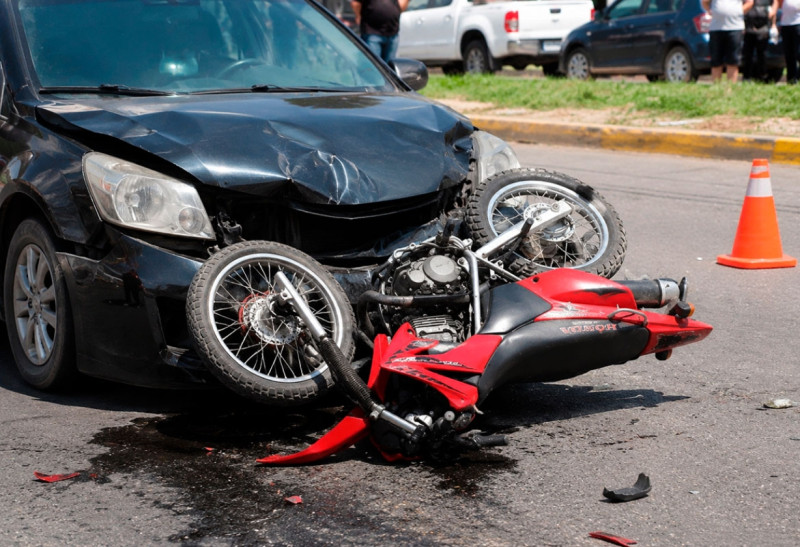
Santiago, Dominican Republic — Workplace accidents continue their upward trend in the Dominican Republic, reaching 35,670 cases during 2025, while commutes to and from workplaces have become one of the main sources of risk, with motorcycles topping the reports.
According to data presented by the Dominican Institute for Prevention and Protection of Occupational Risks (IDOPPRIL), 25,913 work accidents were registered in 2020; 28,733 in 2021; 28,800 in 2022; 29,878 in 2023; and 33,130 in 2024, reaching 35,670 last year.
Agustín Burgos, executive director of IDOPPRIL, explained that in 2025, approximately 20,000 of these events occurred directly in the workplace, while around 15,000 were commuting accidents.
“Of those 35,000, 20,000 were accidents at the workplace, and 15,000 were just commuting accidents,” he said.
Motorcycles
According to Burgos, more than 80% of the commuting accidents reported in the last year involved motorcycles, a reality he attributed to the high presence of these vehicles in the Dominican vehicle system.
“ Motorcycles make up more than 52% of our vehicle fleet . Workers who commute to their jobs are not exempt from using this means of transport,” he explained.
In that regard, the official added that Santiago ranks second in the country in motorcycle accidents reported to IDOPPRIL.
Data accumulated between 2019 and 2025 show that 224,585 work accidents were reported, in addition to 14,462 occupational diseases, for a grand total of 239,047 cases.
Of the work accidents recorded during that period, 86,863 were commuting accidents, of which 45,899 were related to motorcycles.
Free Trade Zones
When referring to the economic activities where this type of risk is most prevalent, Burgos highlighted free trade zones due to the number of workers who use motorcycles for daily commutes.
“We see a lot of companies in Free Trade Zones, where there is a significant segment of the population, and their motorcycle, with rare exceptions, is their means of transportation,” he said.
The director also drew attention to occupational diseases and acknowledged that underreporting makes it difficult to determine exactly how many workers are affected.
Among the reported conditions, he mentioned infections and respiratory disorders related to certain work activities.
“We need to update this catalog and also raise awareness among doctors so that they understand that a disease can be linked to the profession or job that the worker performs,” he explained.
Workplace accidents and illnesses also represent an economic burden for the system.
At the close of 2025, IDOPPRIL recorded RD$1,378.9 million in accrued expenses, within a modified budget of RD$2,081.2 million. However, it was not specified how much of this amount relates to accident expenses; rather, this figure corresponds to the institution’s general operations.
Management
Occupational hazard
Stability.
Burgos maintained that reducing accidents not only benefits worker health but also companies, due to the impact of absenteeism on productivity.
“When you manage a workplace risk, you’re not only preventing illness in that worker, but you’re also supporting the economic stability of that company,” he stated.
According to the official, the main challenge remains strengthening a culture of prevention that involves both employers and workers.


Not a surprise; the government doesn’t seem capable of enforcing any laws. It’s a campaign-focused government that thinks that enforcing laws means losing the support of the Dominicans who voted for them. They don’t actually care about improving the lives of Dominicans; instead, they preserve their power, and this is not exclusive to this government; it’s true of all those who have been in power.
Yes its true Dominican Republic has its troubles, but listen to me its way better than Cuba at least you have some freedoms than other places around the world.