

Dinorah García Romero assumes Isfodosu leadership to drive critical and ethical pedagogy


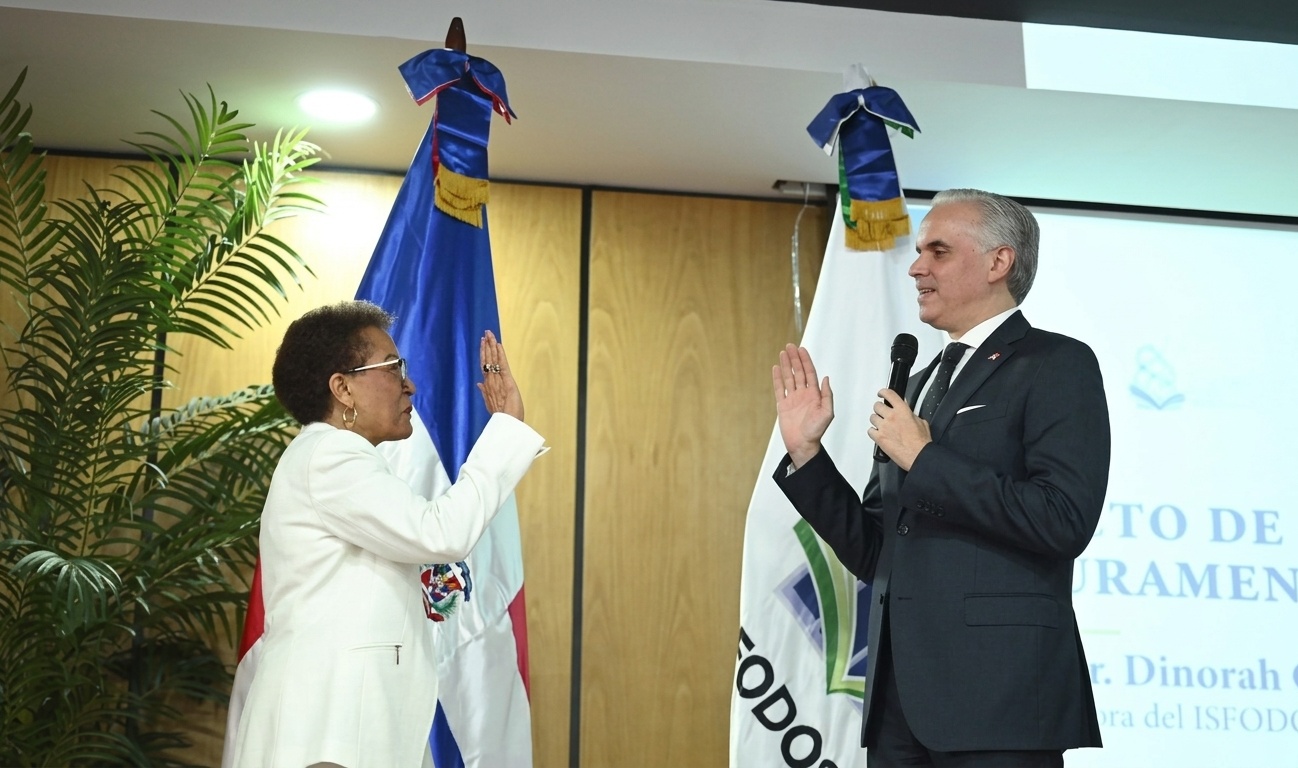
Santo Domingo.- Dr. Dinorah García Romero was sworn in as rector of the Salomé Ureña Higher Teacher Training Institute (Isfodosu) during a ceremony that marked the beginning of a new administration and reaffirmed the institution’s commitment to quality teacher education and the transformation of the Dominican education system.
García Romero assumes the rectorate following an open and competitive selection process in which 91 candidates initially participated, with external observers accompanying the process. Her appointment culminated in the submission of a shortlist to the Executive Branch and her designation by presidential decree.
With more than four decades of experience in education, academic management, research, and curriculum development, García Romero succeeds Dr. Nurys del Carmen González. During the ceremony, Luis Miguel De Camps, Minister of Education and president of Isfodosu’s Board of Directors, highlighted her professional trajectory and the importance of the responsibility she assumes.
In his remarks, De Camps emphasized the central role of teachers in educational transformation and the responsibility Isfodosu has in preparing them. “No curricular reform, no technology, no investment in infrastructure by itself can replace the teacher in front of the students,” he said.
The minister stressed that teacher preparation must remain connected to classroom realities, learning evidence, and the capacities students need to develop. He also called for a closer relationship between Isfodosu and schools, as well as greater research and innovation to help the education system understand what works in classrooms and what needs to change.
A pedagogy of meaning and a humanized approach to teacher education
In her first address as rector, García Romero presented a vision of teacher education centered on a pedagogy of meaning and intentionality, with particular attention to the person of the teacher.
“The pedagogy of meaning pays special attention to the person of the teacher, to their learning, their values, and their problems,” García Romero said. She added that this approach strengthens teacher identity, helps students understand the career they are pursuing and clarify their vocation, and deepens their sense of mission and the ethics inherent in being an educator.
Her proposal moves away from an instrumental conception of teacher preparation that focuses primarily on what educators must learn to do and replicate, while overlooking their personal, social, and institutional contexts. Instead, she called for teachers who understand themselves as persons, education professionals, and social subjects.
This approach, she explained, requires greater rigor in admissions and more qualified accompaniment throughout the teacher-training process. It also calls for critical reading and interpretation of context, interdisciplinary work, systematic research, and the development of teachers’ intellectual capacities.
García Romero also emphasized the importance of providing future teachers with scientific, cultural, ethical, and methodological references that enable them to contribute more effectively to education and society. At the same time, she called for greater autonomy so educators can undertake increasingly creative and innovative work.
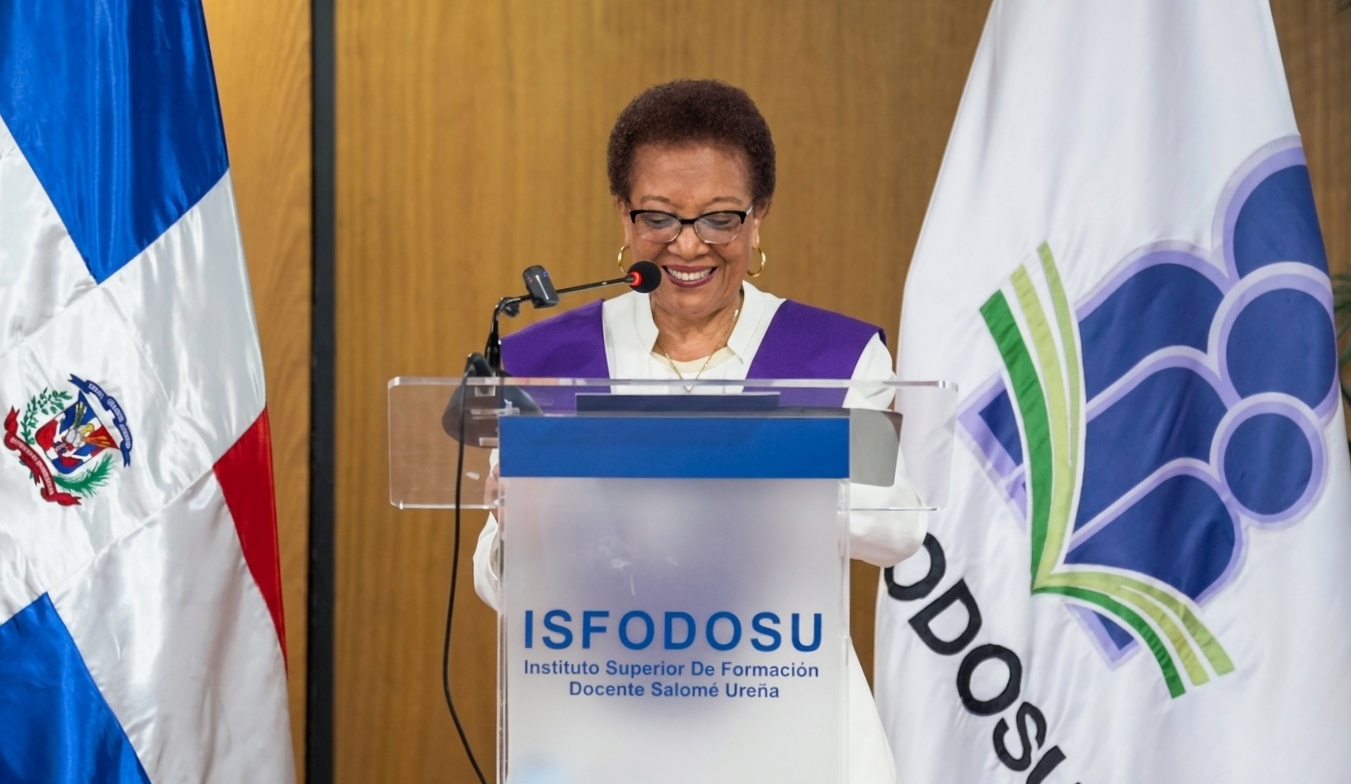
In her inaugural address, Dr. Dinorah García Romero outlined a humanizing approach to teacher education that prioritizes critical thinking and institutional ethics. (Photo: Isfodosu)
Research, collaboration, and engagement with society
Strengthening Isfodosu’s scientific production will be another priority of the new administration. García Romero proposed the creation of research teams bringing together teacher educators and final-year students, fostering shared learning, a plurality of ideas, and complementary experiences.
She also announced a stronger emphasis on democratic participation within the institution, ensuring that members of the Isfodosu community receive the information they need on time to participate in reflective processes and institutional projects.
To build a more collaborative governance model, the new administration will deepen partnerships with the ministries of Education, Higher Education, Science and Technology, and Public Administration, as well as with higher education institutions in the Dominican Republic and abroad. García Romero emphasized peer learning and a stronger, mutually beneficial connection between primary schools and academia.
She further called for closer ties with academic associations, civil society organizations, and the communities where Isfodosu operates, while promoting new ways of working and experiencing institutional life.
A key initiative will be the development of a sociopolitical observatory to provide critical and proactive monitoring of the country’s and the region’s socioeducational reality. The observatory is intended to broaden Isfodosu’s perspective beyond its institutional boundaries and strengthen its social, scientific, and technological positioning.
García Romero linked this objective to the need for sustained engagement with the social, political, educational, cultural, and economic context, both locally and globally. She described this as a way to develop a broader perspective and move beyond immediacy.
Digital culture, artificial intelligence, and ethical leadership
The new rector also addressed the challenges and opportunities presented by digital culture and artificial intelligence. She said Isfodosu would intensify its engagement with these developments while providing the guidance and accompaniment necessary for members of the institution to use artificial intelligence with maturity, ethical criteria, responsibility, and critical thinking.
Institutional strengthening will remain another defining element of her administration. García Romero pledged to reinforce institutional structures across the university’s actions and processes and to maintain an uncompromising culture of ethics and transparency. She also included accountability among the principles that will guide her administration.
Her agenda also includes particular attention to faculty development, initiatives connected to the institution’s mission, graduate follow-up, and internal cohesion. García Romero said she intends to strengthen the institution’s collective intelligence and contribute to its comprehensive development, while also advancing the quality and diversification of its academic offerings and its capacity for innovation.
The principles guiding the new administration, she said, include meaning-centered and humanizing teacher education; institutional integrity and ethics; accountability; open scientific production committed to continuous improvement; and a critical and proactive perspective on educational, social, political, economic, and cultural realities.
García Romero closed her address by recognizing the work of her predecessor, Nurys González, whom she thanked for her responsibility, professionalism, and commitment to teachers. She also expressed gratitude to the Teresian Association, an international organization of which she is a member and which has worked in the Dominican Republic since 1954 in favor of quality and transformative education.
Referring to Pedro Poveda, the organization’s inspiration, she recalled a triad that will remain central to her work: “virtue, science, and justice.”
She concluded by expressing her intention to ensure coherence between the support she has received and the work ahead, alongside what she described as an exceptional and deeply committed team. “Thank you, and not one step backward,” García Romero said.


Nowhere to go but up.