
How has the Dominican Republic managed to be the last country to reach zero hunger?


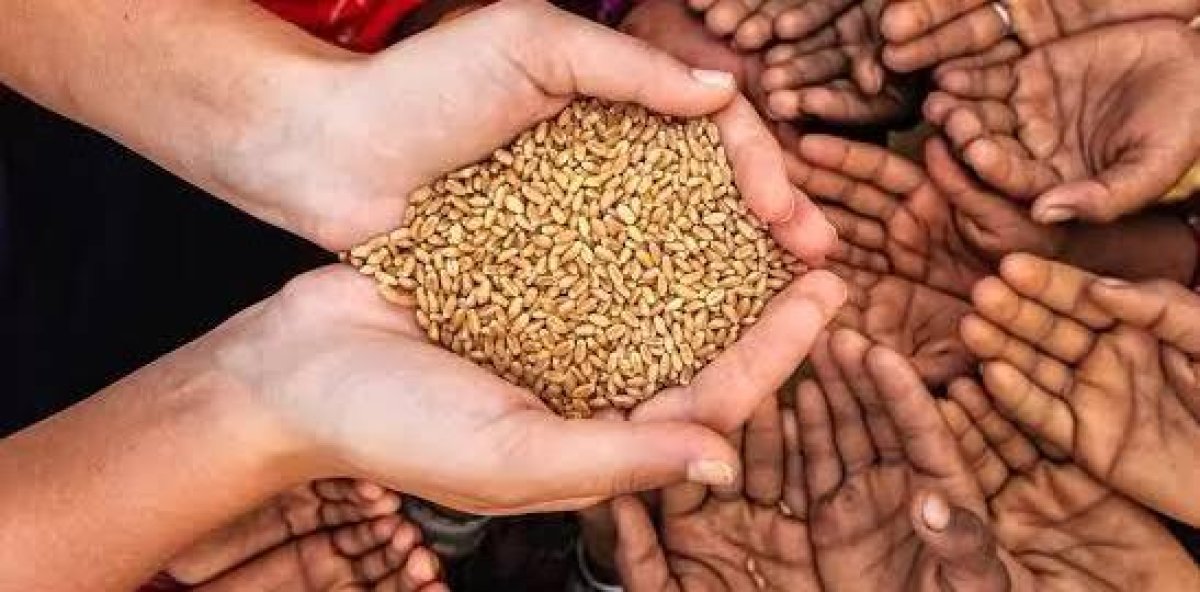
Despite all the difficulties that Latin America and the Caribbean are experiencing, at least hunger decreased for the fifth consecutive year in the region.
The pandemic marked one of the hardest periods in recent years for vulnerable families. Since then, the situation has improved with the implementation of social programs and the recovery of the regional economy.
This is reflected in the report “The State of Food Security and Nutrition in the World 2026,” published at the end of July by several United Nations agencies.
The study points out that in Latin America, the reduction in hunger was 4.8% of the population in the last five years, an improvement that leaves the region with a little more than 30 million people suffering from hunger.
The FAO (Food and Agriculture Organization of the United Nations) defines hunger, or chronic undernourishment, as insufficient calorie intake for at least a year, and to measure it, the agency uses an indicator called the Prevalence of Undernourishment (PoU).
The report states that the Dominican Republic is the last country in the region to achieve “zero hunger”, a statistical definition applied when less than 2.5% of the population suffers from it.
That goal has been met by six countries in the region.
The first to achieve this was Brazil more than a decade ago, and the last to eradicate it has been the Dominican Republic. Here are the countries with zero hunger and the year they left the world hunger map:

A country is considered to have zero hunger when less than 2.5% of its population suffers from it, according to the FAO.
- Brazil in 2012
- Costa Rica in 2013
- Uruguay in 2005
- Chile in 2021
- Guyana in 2021
- Dominican Republic in 2026
The policies implemented by these six countries “reveal a coherent pattern,” Máximo Torero, chief economist of the FAO, tells BBC Mundo.
“Hunger decreases when agricultural, economic and social policies reinforce each other,” he explains in dialogue with BBC Mundo.
The economist argues that it is very important to combine social protection plans that are well focused on the most vulnerable groups and good agricultural production projects.
With all the research that has been done on extreme poverty and chronic undernourishment, experts are clear about which strategies work better than others.
The challenge is not really to invent a “novel formula” never before imagined. It is, they say, something much simpler: the way governments implement anti-hunger programs over the long term.
The classic example is Brazil, one of the region’s pioneering countries to be removed from the hunger map more than a decade ago. Although chronic undernourishment increased again during the pandemic, it recovered and returned to zero hunger last year.
With more than 200 million inhabitants, Brazil has served as a model for other nations that have, over the years, replicated several of its programs.
The regional panorama

Brazil was the first country in the region to reach zero hunger in 2012, according to FAO.
FAO’s latest annual report includes information collected globally from 2004 to 2025 on indicators such as hunger, malnutrition, and food insecurity.
Although this year’s results are positive for Latin America, given that chronic undernourishment decreased in the region and a new country, the Dominican Republic, crossed the threshold of zero hunger, the rest are still lagging.
Argentina is currently the country that is closest to achieving zero hunger, followed by Mexico.
At the other extreme is Bolivia, the country where people suffer the highest levels of hunger in the region, with almost 20% of its population undernourished.
This is the list of Latin American countries and their levels of hunger, as a percentage of the population, according to FAO data, excluding countries that have achieved “zero hunger”.
There is no information available for Nicaragua and Cuba.
- Argentina 2.8%
- Mexico 3.1%
- Colombia 4.1%
- Paraguay 4.1%
- Panama 4.7%
- Venezuela 5.3%
- El Salvador 5.3%
- Peru 5.7%
- Ecuador 10.8%
- Guatemala 12.7%
- Honduras 14.3%
- Bolivia 19.5%
The case of the Dominican Republic

The Dominican, Dioris Rijo, together with the members of her community, has developed an agricultural business that has changed their lives.
But the novelty of the report is the Dominican Republic, where the social safety net improved, benefiting families like that of 50-year-old Dioris Rijo.
When her three children were young, more than two decades ago, her family went hungry, in the midst of a banking collapse that left the country in ruins, with runaway inflation and unemployment at record highs.
Lifelong farmers in the eastern province of La Altagracia, they did not have enough agriculture to provide their families or community members with the minimum sustenance to live.
Dioris went to work in the hotel sector and other companies in cities such as Salvaleón de Higüey, near Punta Cana. When the pandemic hit in 2020, tourists disappeared, and so did jobs. She went back to the countryside to live off what the crops gave her.
What was not in her plans was that a better future awaited her in the same land where she left. “Here I am earning my living, and I don’t have to go to work far away,” she now tells BBC Mundo.
“Even if I go little by little, the little is mine,” she says with the pride of being an independent agricultural entrepreneur.
Her family and neighbors grow crops such as lettuce, celery, and leeks and raise tilapia in ponds. “We’ve done very well,” she says.
In the big cities and other extremely poor areas of the country, the situation is different, but in the Dioris community, things have gone well with support from state subsidies.
Dominican economist Maribel Suero Castillo, secretary of Technical Affairs of the Dominican College of Economists (CODECO), argues, however, that the data and the daily economic reality are disconnected, according to local press reports.
Disconnected because the FAO indicator measures national dietary energy availability and theoretical calories per capita, but ignores the actual distribution of income and physical access to food.
The two-decade plan

The Dominican Republic went from having 21% of its population hungry in 2004 to “zero hunger,” according to the FAO.
Beyond methodological discussions, the Dominican Republic is, according to the report, the country that has improved its situation the most.
Reaching zero hunger is not an achievement of a single Government.
It has been more than 20 years since the country suffered a banking collapse in 2003 that led to one of the worst economic crises in its recent history.
The following year, estimates indicated that one in five people went hungry.
In the midst of chaos, with runaway inflation and rampant unemployment, Leonel Fernández became president in August 2004, and the IMF (International Monetary Fund) implemented, together with the Government, a macroeconomic stabilization program to emerge from the emergency.
In the following years, there was an economic recovery driven by new investments, tourism development, the boom in the construction sector, free zones and, not least, the arrival of remittances.
They were in the middle of that when the country faced the 2008 international financial crisis. After the storm, the economy began to expand again until, in the early 2000s, it entered a period of accelerated growth that continues to this day, except during the pandemic.
The drop from a hunger level of 21% to “zero” in 20 years has happened while two major political forces have taken turns in power.
During that period, the Dominican Liberation Party (PLD) governed the country for 16 consecutive years (with Leonel Fernández and Danilo Medina as presidents between 2004 and 2020). From 2020, the former opponent and current president, Luis Abinader, of the Modern Revolutionary Party (PRM), assumed power.
During those administrations, along with economic growth, the country implemented social policies to reduce hunger.
Experts such as Magdalena Lizardo, economist and director of the Pareto Consulting Group, explain that the supply of calories has grown substantially.
“It has been a long-term effort,” he points out.
“A cumulative process”

The Dominican Dioris Rijo returned to her place of origin to plant and raise fish after the pandemic.
Yosmeri Céspedes, a single mother of four from Santo Domingo, says that despite having a job, the food benefits she receives help her better meet her household’s needs.
Like her, many Dominicans combine income from work and social assistance to meet their food needs, says Manuel Robles, director of the Government’s Technical Secretariat for Food and Nutritional Sovereignty and Security.
“It has been a cumulative process,” says Robles, and argues that recently the momentum of the battle against chronic undernourishment has accelerated by leaps and bounds.
“Zero hunger arrived sooner than we thought,” he tells BBC Mundo, a goal that without the economic growth that the country has experienced in its recent history would not have been possible.
And not without the will to make a fiscal sacrifice to finance food programs, he says.
These are some of the programs that the country has implemented to reach zero hunger:
- The School Feeding Program (PAE): As schools extended the school day, from 2013 onwards, public school students began to receive breakfast, lunch and snacks.
- Food Program: benefits about 14% of the general population. It works with an electronic card (like a debit card) that stores a set amount of money for people to spend at food establishments in popular sectors, known as “colmados”. People who have access to the program are selected through a unique beneficiary system, a database that registers those with the greatest needs.
Periodically, Robles explains, data on income and expenditure are collected, and the population is divided into five groups based on a Quality of Life Index (QLI) derived from factors such as housing characteristics or access to food.
Levels one and two, the poorest, can enter the Food Program. That information is also used to deliver other benefits.
- Gas Bonus Program: delivery of subsidies for the purchase of liquefied gas for cooking.
- Economic Dining Rooms Program: located in areas where the concentration of poverty is greater, it offers free cooked food
- Increase in agricultural production: agricultural production has received incentives such as preferential rate financing for farmers, technification of production, the delivery of land titles, training, and public purchases to local producers.
According to the economist Lizardo, the entire process of reducing hunger has been influenced by both social programs and the increase in the production of animal protein, essentially chickens and eggs, and the increase in agricultural production.
Torero, an economist at the FAO, points out that the country “has put a lot of effort into ensuring that small and medium-sized producers have access to financing,” which is essential in the fight against hunger.
That has been the experience of some farmers like Dioris Rijo, who now produce and sell vegetables and raise fish as part of an emerging business that provides the food his family needs.
The Dominican Republic managed to get off the world hunger map, but now it faces other challenges.
41% of the population suffers from “moderate or severe” food insecurity. This no longer refers to minimum calorie intake, but to regular access to nutritious food.
That goal, which is more difficult to achieve, will probably take much longer.