

Inversiones Calpe installs bollards at Playa Encuentro property following court rulings


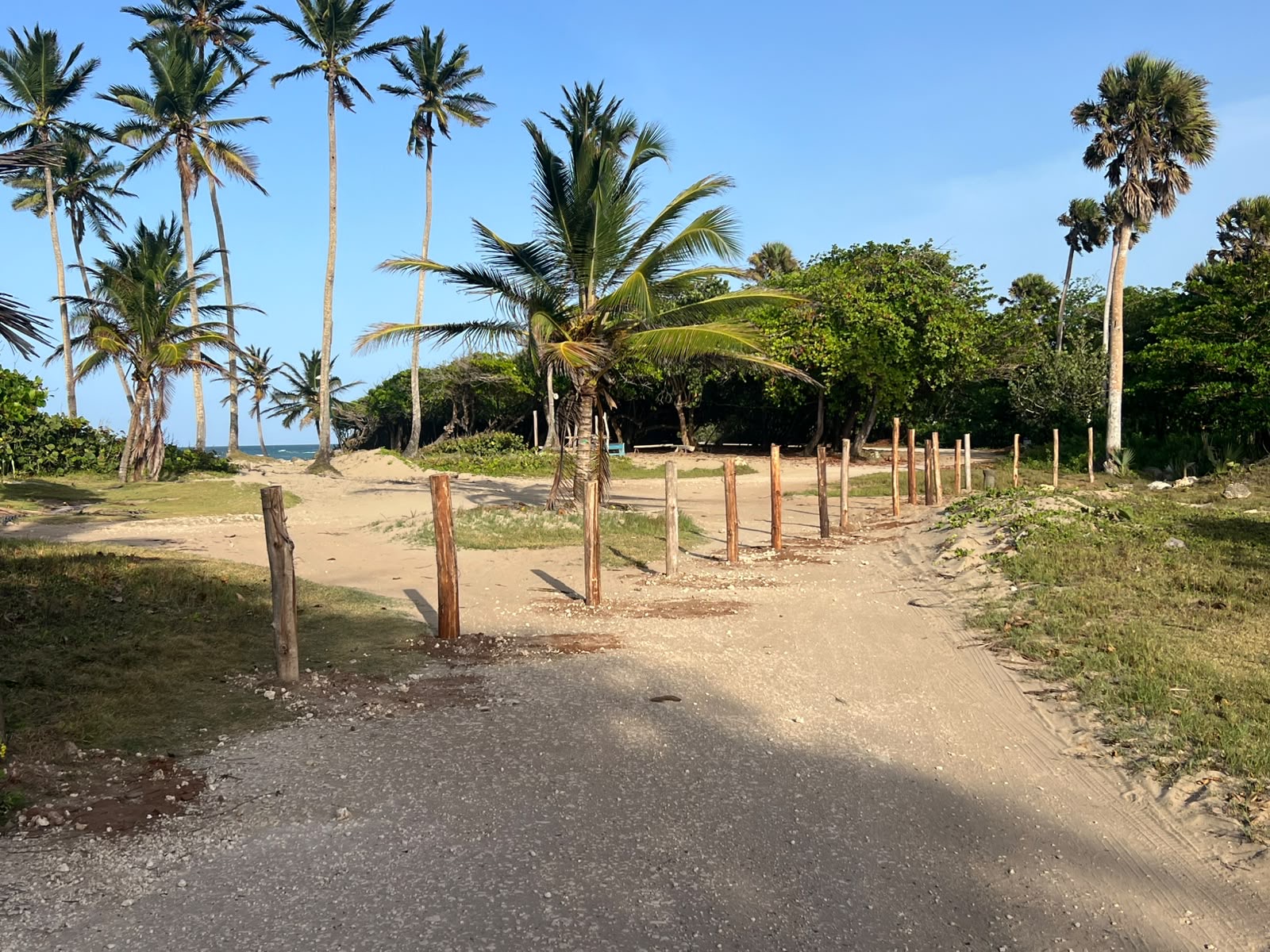
Company says the work is intended to protect private property and does not prevent public access to Playa Encuentro through the access route recognized by the courts.
CABARETE, Puerto Plata. – Inversiones Calpe, S.R.L. has begun installing bollards on land it identifies as private property at Playa Encuentro, Cabarete, in the latest development in a long-running legal dispute involving property rights, access routes and several government institutions.
The company, represented by U.S. investor Lance B. Lundberg, said the bollards are being installed within the boundaries of its property and are intended to prevent unauthorized traffic through the site.
According to Calpe, the work does not prevent public access to Playa Encuentro. The company said it has also made portions of its property available for parking and has provided bathrooms, showers and security services for beach visitors.
Calpe said the measures are intended to organize access, reduce vehicle traffic through environmentally sensitive areas and help protect the surrounding environment.
The company says the current work is being carried out in accordance with ruling No. 0030-1643-2025-SSEN-00312, issued on April 30, 2025, by the Fifth Chamber of the Superior Administrative Court (TSA).
That ruling ordered the effective enforcement of an earlier decision and directed authorities to allow the owners to fence Parcel 1-Ref-13 of Cadastral District No. 2 of Puerto Plata “without any hindrance or obstacle.”
The ruling also ordered the cessation of interference with the property, the removal of signs installed within the property and the correction of signs in nearby areas that provided inaccurate information concerning roads and access to Playa Encuentro.
According to the ruling, access to the public-domain portion of the beach should not take place through the Calpe property because a public road exists for that purpose.
The case dates back to TSA ruling No. 0030-1643-2024-SSEN-00889, issued on November 13, 2024. That decision ordered government institutions to cease interference with the property, remove signs installed within the private parcel and correct signs in surrounding areas that provided inaccurate directions concerning access to Playa Encuentro.
The dispute continued over compliance with the court’s orders.
In a subsequent decision, No. 0030-1643-2026-SSEN-00180, issued on April 10, 2026, the Fifth Chamber of the TSA determined that the Ministry of Tourism and the Dominican Navy had failed to comply with the earlier ruling for 213 days, from June 24, 2025, through January 22, 2026.
The court ordered the two institutions to pay a combined RD$213,000 in accumulated astreinte, or daily penalties, and gave them 30 days to comply fully with the April 2025 ruling. The court also increased the daily penalty for future noncompliance to RD$1,500.
The April 2026 ruling ordered the Ministry of Tourism and the Dominican Navy to refrain from entering the property without authorization from its legitimate owners.
Calpe has also said that the Third Chamber of the Supreme Court of Justice declared inadmissible cassation appeals filed by the Ministry of Tourism and the Ministry of Environment and Natural Resources against the April 2025 TSA ruling. The company identifies the Supreme Court decision as SCJ-TS-25-4322, dated December 18, 2025.
Calpe said the current installation of bollards and fencing is intended to define the boundaries of the private property, prevent unauthorized passage through the site and direct visitors to Playa Encuentro through the public access route identified in the court proceedings.
The company has called on government authorities and visitors to respect both the public nature of Playa Encuentro and the property rights recognized in the court rulings.
The institutions involved in the broader dispute include the Ministry of Tourism, the Committee for the Execution of Tourism Zone Infrastructure (CEIZTUR), the Dominican Navy, the Ministry of Defense, the Ministry of Environment and Natural Resources, and the National Environmental Protection Service (SENPA).


I see, so if all beaches are “public” then they will just buy all the land in front and around it for thousands of yards….got it…
The resorts having beach fronts will take small bites, such as the bollards, over time to hinder public access to the beaches. It is a forbidden game they play to discourage the public from even having the thought of going to the beach. As long has the resorts have $$$ millions to twist the many arms of government to not, or to lazily enforce the beach regulations the people have to suffer it.