
Dominican Republic could absorb U.S. slowdown


The gross domestic product (GDP) of the United States, according to data from the Bureau of Economic Analysis at the Department of Commerce, grew by just 0.4% in the second quarter of 2026, down from the previous quarter. Equivalent to an annual rate of 1.5%, below the 2.1% recorded in the first quarter.
The signal for the Dominican Republic is yellow, not red, because the slowdown does not yet appear pronounced enough to significantly affect the country’s main foreign-exchange-generating sectors.
A moderation in U.S. growth can be absorbed reasonably well as long as employment and household incomes continue to support consumption.
There are also some reassuring data. Between January and July, the Dominican Republic received US$7,316.4 million in remittances, an increase of 6.4% compared to the same period last year. In July, however, growth moderated to 4.7%. This suggests that the U.S. economy remains strong enough to sustain growth in the main private flow of dollars into the country, although the July slowdown warrants monitoring.
Therefore, the relevant question for the coming months is not so much whether the United States grows at 1.5% or 2%, but what happens to employment and household income, particularly for Hispanic workers, given the close relationship of these factors with the remittances received by the Dominican Republic.
The same can be said for tourism. Between January and July 2026, 7.7 million visitors arrived in the country, 7% more than in the same period of 2025. In July alone, the country received 754,413 foreign tourists, of whom 363,502 (48%) were Americans.
A U.S. consumer who retains spending capacity is good news for hotels, airlines, restaurants, and the entire chain of activities linked to Dominican tourism.
In the case of exports of goods, a still-resilient U.S. demand also favors the Dominican Republic, particularly free-zone manufacturing and the medical device industry. The IMAE grew by 5.5% in July, bringing the sector’s growth from 2.6% in January-June to 3.1% in January-July. And more could be achieved by tapping into those niches where it can be more deeply integrated into U.S. supply chains.
This reinforces the need to get more out of nearshoring. It is not enough for the United States to buy more; it is necessary to ensure that a growing share of that spending translates into production in the Dominican Republic.
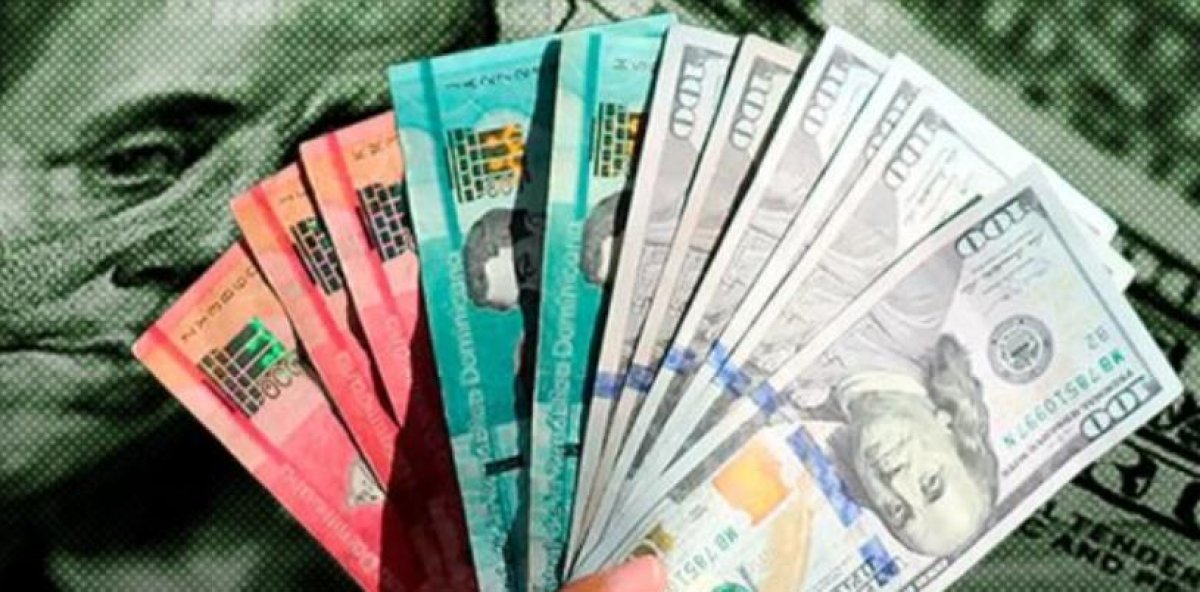
The behavior of the U.S. economy also invites us to look at the exchange rate. If the United States slows without entering a recession, while the Dominican Republic continues to receive significant inflows of foreign currency from remittances, tourism, investment, and exports, the relative abundance of foreign currency may continue to exert pressure on the peso’s appreciation.
However, the alert could shift from yellow to orange if the slowdown no longer reflects only GDP and begins to affect U.S. households’ employment and income. If the cooling deepens to the point of weakening consumption, remittances and tourism would probably be two of the first channels through which this deterioration would be transmitted to the Dominican Republic.
For now, however, there is more reason for caution than for alarm.