

Program designed to measure the economic and social impact of Punta Bergantín


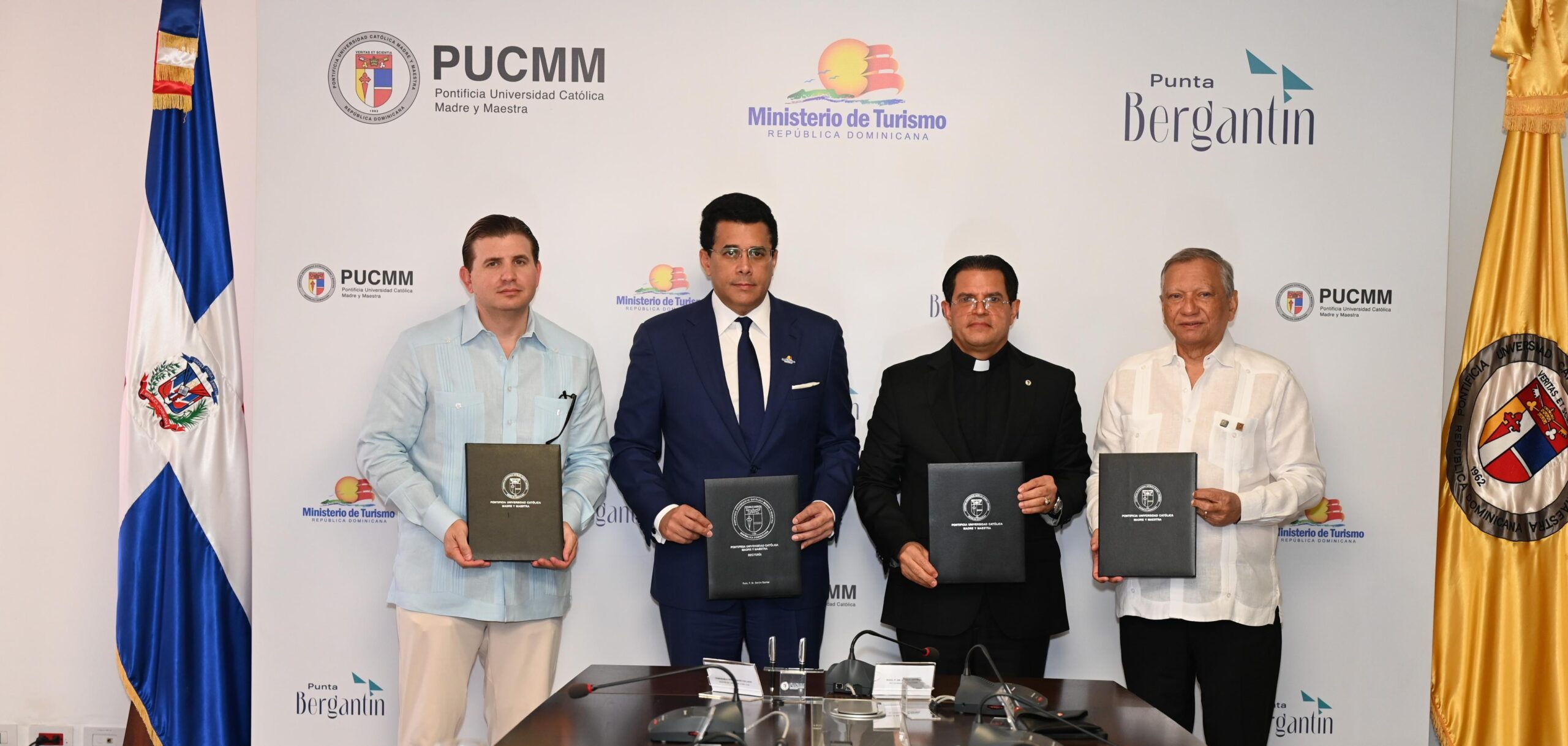
The trust for the tourism and real estate development of Punta Bergantín will have a permanent research program to measure its economic, social, and territorial impact in Villa Montellano, Puerto Plata, and other communities in the northern region.
The initiative was made possible by an agreement among the Pontificia Universidad Católica Madre y Maestra (PUCMM), the Ministry of Tourism of the Dominican Republic (Mitur), and the Trust for the Economic and Social Development of Punta Bergantín.
, rector of PCMM, highlighted the importance of the alliance between the State, academia and the private sector to promote national development.
He explained that the agreement seeks to measure the economic, social and territorial impact that Punta Bergantín will have, as well as to strengthen the preparation of the human talent that the project will demand.
“Today we signed an agreement with the Punta Bergantín project, Mitur and PUCMM. Clear evidence of what alliance is, where the State, academia and the private productive sector align and create alliances to impact development in the country,” he said.
He added that the university will provide research, academic training, and social extension to meet the needs of the new tourist pole.
Meanwhile, the Minister of Tourism, David Collado, stressed that the country’s tourism growth strategy has been based on the constant analysis of data to know the profile of visitors and more effectively guide international promotion.
“We have not improvised and we have worked hand in hand with data,” said Collado, noting that this methodology has contributed to the sustained growth of Dominican tourism and the diversification of source markets.
Meanwhile, the executive director of the Punta Bergantín trust, Andrés Marranzini, considered that the agreement represents the starting point of a collaboration that will allow measuring and documenting the economic and social impact of the project in Puerto Plata and the North region.
“Punta Bergantín is spilling a lot from the economic point of view and aims to transform and be a catalyst, a trigger for development in the entire region,” he said.
He highlighted the contributions of the university’s professionals and students in collecting evidence of this transformation and identifying new opportunities.
He also stressed that the agreement contemplates strengthening training for human capital to meet the demand that tourism development will generate, including a hotel school operated by hotel students from PUCMM.
“The creation of quality human capital is not only a local opportunity,” he said, explaining that the country has professionals who occupy important positions in the Caribbean hotel industry. He added that, with the 1,600 rooms planned in the first stage, Punta Bergantín can contribute to the North region finding “a new industry that contributes to its progress,” he added.
Settlement Details
The study will monitor indicators such as job creation, income, entrepreneurship, investment and quality of life, through a longitudinal database, semi-annual reports and an annual report. PUCMM, through its School of Economics, will play a central role in the methodology, research, analysis and preparation of these reports.
The initiative seeks to provide objective data that allow us to understand how tourism development transforms the lives of communities and to use that information to strengthen public policies and promote sustainable and inclusive growth.
It also contemplates academic research, training of students and professionals, as well as the possibility that the School of Tourism and Gastronomy of the PUCMM participates in the management of a future school hotel within Punta Bergantín.
The area of influence will cover Villa Montellano, the directly and indirectly impacted communities and other relevant areas of the North region, including, where appropriate, Santiago.
Through the agreement, the participating institutions reaffirm their commitment to join their capacities, knowledge, and efforts to contribute to the sustainable development of the area, promoting opportunities that generate a positive impact on tourism activity, the local economy, and society.


In the planning process it would be good if the new road from Santiago was across the road to mitigate route 5 congestion. Also hopefully there are plans for quality worker housing nearby