

Dominican Republic explores nuclear energy opportunities through U.S. cooperation


Santo Domingo.- The Dominican Republic is exploring the potential of nuclear technologies as part of its long-term energy strategy, although the government has not made a decision to build a nuclear power plant.
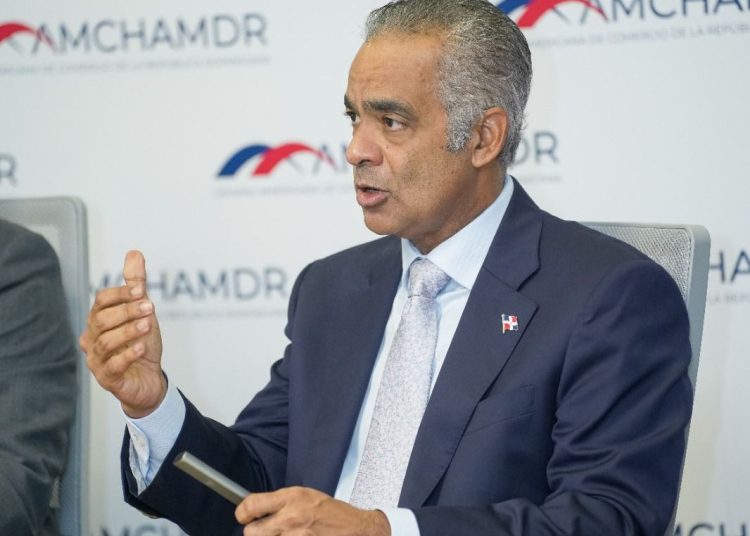
Minister of Energy and Mines Joel Santos Echavarría discussed the opportunities and challenges of nuclear energy during a meeting with the American Chamber of Commerce of the Dominican Republic (Amchamdr).
Santos explained that growing electricity demand and the need to diversify the energy mix require the country to evaluate emerging technologies. Installed electricity capacity has increased from about 4,921 megawatts in 2020 to more than 7,600 MW in 2026, while peak demand surpassed 4,300 MW in July.
The minister said cooperation with the United States could provide opportunities for knowledge transfer, technical assistance, specialized training and institutional strengthening. He also emphasized that nuclear technology has applications beyond electricity generation, including nuclear medicine, agriculture, water management, environmental monitoring, scientific research and industry.
Regarding electricity generation, Santos noted that the expansion of solar and wind power must be supported by reliable generation, energy storage and stronger transmission infrastructure to ensure a stable and resilient grid.
He also discussed small modular reactors (SMRs), which have attracted international interest because of their smaller scale, continuous generation and potential to complement renewable energy. However, he stressed that the technology is only being studied as a long-term option for the Dominican Republic.
Santos clarified that the cooperation agreement with the United States does not mean the country has decided to build a nuclear plant, selected a specific technology or committed to an investment. Its current purpose is to develop the technical, scientific, regulatory and institutional capabilities needed to evaluate future options responsibly.
Among the next steps are strengthening the regulatory framework, developing an independent regulatory authority, training specialized professionals and expanding cooperation with the United States, the International Atomic Energy Agency (IAEA) and other technical partners.


The country has too much debt. It is doubtful the RD could afford enough costly modular reactors to cover electricity demand. Use what the country has in abundance for electricity generation, sun and wind.
The DR should consider geothermal energy. We do have thermal waters/springs in the DR. It’s a renewable source of energy that does the same thing than a nuclear power plant does, but without the nuclear waste.