
Is tap water safe to drink? Factors that lower water quality


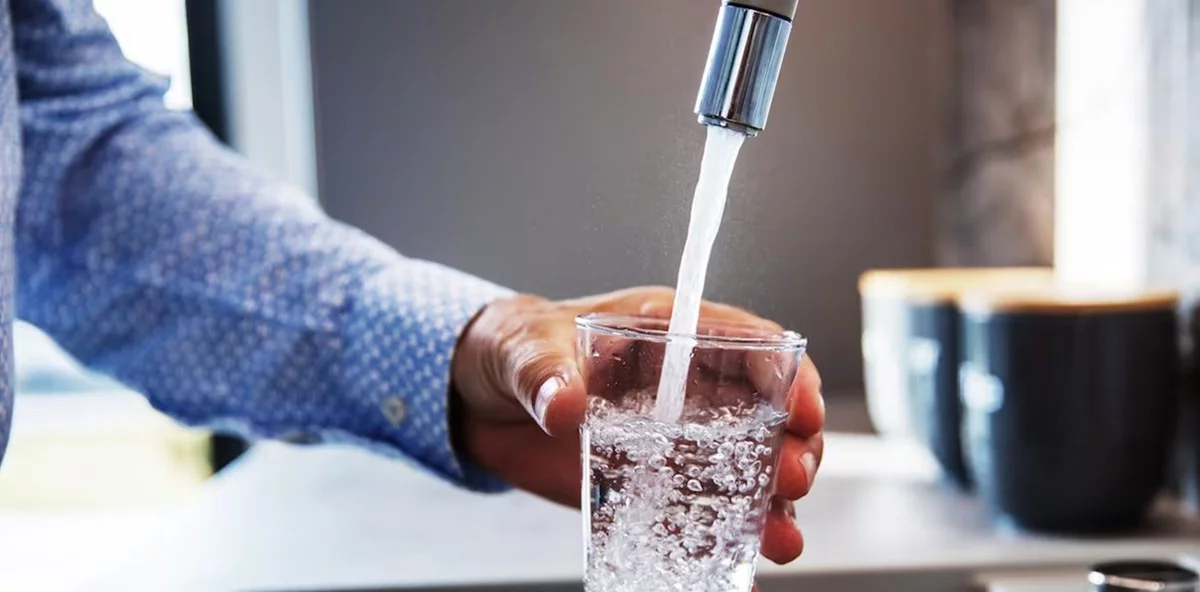
Water is the most important natural resource, not only for the survival of all living beings, but also for the stability of the planet. However, this precious liquid can leave a treatment plant potable but not necessarily reach the consumer’s glass with the same quality in the Dominican Republic, especially in Greater Santo Domingo.
As José Mateo Mota, director of Water Quality at the Santo Domingo Water and Sewerage Corporation (CAASD), explained to the newspaper Hoy, factors such as service intermittency, pipe damage, leaks, and especially storage conditions within homes can affect water quality along the way.
“Yes, the water usually, almost 100% of the time, leaves our water treatment plants 100% potable. This doesn’t mean it arrives at your home that way, because there are issues with the network and the service. The very intermittency of the service means that this 100% quality isn’t maintained until it reaches your home,” the official responded when asked about the issue by the newspaper Hoy, given that September 18th is World Water Quality Control Day.
The risk can also be inside the house
According to Mota, one of the main factors that can degrade water quality in Dominican homes is the systems used to store it, especially cisterns and water tanks.
“The first thing that can contaminate it is the storage system that is regularly used in the Dominican Republic. Here, when a building or house is to be built, the first thing done is to dig the hole for the cistern. And then there is no culture of maintenance, cleaning, and disinfection of those cisterns. The same goes for the water tanks,” said the Director of Water Quality at CAASD.

Potable water storage:
The specialist explained that cisterns can accumulate sediment and other materials, and that poor-condition lids, insects, rain, and lack of maintenance can also contribute to the deterioration of the quality of the stored water.
“That means that 93- 96% of potable water that reaches homes tends to deteriorate because people don’t clean their cisterns every 6 months, as they should,” he said.
However, despite the factors that can affect water quality, José Mateo Mota assured that the capital’s population receives it in their homes “of much better quality than what is allocated to them, than what one as a technician offers them.”
“There is a real disregard for the quality of service (…) a lack of understanding,” he declared.

José Mateo Mota, Director of Water Quality at the Santo Domingo Water and Sewerage Corporation (CAASD)
Mota also stated that, as part of sanitary control, CAASD collects more than 80 water samples daily from the networks for bacteriological analysis.
“The entire urban area of the National District and the province of Santo Domingo, with rare exceptions, receives reliable drinking water,” he insisted.
Keys to verifying water quality
When asked how a person can determine whether the water they consume might be contaminated, the specialist pointed out that, beyond observing whether it arrives clean, clear, and without strange odors, the ideal step is to take a sample to a certified laboratory to assess its quality.
“CAS itself has the laboratory, INAPA (National Institute of Drinking Water and Sewerage) has the laboratory, and other private organizations have laboratories that can analyze the water and give you a result. That is the quickest way to know and trust the quality of the water you receive,” he stated.
Furthermore, he maintained that, throughout the urban area of the National District and the province of Santo Domingo, with rare exceptions, the population receives reliable water for consumption.
“The National District and the province of Santo Domingo, the entire urban area, is covered by reliable water, water that comes from water treatment plants that produce 100% potable water and is covered by the sanitary control that we carry out, in which we take more than 80 samples every day from the networks for bacteriological analysis,” he declared.