
Descendants of Dominicans in the U.S. cling to their roots


NEW YORK— Juan Díaz came to the United States 52 years ago. One of his first concerns was learning English. His son, Juan Francisco, was born here 22 years ago and has a very different concern: maintaining his connection with the Dominican Republic.
Juan studied Business Administration, owns his own business, and is now semi-retired. Juan Francisco is studying Civil Engineering. Like these two, there are thousands of Dominicans who have made their lives in the United States and whose children have gone on to universities, Government positions, businesses, and other professional fields.
Previously, discussions of the Dominican diaspora were mostly limited to bodegas, restaurants, beauty salons, and other businesses. But this has been changing.
Today, more than three million Dominicans live outside the country, according to INDEX data published this year, but the United States is by far the largest concentration of that diaspora. At the end of 2024, 2,398,000 Dominicans resided there, the most recent figure available for that country.
The generational shift has been documented. According to the Pew Research Center, among Dominicans aged 25 and older born in the United States, 33% had at least a bachelor’s degree, compared to 18% of those born in the Dominican Republic.
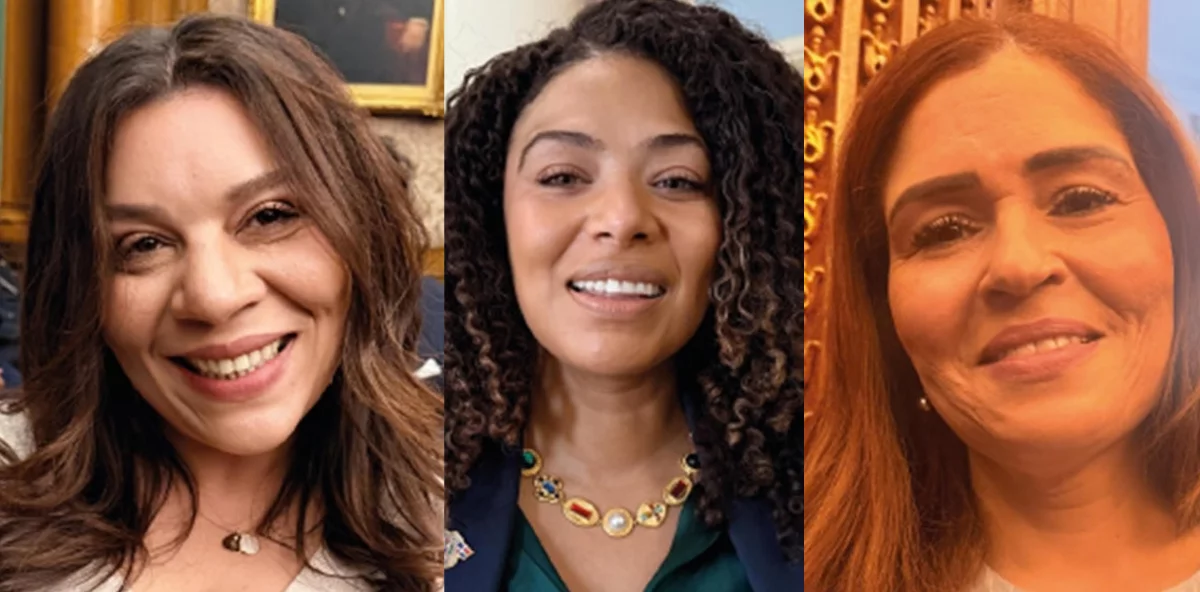
Ana Mercedes Chireno was born in Brooklyn to Dominican parents. She studied Philosophy and Political Science and works with non-profit organizations and the city Government.
Arelia Taveras, also the daughter of Dominicans and born here, holds a doctorate in Law, runs her own business, and leads a Latin restaurant association. Charlie Núñez studied Architecture and has businesses in events, real estate, and hospitality.
What worries them?
The answers vary. Ana Mercedes looks to the Dominican Republic a lot. She’s concerned about the country’s economic development, among other reasons, because many Dominicans in the United States still support family members living there.
“We want to see the Republic develop in a sophisticated, stable way, because we all have the goal of returning to the country one day,” he says with a nostalgic voice and gaze.
For Arelia, the concerns are more related to what is happening in the United States: employment, opportunities, and the cost of living.
“Prices have gone up too much,” he says. He also talks about the difficulties restaurants are facing, a sector that for years has served as a gateway to employment for many Latinos.
Charlie brings up another topic: US immigration policy. “I think the most important thing right now is what’s happening with immigration. They’re afraid to be here, to work, and there are the situations with ICE,” he says.

Residents in the US
Juan Díaz returns to the language. “If you don’t learn the language, the opportunities are minimal or minuscule,” he says. He recounts that he recently spoke with someone who has lived in the United States for about 30 years and practically doesn’t speak English.
His son is at a different stage. For Juan Francisco, the challenge is maintaining his Dominican identity.
“The most important thing for a son of a father born in the Dominican Republic is to maintain that culture, to maintain that connection,” the young man explains in Spanish with a marked English accent.
Unlike him, his father had to learn English to make his way in the United States. The son has spoken English since birth and now tries to stay connected to his father’s roots.
Where do the little chelitos go?
Although there are differences, one thing that doesn’t seem to have changed among the new Dominicans in New York is sending money to the Dominican Republic. Between January and August of this year, the Dominican Republic received US$8.4327 billion in remittances, according to the Central Bank, US$511.7 million more than in the same period of 2015. The United States continues to be the primary source of these funds.
Juan estimates that his family sends an average of US$800 per month. He used to help his mother, who passed away a few years ago. Now, along with his wife, he continues to support relatives and cover the maintenance costs of her mother’s house in Moca.
Carmen Hernández, born in Santo Domingo and a resident of the United States since age 5, works in the arts in Brooklyn, creating spaces for artists and other creators to develop their work.
“This is our culture of sending money, isn’t it?” she says, referring to remittances. For years she helped her uncles and grandparents, and she estimates that between US$200 and US$300 a month is a common amount for those who send money to their families. “It’s usually for food, for basic expenses, for medicine. Medicine is so expensive,” she explains.
Ana Mercedes’ parents also send money each month to help relatives with food and other essentials. But some of that money is also ending up in properties and businesses.
Arelia says she has clients who are building and developing projects in Villa Tapia and Santiago. Juan already owns a furnished apartment in the Dominican Republic and says he wants to make other investments.
The cost of living in the United States is also a factor. Arelia points out that when fewer resources are available here, the ability to send money and invest there decreases as well.
The idea of returning
Although they’ve lived in the United States for decades, several of those interviewed still talk about returning. And not just those born in the Dominican Republic. Ana Mercedes, who was born in Brooklyn, says she’d like to retire someday in Samaná or Las Terrenas. “I miss the sun and the warmth of our country,” she says, now with a more cheerful tone.
Carmen is also thinking about returning. She talks about “the beach, the sun, its people and its food.”
Charlie has traveled several times this year and sees the Dominican Republic as a possible retirement destination. Juan already has a place to go: his apartment is furnished and waiting for him.
Juan Francisco, on the other hand, has never lived in the Dominican Republic.
He has been there many times, although his last visit was about two years ago.
When asked what he likes about his father’s country, he replies: “The atmosphere, the warmth, the feeling that when you are there, it feels like your own home.”
His father left the Dominican Republic 52 years ago.
Their son was born in New York, but they both share the same feeling: Dominican identity, proving that it is true that one leaves the country, but the country never leaves one, and that Dominicans are born wherever they want.