
“Intern with Wisdom,” a new opportunity in the world of work for older adults


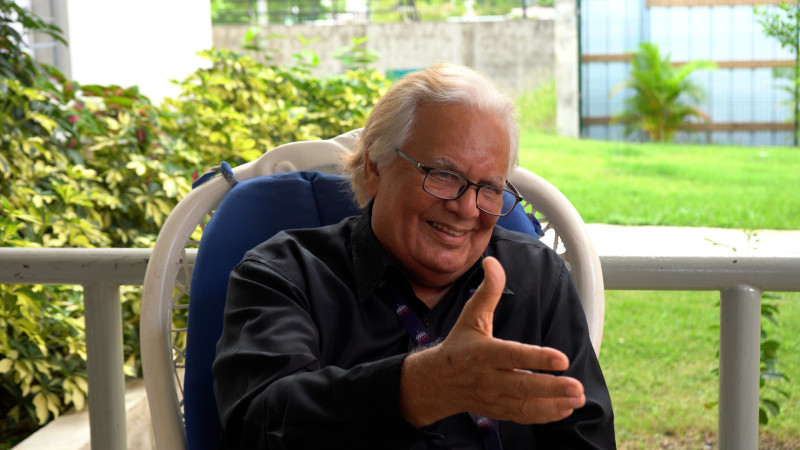
At 78, Ramón Antigua begins his day at 4:00 to go to work as an administrative assistant at 7:00.
An agricultural technician by trade with a long professional career in both the public and private sectors, he was forced to pause his routine at retirement, which he gracefully resumed at age 69 in September 2017 through the Wisdom Intern Program of the National Council of the Elderly Person (Conape).
“My experience as a Wise Intern at Conape has been pleasant, satisfying, and at the same time fulfilling; fulfilling because I like what I do, pleasant because I have found good colleagues, and fulfilling because it allows one to feel good, do something, and be useful,” said the septuagenarian who works in the Culture, Education, and Recreation Division of the institution.
Ramón is one of the 208 active senior citizens registered by Conape as of June this year in the program that aims to facilitate the participation of people over 60 in society’s economic life.
“Thank God I’ve come back to life with Conape, because I was just sitting around at home, but Conape got me out of there and thank God I feel active, I feel involved,” said Josefa Lugo Marcelo, 70, who, along with Ramón, is one of the 12 senior citizens who started in the program initially called “Schedules Without Barriers” nine years ago.
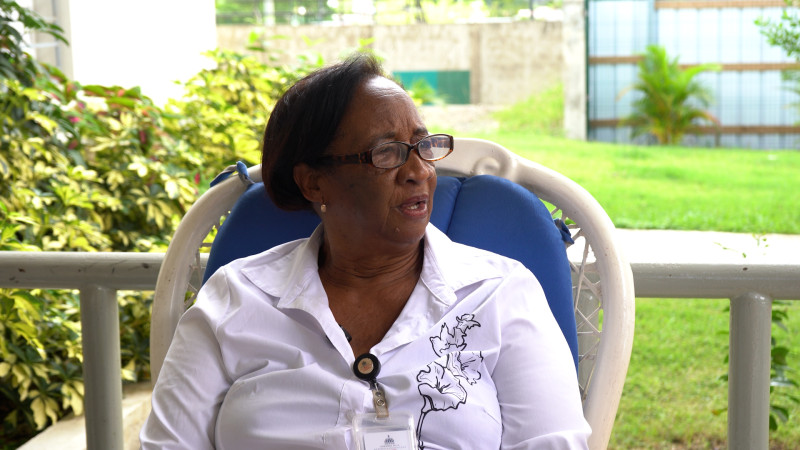
Josefa Lugo Marcelo, a senior citizen over 70, works as an administrative assistant in Conape’s Legal Department. External source
Josefa is a teacher by profession, but she also has a law degree, which opened doors for her in Conape’s Legal Department after she learned about the initiative through the program “Grandparents 911,” hosted by the late actress María Cristina Camilo.
In greater numbers, Conape employs 101 older adults aged 65 to 69; 58 aged 70 to 74; 29 aged 75 to 79; and 20 aged 80 or more, with women leading the way: 126 employees and 82 men in the program.
According to Conape, these elderly people work in the headquarters, provincial offices, day homes, permanent care centers, and other service-provision spaces.
Ramón is one of those who provide services in day centers, putting his agronomist’s trade to use restoring orchards in Ciudad Juan Bosch, Capotillo, and Nuevo Domingo Savio, work he does in person three days a week, while working remotely from home two days.
“I’m on a schedule where I work three days a week. On Mondays, I go to Ciudad Juan Bosch. On Tuesdays, I go to Capotillo, and on Wednesdays, I come here to Domingo Savio. Then, on Thursdays and Fridays, I work remotely using a computer I have at home,” he explained.
Josefa, on the other hand, works at the main office and says she likes her work, so she leaves her home in Capotillo Monday to Friday to work her shift from 8:00 in the morning to 3:00 in the afternoon.
“I like the work I do. I go every day; the department head there told me that if I wanted to work three times a week, I said no, because I feel good going daily, I’m already used to being there with my colleagues and the elderly, encouraging the elderly like myself. Now, on days when I think I can spend a couple of days at home, I ask for permission,” she said.
In addition to legal work and in the culture division, as in the case of Josefa and Ramón, Conape registered older adults as of the last cut-off in June in administrative, social, health, operational, supervisory, citizen service, provincial coordination, transportation, maintenance, and general services work.
Likewise, in response to an information request from Listín Diario, they said they are developing a Methodological Plan for the Survey on Needs, Expectations and Working Conditions of Older Adults to learn about their needs, interests, and expectations in labor matters.
Similarly, strengthening the program includes collaboration with public institutions and private entities to expand employment opportunities for older adults.
Josefa, who stayed home to care for her grandchildren from the time she retired until she re-entered the workforce, values staying active and says she is not yet ready to retire.
“For me, it should be of greater importance, because the older adults who remain active, you see that there are older adults who are improving themselves, right there in the institution where we are working, and every day we feel more and more entitled and with a vocation of service to give to our older adults just like me,” said Josefa Marcelo.
Meanwhile, Ramón Antigua urges employers to consider hiring older adults, arguing that the workforce also requires the wisdom and experience they possess.
“Employers who need to hire should take into account the wisdom of older adults. They should also have a department that brings together and can wisely manage the different functions of the various departments,” he urged.
Pension system
Under the Dominican pension system, retirements require 20, 25, 30, or 35 years of service once the beneficiary reaches 60 to qualify for a pension.
Many countries guided by this system are reconsidering this rule because accelerated aging across the region and other continents affects labor markets.
The Organization for Economic Co-operation and Development (OECD), which comprises more than 30 countries and with which the Dominican Republic is seeking closer ties, is one such organization. This body projects that the working-age population will decline by 13% over the next 40 years, placing significant pressure on the economy.
“Given that we are living longer and reaching old age in better health, we need to extend working life. Countries must raise the effective retirement age and promote employment opportunities for older people to ensure the financial sustainability of pension systems, economic security in old age, and strong economic growth,” said OECD Secretary-General Mathias Cormann.
Under this argument, developed countries such as France and Spain are considering raising the retirement age to 67.
In the local context, during the past 2025, the National Continuous Labor Force Survey (ENCFT) , of the Central Bank, registered 662,646 employees aged 60 or over, which represented 12% of the labor force; of these, the majority corresponded to the male sex with 422,000 compared to 240,646 women.