
Fernando Capellán calls for prioritizing employment and business to boost integration between the Dominican Republic and Haiti


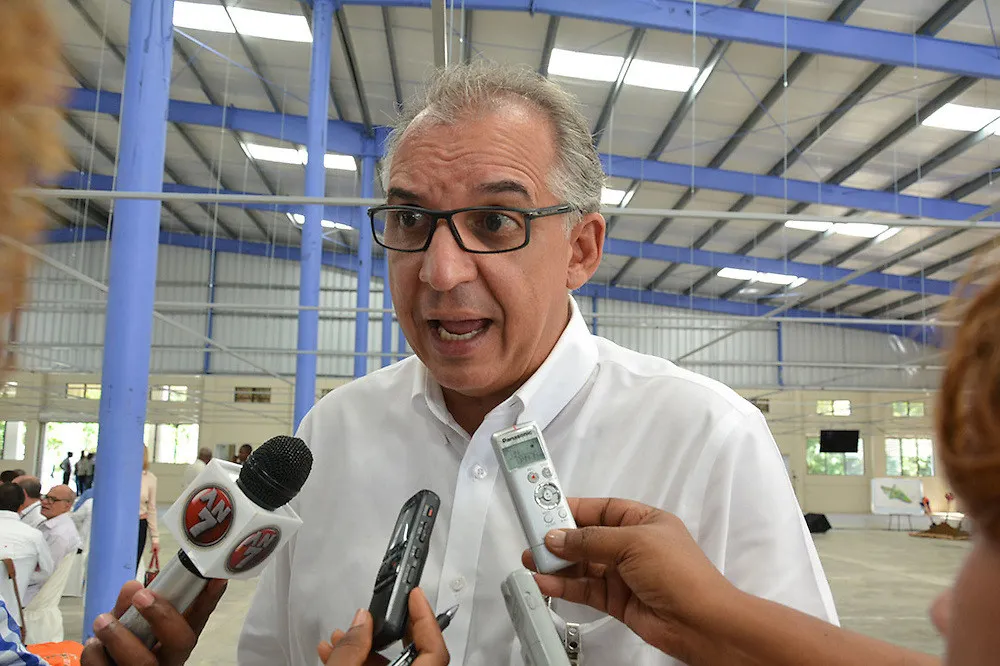
Businessman Fernando Capellán, founder and president of the textile company Grupo M and the Codevi industrial park, called on the Dominican Republic and Haiti to promote economic integration based on job creation, private investment, and cooperation between the two countries, warning that political tensions and rhetoric pitting the two nations against each other hinder the adoption of measures to improve the living conditions of their populations.
During his speech at the forty-first session of the Economic Commission for Latin America and the Caribbean (ECLAC) 2026, held in the province of Santiago, Capellán maintained that the relationship between both countries should be approached as an opportunity for business and joint development, as long as the sovereignty, security, and laws of each nation are respected.
“If we handle this issue poorly, it’s definitely a major threat to both countries,” said the businessman, who shared his 23 years of experience operating in Haiti through Grupo M and the Codevi industrial circuit, established in Haitian territory, near the border with the Dominican Republic.
Capellán explained that since the company began operating at Haiti‘s northern border, it has developed an ecosystem that includes jobs, childcare centers, schools, a polyclinic, and reforestation centers, in addition to replacing coal with propane gas.
He said the operations currently generate between 18,000 and 19,000 jobs and have helped transform the community and its environment.
“In 23 years there has truly been a before and after in this community and this entire region,” he stated.
A mutually beneficial economic relationship
The president of Grupo M said economic integration between the Dominican Republic and Haiti must start with the recognition that both nations need each other commercially.
He explained that Haiti represents a market for Dominican products, especially food and construction materials, and that geographical proximity allows trade exchanges that would not be possible in the same way with other countries.
“It is one of the few countries where you can export by wheelbarrow, that is, you take a wheelbarrow in Dajabón, in a town in the north, and you can go with a wheelbarrow of vegetables and sell them in Haiti, or vice versa,” he said.
Capellán insisted that the relationship must be built on pursuing the well-being of the populations on both sides of the island and respecting national sovereignty.
- He also considered Haitian labor essential for the Dominican Republic and the investment opportunities it presents. should be evaluated from a business perspective, not solely from the perspective of charity or subsidies.
“We have always seen Haiti and the Dominican Republic, especially the Dominican-Haitian border, as business opportunities, not necessarily in the charitable or grant sense, etc., but pure business, which is why we are confident that we can attract capital,” he stated.
He added that Haitians, like Dominicans residing in the United States and Europe, want opportunities to live and develop in their own countries.
The Dominican Republic must include Haiti in its economic strategy
Capellán acknowledged the Dominican Government‘s efforts in international forums, particularly in the United Nations Security Council, to promote the resolutions and resources needed to address gang violence in Haiti.
However, he said the Dominican Republic should also promote concrete initiatives to create jobs on the other side of the border.
For example, he mentioned the Dominican Republic 2036 Plan, aimed at doubling the size of the national economy, in which he said he participated in its development.
The businessman appreciated the work done to develop this initiative, but questioned why the economic relationship with Haiti is not included as an important component of the strategy, despite the volume of Dominican exports to that market and the presence of Haitian workers in the country.
“But when you look and see, and I participate in that plan, when we look at it, the Haitian issue doesn’t come up as a major issue in a country that is buying $1.2 billion, that has a certain number of immigrant workers in the country, and that has influence. And it doesn’t appear in that plan,” he noted.
Consequently, he called for stronger communication and joint work between governments, businesses, and the cultural and sports sectors of both nations.
“We need to see how these governments, how these business leaders, how these sports organizations, these cultural forces, begin to communicate and work together,” he said.
Capellán concluded that there is no viable alternative to seeking mechanisms for economic cooperation between the Dominican Republic and Haiti, and reiterated that integration based on productive opportunities could generate significant benefits for both populations.
“There is no alternative, there is no alternative, and I hope that I have been as explicit as possible in terms of how and what to do, and how we can achieve an economic integration that can be very, very powerful in these two nations,” he concluded.
Security and job creation in Haiti
Capellán considered restoring security in Haiti essential, but warned that progress in this area will not be sustainable without job opportunities.
“We can improve security in Haiti 100%, but if there are no jobs, it is not sustainable,” he stated.
The businessman suggested that manufacturing development and attracting investment could significantly increase jobs in Haiti and along the Dominican-Haitian border.
In that regard, he argued that both governments need to establish strategic plans to organize their relationship, instead of continuing to make decisions based on emotions or immediate political needs.
“Right now, decisions are being made based on emotions. They are not strategic decisions. Many are tactical decisions, which not only plug a hole in a primarily political moment but also do not take a medium- and long-term strategic approach,” he stated.
However, he considered the rapprochement between representatives of the Dominican and Haitian private sectors, as well as meetings between Dominican Minister Víctor “Ito” Bisonó and the Haitian Minister of Foreign Affairs, positive signs. Minister of Foreign Affairs, as positive signs.
The social media confrontational discourse
When referring to the obstacles to moving toward economic integration, Capellán identified the use of tensions between the two countries to gain popularity on social media as one of the main problems.
“The main problem we see is the likes, the ‘likes‘,” he declared.
He explained that businesspeople, politicians, and influencers from both countries can gain followers and reactions by spreading messages that pit Dominicans against Haitians or that promote fears related to an alleged invasion or integration.
In his view, this dynamic influences public decisions because some actors prioritize votes and popularity. over the adoption of medium- and long-term policies.
“There is a need to turn down the volume of the war drums; there is a very important need for the Haitian bogeyman in the Dominican Republic and the Dominican bogeyman in Haiti to be silenced to disappear, and it is an important mission that we achieve that,” he expressed.
To illustrate his point, he recalled the figure of the “bogeyman,” traditionally used to scare children, and compared it to the fears he believes social media is currently fueling.
“There’s a bogeyman that social media has us under, preventing appropriate public policies for the improvement of people’s lives,” he argued.
Codevi and joint investment opportunities
The businessman highlighted the potential of joint industrial plants, taking the Codevi model as a reference, where the supply chain and suppliers have significant participation from the Dominican Republic, while the workforce is located in Haiti.
In his view, combining the resources, capabilities, and advantages of both countries can open opportunities in manufacturing, logistics, finance, infrastructure, and reforestation of degraded watersheds.
He also mentioned possibilities for cultural and sporting cooperation, though he acknowledged that relations in this area have gone through periods of tension.
“The combination of the assets of these two countries is key; neither can achieve efficiency alone, but only through a combination of both,” he stated.
Taiwan and the United States as manufacturing allies
Among the opportunities that could create jobs in Haiti, Capellán mentioned the participation of Taiwan and other nations interested in supporting the country’s economic development.
He said it is necessary to define precisely what will be requested from Taiwan, especially given its experience in the textile and clothing industry, sectors in which Haiti can expand its production capacity.
“There are other nations that are also interested in helping, and I believe we must take the initiative to provide that specific assistance,” he said.
He clarified that the proposal does not request donations, but instead identifies investment opportunities that are also profitable for the participating countries.
“We’re talking about Taiwan not giving charity; it’s a business opportunity that Taiwan can have in Haiti,” he stated, also mentioning the possibility of exploring economic cooperation initiatives with Brazil.
The businessman also highlighted the importance of the US legislation known as HOPE/HELP, which facilitates trade conditions for certain textile products and clothing from Haiti.
He said the legislation was recently renewed for two and a half years in the United States Congress, a period he considered insufficient compared to the ten-year renewals he recalled had occurred previously.
Therefore, he defended the need to move toward a permanent legislative framework that provides greater certainty to investors and allows Haitian manufacturing activity to expand.
Capellán argued that Haiti has the conditions to concentrate large numbers of workers in industrial facilities dedicated to activities such as assembling clothing, shoes, and toys.
“Today, the only country in this hemisphere that can create, that can have 2,000 people working under one roof, is Haiti,” he stated, explaining the advantages, in his view, the country offers for manufacturing.
In that context, he suggested the United States should consider Haiti an opportunity to develop light manufacturing and bring supply chains closer to the market. U.S.
As a reference, he mentioned Egypt’s and Jordan’sQualified Industrial Zones (QIZs), which provide a framework for preferential market access for certain products. U.S.
In his view, a similar scheme for Haiti could attract investment. from US companies interested in moving manufacturing operations from Asia to the region.
The businessman also said he has identified about ten measures that, in his view, the Haitian Government should adopt to relaunch manufacturing, and he maintained that these actions would not necessarily create conflicts.