

Shortages affect daily life in neighborhoods of Greater Santo Domingo


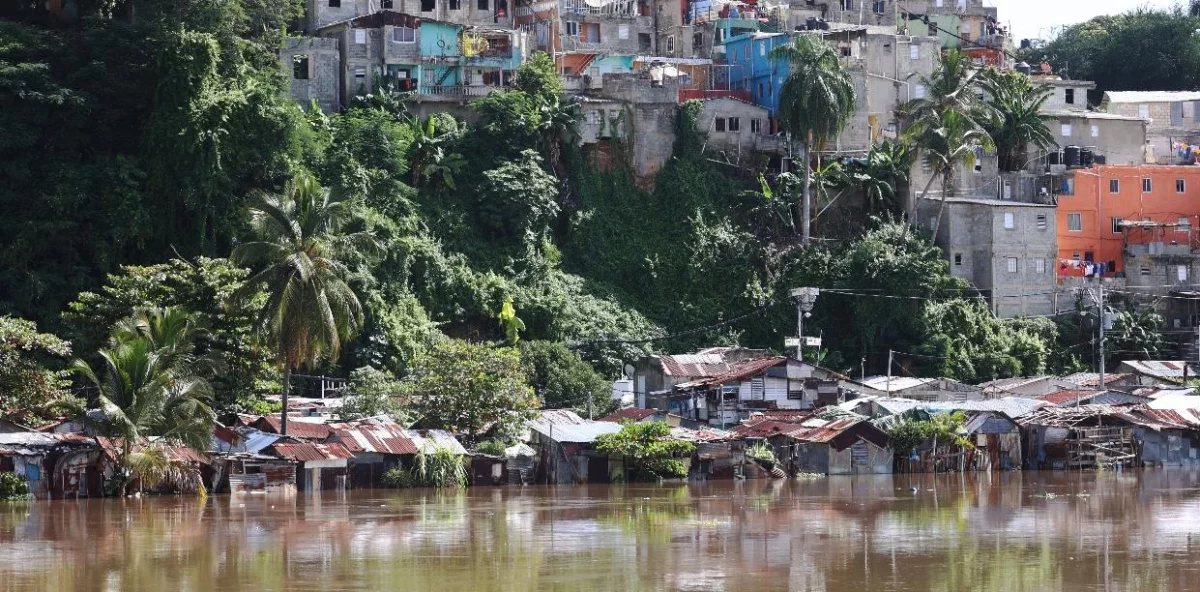
In the vulnerable neighborhoods of Greater Santo Domingo, shortages show up every day: homes store water because it doesn’t arrive regularly, deteriorated streets hinder transit, and families must stretch their income to cover the cost of food.
During visits to Los Guandules, Guachupita, La Ciénaga, Gualey, and Los Tres Brazos, residents described the difficulties they face in accessing basic services and employment. They questioned the lack of attention their communities receive from the authorities.
In La Ciénaga, Edward Bautista Mueses, 55, who has lived in the area for 24 years, explained that water arrives on Thursdays and sometimes on Sundays, but it needs pumps to bring it up to the homes. Families must have tanks to store it.
Added to this are deteriorated streets that damage vehicles, power outages lasting up to eight hours, and precarious housing. According to Bautista Mueses, the lack of job opportunities and deficiencies in public services contribute to keeping families in poverty.

Dolores Arias, Residents of Los Guandules

Atilano de la Cruz, resident of Los Tres Brazos
He questioned the presence of politicians in the neighborhoods, saying they come only during election campaigns to seek votes and then forget or stop addressing residents’ needs. In addition to the difficulties with basic services, the cost of food reduces families’ ability to meet their needs. This was expressed by Dolores Arias, 70, a resident of Los Guandules, who earns a living selling chopped chicken and soft beans. According to her, prices change constantly, making it difficult to support her family.
Arias receives RD$1,600 monthly from the Aliméntate program , assistance he considers helpful given his lack of resources. However, he indicated that having a safe home and a street in good condition would also contribute to improving his living conditions. He added to these difficulties the problems of receiving potable water, which is only available on Tuesdays and Saturdays, until 3:00 p.m.
In Los Cocos de La Lira, in Los Tres Brazos, Atilano de la Cruz, president of the neighborhood council, maintained that communities must resort to protests to get answers to their demands.
Among the problems he listed were the lack of garbage collection, deficiencies in the electricity service, and unemployment.
However, De la Cruz acknowledged that she also receives public services that contribute to her well-being. She valued the medical care she receives through her health insurance, explaining that she attends therapy sessions several times a week for spinal problems without having to pay for them.
In Guachupita, José Antonio Meléndez , owner of a carpentry workshop and a resident of the area for 20 years, described a different situation regarding water supply and garbage collection, services which, he said, operate according to the established schedule. However, he considered it necessary to expand hospital capacity, as the existing facilities remain overcrowded.
Meléndez also questioned the extent of the financial aid that families receive through Aliméntate.
In his opinion, the RD$1,600 from the program barely covers part of the food for a day or a day and a half, due to the high prices.
In Los Guandules, Juana Julia Reyes, owner of a small grocery store and resident of the neighborhood for 30 years, pointed out that blackouts and interruptions in the water supply make life more expensive for families, who must buy inverters, tanks and other equipment to compensate for the deficiencies in public services.
Although he acknowledged that garbage collection is done daily on his street, Reyes felt that continuous access to water and electricity should be guaranteed.
Pedro Acevedo, 88, a resident of Gualey for more than three decades, pointed out the deterioration of his home along with those of his neighbors and recalled that the last time his street was repaired was during the government of Hipólito Mejía, in 2000.
They warn about official measurements.
In separate articles published this week in HOY, economists Jenny Torres, Magdalena Lizardo, Francisco Tavárez, and Isidoro Santana all emphasized that the official measurement of poverty in the Dominican Republic must go beyond monetary income and incorporate the actual living conditions of households. They proposed complementing the indicators with measurements of multidimensional poverty and vulnerability.


Why can’t the government just relocate residents and place them in temporary housing, demolish the neighborhood and reconstruct the neighborhoods with plumbing, electricity, water, and better infrastructure, and relocate the residents back to the same neighborhood but with better accommodations?