
High medical co-payments worry authorities



Santo Domingo — High co-payments and medical price differences that drain the pockets of those affiliated with the Family Health Insurance (SFS) when they seek medical care also concern the system’s authorities.
Faced with this reality that harms patients’ finances, the Minister of Labor and President of the National Social Security Council (CNSS), Eddy Olivares Ortega, assures that this body is committed to reducing the economic burden on its members, while the Director General of the Directorate of Information and Defense of Social Security Members ( DIDA, Elías Báez, describes medical co-payments as unfair and calls for a system of consequences.
The president of the CNSS and the director of DIDA issued their opinions, separately, when referring to a publication by Listín Diario that details the high economic pressure generated in patients by co-payments and differences that they must disburse for health services, whose estimate for 2026 exceeds 24 billion pesos, according to a technical report prepared by Dr. Pedro Ramírez Slaibe, a specialist on the subject.
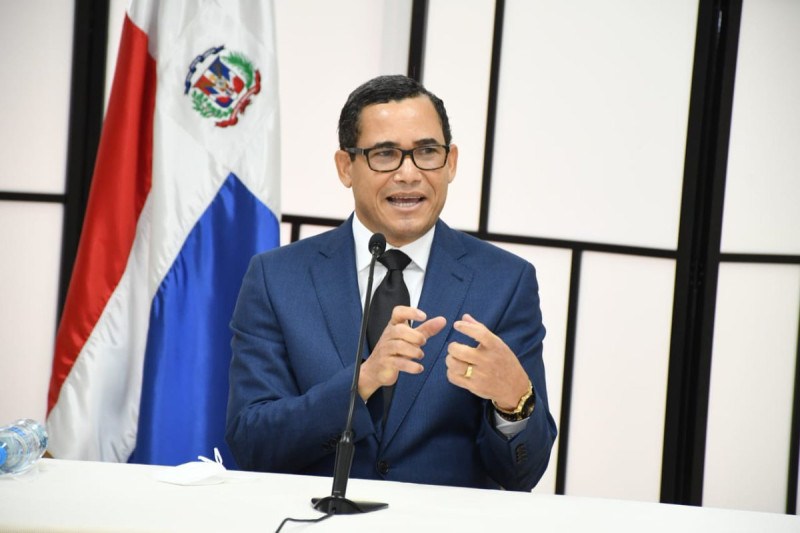
Eddy Olivarez Ortega, Minister of Labor and President of the CNSS.
However, he acknowledges that the search for greater coverage and lower economic burdens for members constitutes a permanent challenge for social security.
He also highlighted the commitment to continue promoting spaces for dialogue and consensus with all actors in the Dominican Social Security System (SDSS) to identify viable alternatives that allow for continued reduction of out-of-pocket expenses, expansion of coverage, and improvement of the benefits received by members.
He said this aligns with measures adopted in recent years to strengthen the financial protection of members of the Family Health Insurance (SFS).
“The CNSS recognizes that the search for greater coverage and lower economic burdens for members constitutes a permanent challenge for social security,” he noted.
He reported that the CNSS recently asked SISALRIL to conduct a comprehensive review of the PDSS, which will help improve benefits by adding more in-demand and innovative medical procedures to coverage.
In addition to these efforts, he added that through Resolution No. 553-02, dated September 22, 2022, the Council approved a 50% reduction of the variable co-payment applicable to important services of the Contributory Regime, decreasing from two to one minimum wage the maximum limit that members had to assume in procedures such as hospitalizations, cesarean sections, surgeries, and other high-frequency and high economic impact services.
In his opinion, these decisions have provided concrete relief for Dominican families, strengthening an essential principle of social security: protecting people when they most need medical attention and preventing a health condition from becoming a household financial burden.
It also noted that the Council has continued to strengthen outpatient care, one of the services most in demand.
In that regard, he added that, through Resolution No. 624-02, dated October 31, 2025, the Council approved an increase in the amount recognized for medical fees for outpatient consultations, raising it from RD$500 to RD$750 and including specialized, dental, psychiatric, and psychological consultations.
“The most important aspect of this measure is that the increase was absorbed by the system without passing on higher costs to members,” he emphasizes.
It highlights that these advances reflect a public policy aimed at strengthening social protection, reducing barriers to access, and ensuring the population has greater support against health risks.
Unfair charges
Likewise, the general director of DIDA considers it unfair that doctors burden patients with differences that are not contemplated in the contracts they sign with the Health Risk Administrators (ARS) and warns that no one can change the established rules.
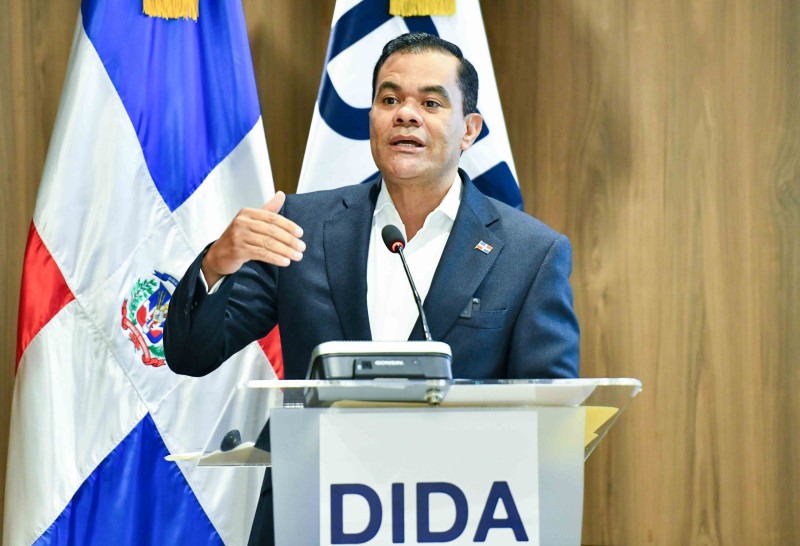
Elias Baez, director of Dida.
Elias Baez said that’s why he insists the solution isn’t just about the amount. “It’s about having a clear limit, rules everyone knows, and a system of consequences that is enforced.”
Remember, in this country, a patient can receive medical care through three channels: the public system, where the state covers the doctor’s fees and the patient receives treatment free of charge; a doctor who doesn’t accept insurance. They set their own consultation fee, and the patient can decide whether to go.
And the third is the doctor who is part of the social security system. “There is a regulated system there, with rates established by the authorities. The ARS (Health Risk Administrator) presents the doctor with what it pays for each service, and if the doctor agrees, they sign a contract and commit to fulfilling it.
Regarding this last option, the director of DIDA emphasizes that no one is obligated to belong to social security, but that whoever decides to be part of the system, and receives the thousands of patients that the system provides, must respect the rules they accepted and that what cannot happen is that an agreement is signed with the ARS and then the member is charged an additional fee that is not contemplated.
“We understand that some doctors consider the fees low, and that is a legitimate debate that should take place in the appropriate forums: with the Health Risk Administrators (ARS), with SISALRIL (the Superintendency of Health Insurance for Labor Risks), and in the National Committee on Professional Fees. What is not fair is that the insured person ends up paying that difference, and even less so that they are charged twice: once for the consultation and again when they return to deliver their results,” he said.
In his opinion, if tomorrow the ARSs were to pay RD$3,000 per consultation, but there were no clear rules or consequences, the problem would continue, and that is why he insists that the solution does not only involve the amount, but also having a clear limit, rules that everyone knows, and a system of consequences that is applied.
However, he noted that, in this regard, he values the steps SISALRIL has taken with its recent circulars and believes it is now time to strengthen compliance.
“This implies that the provider who fails to comply will be held responsible, and that the ARS (Health Risk Administrator) that is aware of these practices in its network will also assume its responsibility.”
He recalled that, for that purpose, DIDA presented SISALRIL with a collective advocacy proposal calling for a cap on the difference in specialized consultations and for consultations that deliver results not to be charged as new consultations.
He also called for the resumption of primary care implementation. “It is a proposal to build, with all sectors, a fairer system for the member and a more sustainable one for those who provide the services,” Báez emphasized in a written statement.
He pointed out that we always tell the member: “Know your rights, always demand your receipt, and if you are overcharged, go to DIDA.”