

Rare earth reserves could be larger; Paliza says studies will conclude by the end of the year


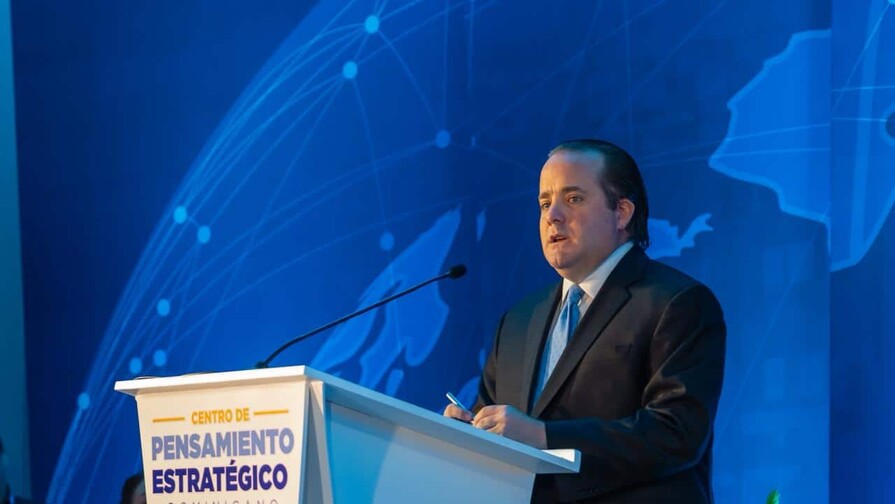
The exploration of rare earth reserves in the Dominican Republic is progressing daily, with the potential to become the next major industry for the Dominican economy. This Wednesday, the Minister of the Presidency, José Ignacio Paliza, confirmed that by the end of this year, an estimate of the quantity and quality of these minerals in the country will be available.
“At one point, President Abinader spoke of 60 million gross tons … No, no, it seems to be much more than that; it could be up to twice as much,” he said.
According to the official, the project is still in the exploration phase. To date, 3,527 meters of boreholes and 3,100 meters of test pits (small to medium-scale excavations) have been completed, and 10,000 samples are expected by the end of the year.
“With global demand for rare earth elements expected to double by 2030, we would be part of one of the most important supply chains of the 21st century,” Paliza said during his participation today in the first International Congress of Geopolitics.
Paliza indicated that if the conditions are in place to develop an industry around this resource, “it would make Barrick Gold, to give just one example, a relatively small company compared to the size of what that industry could mean for our country.”
The minister stated that, based on the information available so far, the deposits in the Ávila Fiscal Mining Reserve (Pedernales) have favorable characteristics for exploitation, with minimal environmental impact.
“There are places where there are many rare earth elements , but the waste generated by their transformation has such an impact that their exploitation is not worthwhile. In our case, it seems that we have them in very healthy or very favorable conditions, so to speak,” he said.
He also maintained that this project will probably have to continue in future Government administrations, due to the time and level of technical specialization required to develop an industry of this magnitude.
Potential in the global supply chain
Paliza argued that rare earth elements have the potential to transform the Dominican economy due to their importance in industries linked to the energy transition, artificial intelligence, defense systems, batteries, and electronic components.
He indicated that more than 80% of the world’s production of these minerals currently comes from China, a situation that has generated concern in the United States and other Western powers due to dependence on a single supplier.
He also asserted that countries capable of guaranteeing access to strategic minerals such as lithium, cobalt, copper, and rare earth elements will have economic, technological, and military advantages in the coming decades.
Despite the progress made in recent years, he insisted that the Dominican Republic must strengthen its energy, logistics, and technological infrastructure to capitalize on opportunities arising from the reorganization of the global economy.
Pedernales on the new strategic map
Paliza also linked Pedernales‘ mining potential to a broader regional positioning strategy, supported by logistics, energy, and technology projects.
Among them, he mentioned the development of the Port of Manzanillo, the expansion of renewable energy, and Google‘s investments in digital infrastructure in the country.
In his opinion, the Dominican Republic has the conditions to become a regional center for logistics, energy, and technology if it manages to consolidate institutional stability, human capital, and state execution capacity.


Luis Abinader spoke of 150 million tons of gross rare earth deposits, not 60 million tons as Paliza said.