
The Dominican Republic signs agreements to provide training in artificial intelligence and accelerate educational digitization.


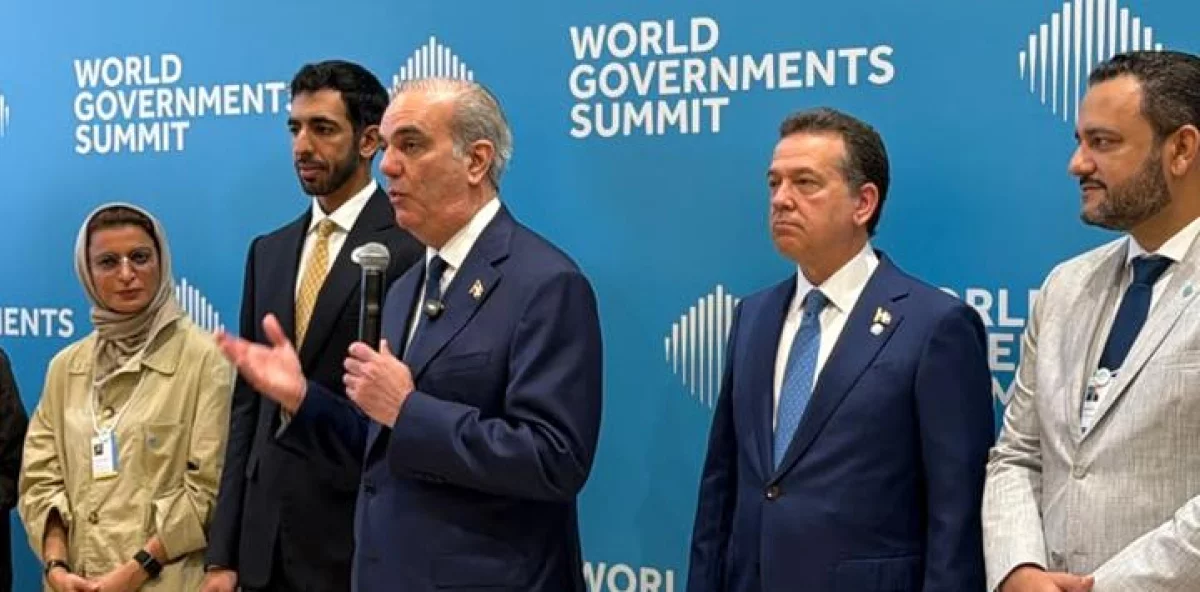
Cap Cana, La Altagracia, Dominican Republic – The Dominican Republic signed cooperation agreements with the Government of the United Arab Emirates to promote training in artificial intelligence, strengthen digital education, and improve the capacity to implement public policies, through three initiatives presented during the World Government Summit Dialogue for Latin America and the Caribbean.
One initiative is AI Prompt, which includes one million scholarships to train people interested in acquiring artificial intelligence knowledge through a program developed in coordination with the Technological Institute of the Americas (ITLA).
The Deputy Minister of Government Coordination and Monitoring, Luis Madera, explained that this training will target the general population and will not be limited to a specific group of young people or students.
The second agreement, signed with the Ministry of Education, seeks to strengthen the country’s digital education strategy by incorporating technologies, processes, and work protocols into the education system to improve student learning.
Mabely Díaz Soriano, Director of Data Intelligence and head of the Public Policy Laboratory at the Ministry of the Presidency, clarified that this initiative does not consist of direct training for students, as is the case with the ITLA program, but rather in strengthening and digitizing the educational system itself to adapt teaching methods to the technologies used by new generations.
The third initiative corresponds to public policy accelerators, a methodology from the United Arab Emirates that seeks to improve the Government’s execution capacity through 90- to 100-day work cycles with concrete results.
He explained that the mechanism allows the Government to take existing public policies, such as training in science, technology, engineering, and mathematics (STEM), and accelerate their implementation to achieve progress within defined timeframes.
He said the Ministry of the Presidency has a Public Policy Acceleration Laboratory and that the cooperation will let them benefit from the experience and methodology developed by the United Arab Emirates, which has used this model for many years.
Díaz Soriano reported that the two governments’ cooperation includes around seven initiatives in progress, including projects to improve the user experience at airports, create a single health record, modernize customs processes, and improve transit and transportation.
He also mentioned Customer Pulse, an application that seeks to strengthen the State’s ability to understand citizens’ perceptions of public services.