
70% of breast cancer cases are detected late in the Dominican Republic


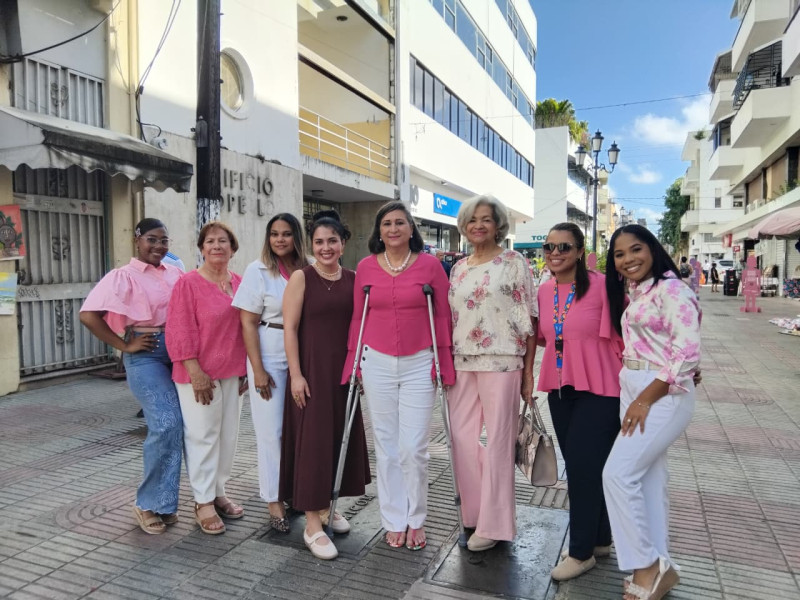
In the Dominican Republic, late diagnosis of breast cancer is around 70%, with residents in rural areas being the most affected.
Against this backdrop, the Women in Solidarity Association (AMSI) and Novartis adorned El Conde Street in the Colonial City with an exhibition of purple and pink statues, sending a message about closing health gaps and promoting prevention.
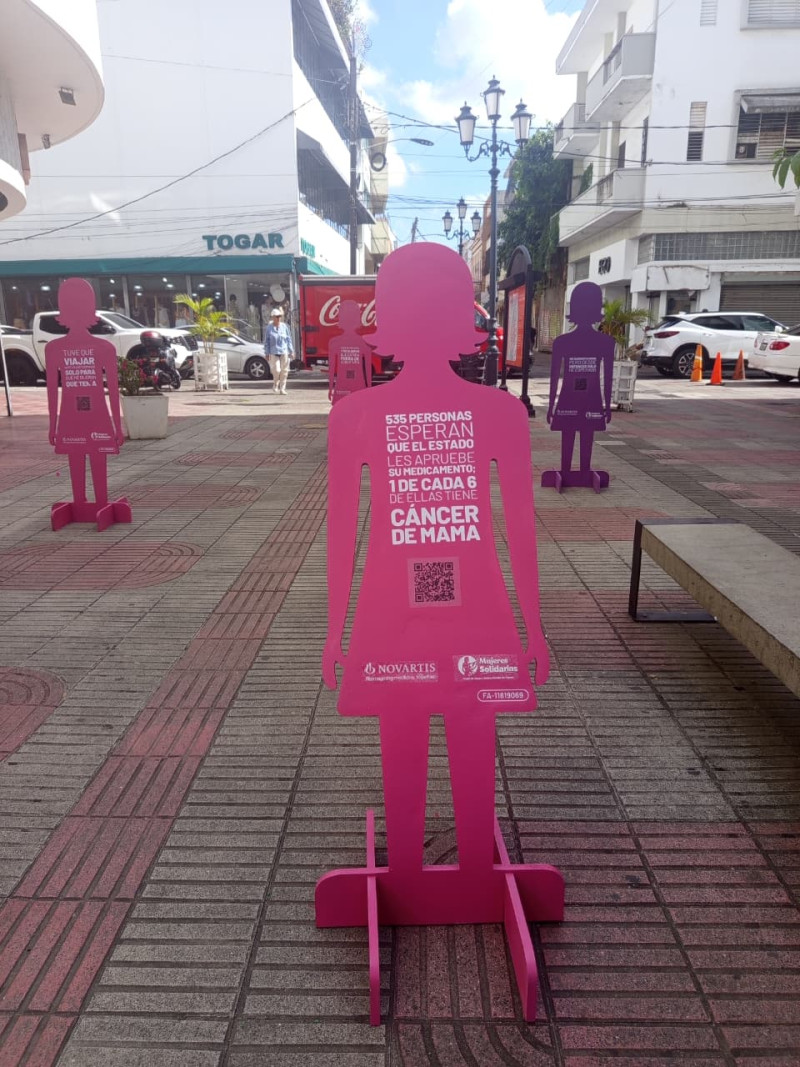
“The only center that treats this is hours away from my house,” “six out of ten women find out they have cancer when it’s already advanced,” “outside the National District, this feels like being outside the system”; in rural areas, more than half of us barely made it to school; we don’t know what signs to watch for in our bodies.” These complaints were inscribed on the statues as a form of protest to raise awareness among citizens and authorities.
However, late diagnosis is only one of the challenges women face in this process.
“Not all women have the same access to healthcare. For women who rely on state assistance, responses are slower because demand is high and supply is low. Some have the opportunity to receive care at low-cost private hospitals and may receive better treatment, but not all women have access to private care, especially in rural areas and in the most remote parts of the country, such as the deep south,” stated Dorka Díaz, president of AMSI.
Díaz, a breast cancer survivor who has overcome three diagnoses thanks to early detection, pointed out that the problem is exacerbated by the fact that cancer centers are concentrated only in the National District and the city of Santiago. Therefore, she continues to advocate for more specialized cancer treatment centers.
“The Government presented us with a project in previous years to build specialized cancer centers in three vulnerable areas—in the east, northwest, and southeast—but it hasn’t materialized. We don’t see it happening, so for those people, traveling to the capital or to Santiago represents a very high healthcare cost,” he noted.
She stated that people who have to travel from rural or remote areas of the country face a clear ordeal: There are women who have to travel for hours to receive care; some, when they are seen in small centers in their town, find that their tests have already expired. When they go to Santiago, they have to spend money again, and these are people who, when they receive a diagnosis, often die trying because access to healthcare is very expensive.
Following this demonstration, Norka Díaz highlighted the importance of listening to and supporting women throughout the entire process, strengthening patient guidance, facilitating timely access to health services for some, and proposing comprehensive, continuous care regardless of where they live or their socioeconomic conditions.
Other pathologies
During the event, the association president, Dorca Díaz, revealed that more than 5,000 patients with different diseases are on a waiting list for treatment in the country.
He also said that although including more than 2 million families in the subsidized health insurance increased access and led to more diagnoses of various pathologies, the state budget for high-cost medicines has not increased since 2020.
So, the high-cost budget was increased, but it hasn’t been increased again since 2020. “So, with greater access to healthcare through that subsidized insurance, there are certainly more diagnoses of different pathologies, especially breast cancer,” she said.
About AMSI
The Women in Solidarity Association (AMSI) is a non-profit organization that, for more than 20 years, has worked in the Dominican Republic on education, promoting early detection, guidance, and comprehensive support for women diagnosed with and survivors of breast cancer, as well as their families.
Within its financial means, the Women in Solidarity Association offers financial support for chemotherapy treatments, radiotherapy, tests, and studies.
However, it does not have funds to cover high-cost medications, which can cost 200,000 to 600,000 or more, according to the president of AMSI.