
AI, ethics, and Adompretur: inside the First International Tourism Journalism Forum


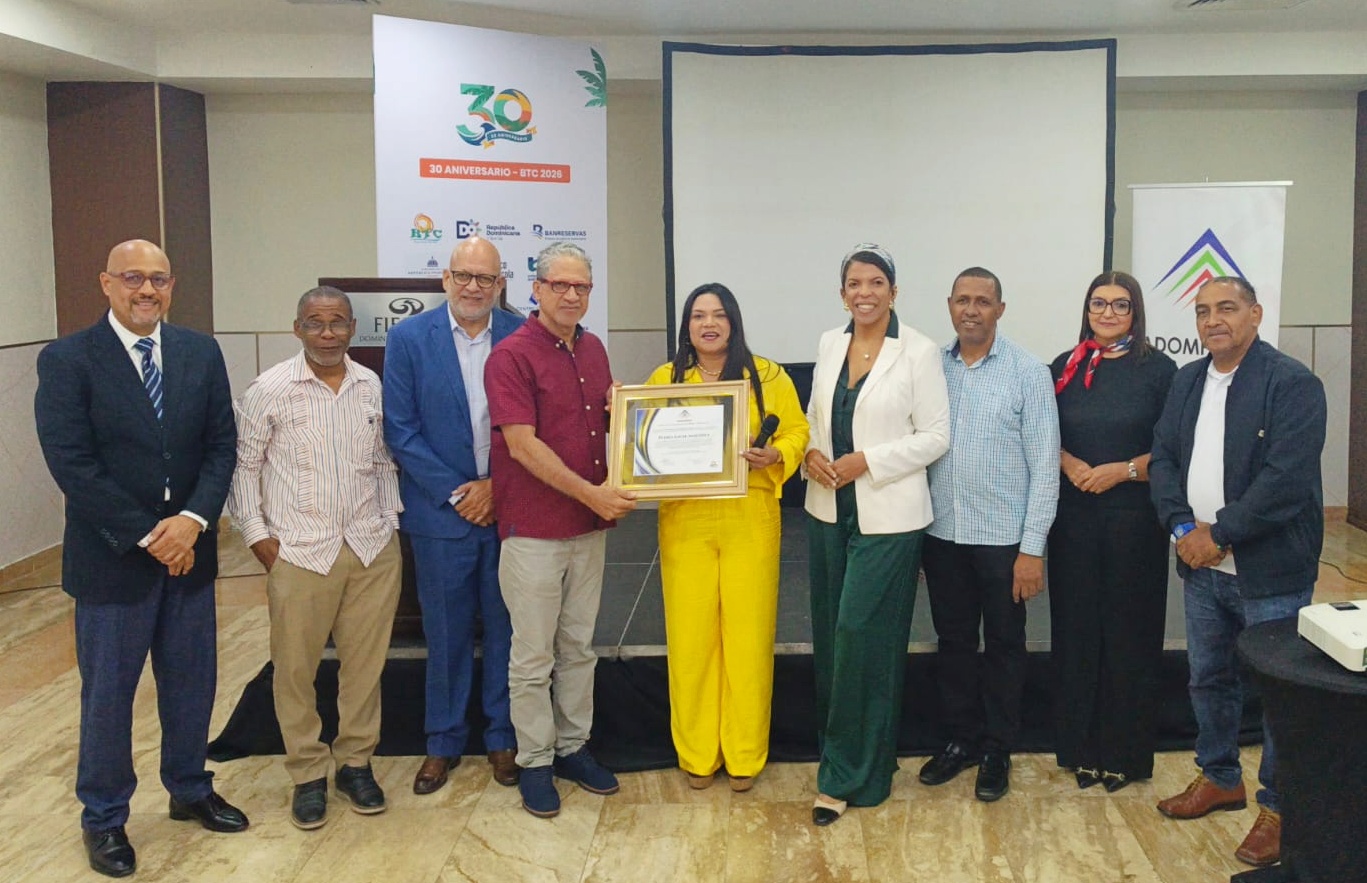
Santo Domingo.- Tourism is rarely short on glossy brochures, pristine drone footage, and catchy destination slogans. But behind every postcard-ready beach or mountain retreat lies a complex web of community impact, territorial planning, and digital disruption. Tackling these realities head-on, the Dominican Association of Tourism Press (Adompretur) convened journalists, regional experts, and industry leaders this Friday at the Hotel Dominican Fiesta for the First International Tourism Journalism Forum.
Held under the banner “Count, Connect, and Transform,” the gathering coincided with the 30th anniversary of the Caribbean Tourism Exchange (BTC). Rather than serving as a ceremonial pat-on-the-back session, the forum tackled the evolving responsibilities of specialized journalism in an era dominated by artificial intelligence and algorithmic noise.
Beyond the postcard: ethics and new narratives
Kicking off the discussions, Argentine journalist Fernando Milo set an introspective tone for the day. Milo challenged reporters to move past superficial promotional coverage, urging them to craft narratives that anchor travelers to the social, cultural, and environmental dimensions of the destinations they visit.
That call for depth echoed throughout panels dedicated to community-based tourism and territorial management. Discussions spotlighted sustainable development initiatives—such as projects backed by the Japan International Cooperation Agency (JICA) across the Cibao and Nordeste regions—emphasizing local identity, water resource management, and economic inclusion over mass-market homogenization.
Meanwhile, industry experts Milka Hernández and Juan Lladó tackled the friction points of domestic travel and public management. Conversations underscored the pressing need for better territorial planning, infrastructure quality, and transparent governance, drawing on lessons from the La Altagracia 2030 Strategic Plan to stress that environmental sustainability and community participation are non-negotiable for long-term competitiveness.
The algorithmic frontier and regional bridges
As the agenda shifted to the afternoon, the focus pivoted squarely toward technology and regional integration. Guillermo Molina Mueses unpacked the dual-edged sword of artificial intelligence in tourism reporting, weighing its utility in data management against the critical need for rigorous verification and human editorial oversight.
A subsequent international panel featuring Mexican analyst Armando de la Garza and Dominican specialist Cristina Rosario explored how digital platforms can be leveraged to forge authentic connections with modern travelers.
The day’s dialogues ultimately culminated in a broader strategic look at multi-destination tourism across Latin America and the Caribbean. Veteran figures Luis Felipe Aquino and Manuel Quiterio Cedeño advocated for closer institutional cooperation and shared itineraries, positioning regional storytelling as a catalyst for cross-border growth.
The Santo Domingo Declaration
The forum culminated in the formal adoption of the Santo Domingo Declaration on Tourism Journalism and Communication, a comprehensive ten-point charter crafted to overhaul travel reporting across Latin America and the Caribbean. Rather than settling for high-minded generalities, the manifesto establishes a concrete framework that repositions tourism journalism from mere destination marketing into a rigorous, ethically grounded discipline.
At its core, the document demands unwavering editorial independence, drawing a firm line between objective news coverage and sponsored promotional content, while calling for continuous professionalization in fields like spatial planning, data analysis, and tourism economics.
On the technological front, the declaration adopts a clear stance on digital transformation and artificial intelligence. While recognizing AI as a valuable asset for data processing and investigative research, it strictly asserts that automated tools must remain subordinate to human editorial judgment, fact-checking, and ethical oversight.
The document further elevates environmental stewardship, community-based tourism, and transparent public governance as essential storytelling pillars, urging journalists to champion emerging local destinations while holding infrastructure management and public spending accountable.
Looking outward, the declaration frames regional integration as a vital path forward. It advocates for collaborative cross-border reporting and shared multi-destination itineraries that unite Caribbean and Latin American nations through historical and cultural ties.
Notably, the manifesto embeds an explicit call for regional solidarity, urging media outlets to reject harmful cultural stereotypes and to support responsible coverage that recognizes Haiti’s long-term potential for sustainable tourism development once adequate safety, stability, and community protections are in place.