

Amber Highway: the project that will change the economic map of Santiago and Puerto Plata


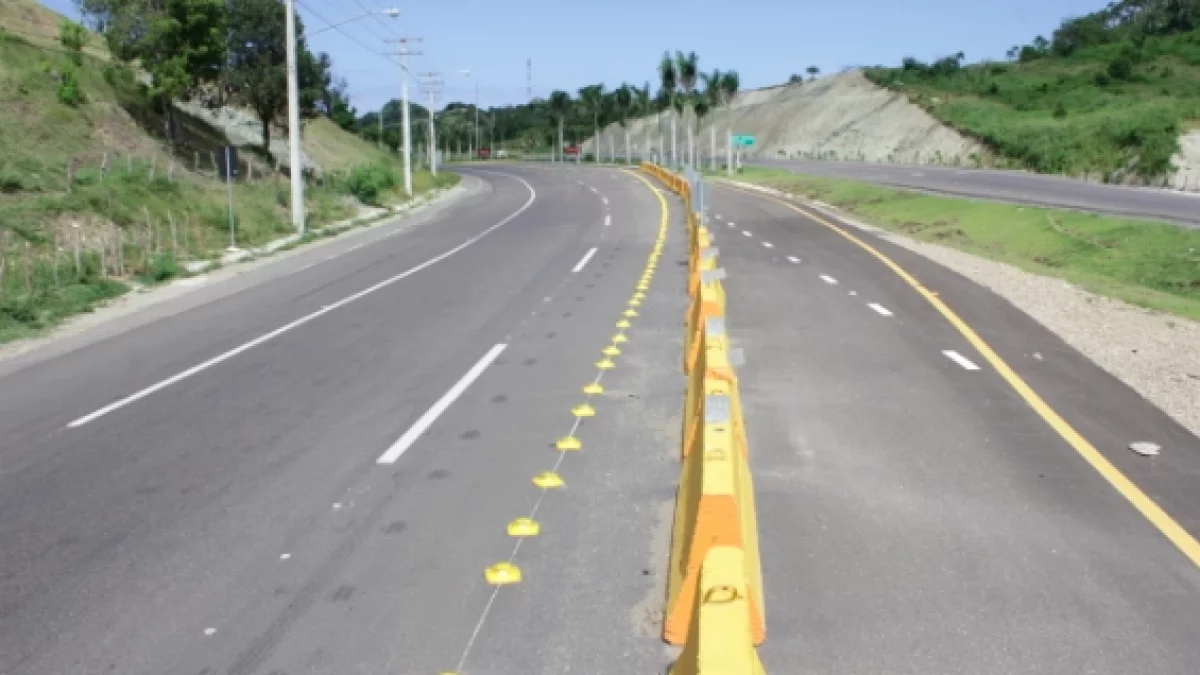
Puerto Plata – The Amber Highway is not just another road on the country’s list of pending projects. It is a strategic route that, if completed in accordance with the announced technical standards, could change how Santiago, Puerto Plata, and the entire North Coast connect, produce goods, receive visitors, and project their economic growth for decades to come.
The project has once again become the focus of public attention due to the progress of the bidding process, the evaluation of technical offers, and the expectations it generates in Santiago, Puerto Plata, Montellano, Sosúa, Cabarete, the Gregorio Luperón International Airport, and the North Coast tourist corridor.
Although many know it as a highway to reduce travel time between Santiago and Puerto Plata, the Amber Highway has a deeper meaning: it will connect the main economic center of the Cibao with a tourist province that seeks to reposition itself with new hotels, real estate, an airport, and commercial projects.
According to official data reviewed by InfoENN – El Nuevo Norte, the road would be approximately 32 to 32.7 kilometers long, with four lanes, two in each direction, and a design speed of around 100 kilometers per hour. Its objective is to create a modern, more direct, and safer connection between the Santiago Northern Bypass and the Puerto Plata–Sosúa highway.
A key point, little explained in the public debate, is that the highway would not lead directly to the urban center of Puerto Plata, but to the Montellano area, connecting with the Puerto Plata–Sosúa corridor, near the axis that links Puerto Plata city, Gran Parada, the Gregorio Luperón Airport, Sosúa, and Cabarete.
That detail completely changes the interpretation of the project. Montellano would cease to be just a transit town and would become a strategic hub for road, tourism, logistics, and real estate development.
From that point, vehicles leaving Santiago can be routed to Puerto Plata, Sosúa, Cabarete, Playa Dorada, Maimón, the airport, Punta Bergantín, and other key points on the North Coast, without relying exclusively on traditional routes.
A mountain road with modern engineering
The Amber Highway would traverse a mountainous region, but it is not designed as a narrow, slow road full of sharp curves. The available technical documents describe a mixed road solution, with open-air sections, cuts into the terrain, fills, retaining walls, bridges, viaducts, interchanges, overpasses, and tunnels.
Among the most important elements of the project is the construction of two tunnels, one approximately 1.8 kilometers long and another approximately 0.7 kilometers long, designed to cross mountainous areas and reduce the need for curves and slopes, and to reduce driving risks.
This characteristic distinguishes it from the Gregorio Luperón Tourist Highway, a historic and necessary road known for its curves, steep slopes, and more demanding driving conditions.
The new highway aims to provide a more continuous, faster, and safer route for light vehicles, tourist transport, buses, commerce, cargo, business services, and airport connections.
The real impact would be on regional development
The project could have a direct impact on the economies of Santiago and Puerto Plata. Santiago represents the commercial and industrial heart of the Cibao region, while Puerto Plata is one of the country’s main tourist destinations, with beaches, hotels, ports, an airport, real estate developments, and a coastal corridor with strong expansion potential.
A faster connection between the two provinces can increase the flow of domestic visitors, boost the transport of goods, facilitate the movement of workers, reduce logistics costs, and raise the value of land and properties in areas near the route.
In Puerto Plata, the effect could be felt especially in Montellano, Gran Parada, Sosúa, Cabarete, the area around Gregorio Luperón Airport, and areas linked to the development of Punta Bergantín.
The project could also benefit suppliers, builders, tour operators, transporters, investors, merchants, hotels, restaurants, and residential projects that depend on better connectivity with Santiago and the rest of the country.
Punta Bergantín, the airport, and the new North Coast
One of the least publicly discussed points is the relationship between the Amber Highway and the new tourist map projected for Puerto Plata.
Punta Bergantín has been presented as one of the most important projects to revitalize tourism in the area. For this type of development to work at scale, land connectivity will be crucial.
A modern highway from Santiago would facilitate the arrival of investors, visitors, employees, suppliers, construction companies, and related service providers in the area. It could also strengthen the role of Gregorio Luperón International Airport as a more attractive terminal for travelers from the Cibao region.
If the airport can connect more effectively with Santiago via a faster route, Puerto Plata could compete more strongly as an air and tourist gateway for a significant part of the Dominican North.
The bidding process
The project is being promoted by the Ministry of Public Works and Communications through the RD Vial Trust. The national public tender, identified as FIDEICOMISO-CCC-LPN-2025-0010, seeks to contract the design and construction of the project.
Initially, the deadline for receiving proposals was set for March 2026, but the process was extended until May to allow greater participation and strengthen competition among interested companies.
Subsequently, RD Vial reported the receipt and opening of the technical bids for Envelope A of the process. Three bidders participated in this stage: Consorcio Autopista del Ámbar, Consorcio AutoAmbar, and Consorcio Ruta del Ámbar.
The phase included a Citizen Oversight Commission, public notaries, representatives of the bidders, and members of the Purchasing and Contracting Committee as part of the supervision and transparency mechanisms.
As of now, no final award has been publicly announced. What is known is that the process has advanced to the evaluation of technical bids, with the continuation of the procedure, the opening of financial bids from qualified participants, and the final award still pending.
A high-impact investment
The Amber Highway is estimated to cost more than RD$32 billion, making it one of the most important road infrastructure projects in the country.
But the value of the project should not be measured solely by its construction cost. Its greatest importance lies in its potential to impact the economic development of the North, the integration of two key provinces, and the expansion of tourism in an area with abundant natural, cultural, and real estate resources.
For Santiago, the highway represents a more direct route to the Atlantic. For Puerto Plata, it represents a stronger connection to the Cibao economic center. For Sosúa, Cabarete, and Montellano, it could mean a new stage of growth and urban pressure.
The challenges ahead
Enthusiasm for the project must also be accompanied by planning. A highway of this magnitude can bring development, but also challenges.
Montellano, Gran Parada, Sosúa, and Cabarete will need better land-use planning, land-use control, drainage solutions, road safety, access regulation, environmental protection, and adequate public services.
If connectivity improves, real estate, commercial, and tourism pressures will also increase. This growth can become a historic opportunity if managed strategically, but it can generate disorder if municipalities are not prepared.
The Amber Highway could change the economic map of Santiago and Puerto Plata, but its success will depend on more than just asphalt: it will depend on planning, transparency, the quality of the work, and the ability of the communities to integrate into the development.


Maybe the DR Government after this HWY is completed, will finally make a connection to the Moca Rd #21 to create the needed Cabarete by pass. This connection could be done just before the new HWY meets in Montellano.