

Haitian mothers’ share of births in Dominican Republic falls to 24%, SNS Reports


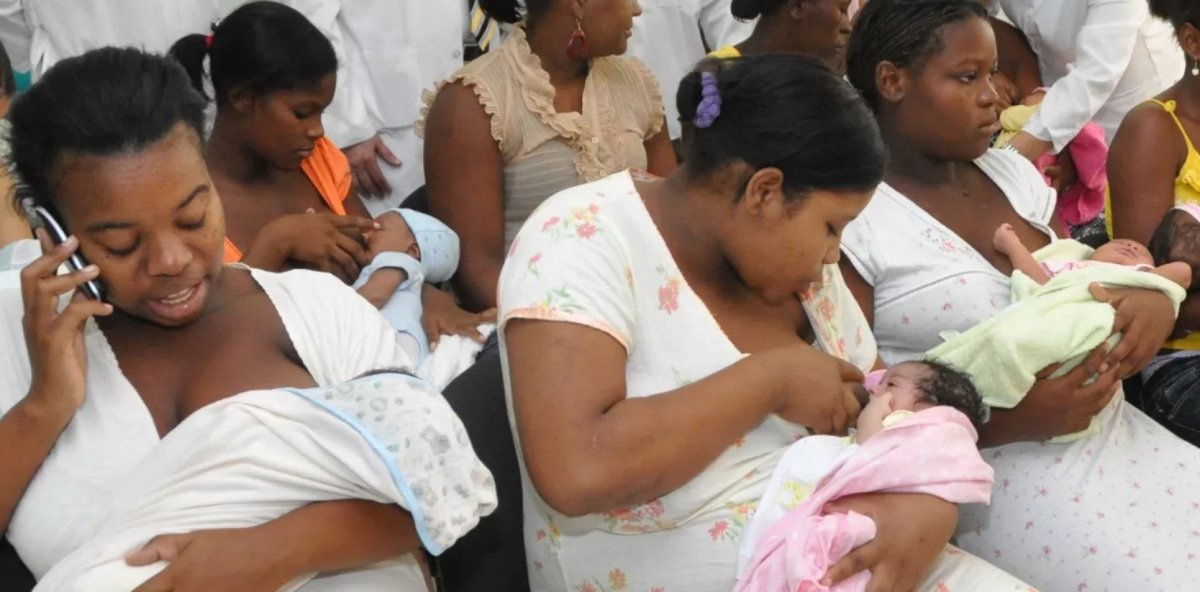
The National Director of Maternal, Child, and Adolescent Health at the National Health Service (SNS), Dr. Martín Ortiz, revealed that the birth rate of children to Haitian mothers decreased from 37% to 24% as a result of migration control measures.
Interviewed by journalist Federico Méndez on the program Esferas de Poder, which is broadcast on Sundays from 8:00 to 9:00 in the morning on RNN Channel 27, he stated that last year, there were 16,500 fewer births to Haitian foreign nationals.
Ortiz highlighted the immigration control that has been implemented in maternal care, as a result of some hospitals receiving a large number of patients, mainly Haitian nationals.
He stated that in 2024, statistics showed that 37% of births in the country were to Haitian mothers.
“That is to say, out of every 100 births, 37 were to Haitian nationals . With the immigration controls implemented last year, which began in March-April, this figure dropped to 24% , a very significant reduction.”
She revealed that Haitian women giving birth were attending the large maternity wards more frequently, while Dominican women were not attending.
“Today, in hospitals like the Nuestra Señora de la Altagracia maternity hospital or the San Lorenzo de los Minas maternity hospital, Dominican women are making significant contributions,” she emphasized.
He noted that attention to Haitian foreign nationals is still being given. Still, it has been declining because the National Health Service’s mission is to provide care to everyone who arrives at hospitals.
The doctor indicated that maternal and child health care has undergone a significant change in the last six years.
He noted that many hospitals across the country have been renovated to improve health center infrastructure.
He explains that more than 200 large hospitals and nearly 2,500 primary care units are being improved so people can go there to relieve pressure on the large hospitals.
“Today, all hospitals are accepting insurance cards from insurance companies, which means more people can go to our hospitals,” he added.
He highlighted that the imaging laboratories have been significantly improved, so that in a hospital with high-resolution capacity, people can go in and leave with their problem solved.
It claims to reduce teenage births by more than 50%.
The National Director of Maternal, Child, and Adolescent Health at the National Health Service (SNS), Dr. Martín Ortiz, stated that the birth rate among adolescents has decreased by more than 50% nationwide.
He stated that in the first half of the year, there were 1,000 fewer births among pregnant teenagers than last year, when 16,000 minors gave birth.
“That is, a 50% reduction, from 32 to 16,000. And in percentage terms, it went from 24 to 18.7. These are numbers that have a significant impact,” he argued.
Ortiz stated that there are currently 39 comprehensive care units for adolescents, both male and female.
“I’m going to give you a number, first an absolute number. In 2019, which is the year used as a reference, we had thirty-two thousand and some adolescent births annually,” he emphasized.
He explained that this represented 24% of births in the country, meaning that out of every 124 births, 24 were by teenagers.
However, Ortiz specified that 16,000 teenage births were registered last year.
The National Director of Maternal, Child, and Adolescent Health at the National Health Service (SNS), Dr. Martín Ortiz, revealed a decrease in the country’s birth rate.
“In this country and around the world, the birth rate is low. Here, it is estimated to be around 2.1 per family. For example, to give a point of comparison, in Haiti it is 8 per family,” he noted.
He describes the reduction in the birth rate as important, but notes that it is happening worldwide.
It indicates that babies who are within the first 28 days of life contribute the most to infant mortality and are the product of the fact that the primary cause is prematurity.
“We have a high rate of premature births in the country, and that means that infant mortality is impacted by this number of newborns with prematurity problems,” he argued.
He also said that infant mortality has decreased significantly due to several factors, such as improvements in hospitals, staff training, and the strengthening of neonatal intensive care units.
She attributes it to the expansion of pediatric intensive care beds, improvements in neonatal intensive care units, and vaccination.
“In 2024, 56% of our maternal mortality was among Haitian women. This past year, it was 52%. Currently, with the decrease in births to Haitian women, we are at 33% of our maternal mortality,” she explained.


seal the border and bring it to zero!
I approve this message.
Time to cut the number to ZERO.