
Can the tectonic plate near Venezuela cause earthquakes in the Dominican Republic?


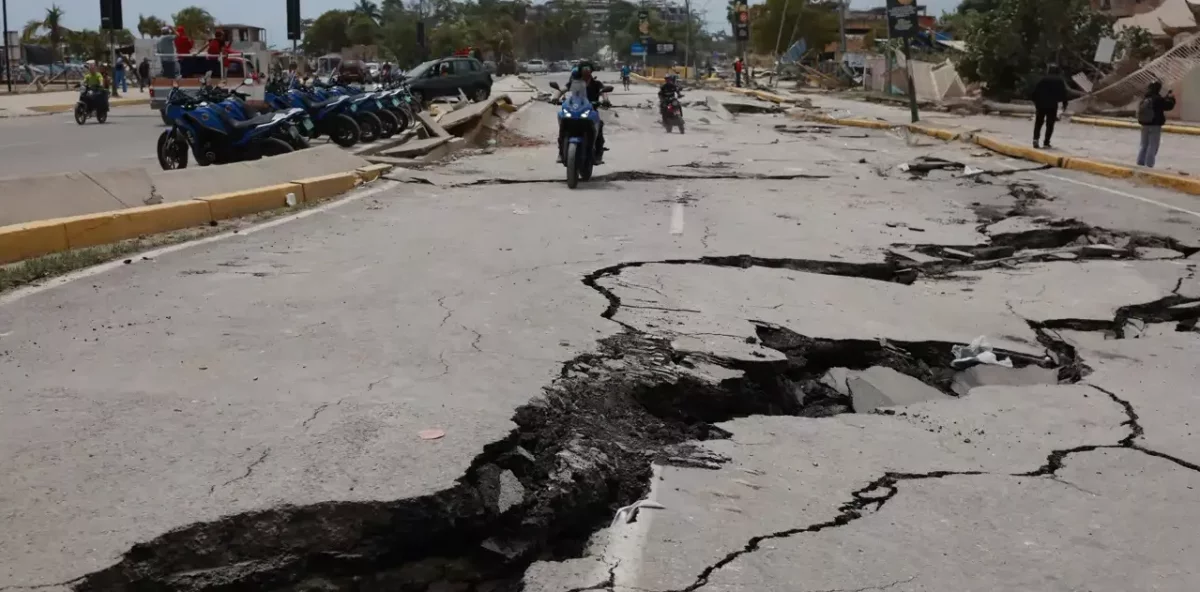
The two earthquakes that struck Venezuela on Wednesday, March 24, measuring 7.5 and 7.2 on the Richter scale, respectively, have already left more than 900 people dead, more than 3,000 injured, and more than 50,000 reported missing. So far.
The earthquake, which occurred shortly after 6:00 p.m., was also felt in the Dominican Republic. What explains this? Could the tectonic plate near Venezuela be causing earthquakes on this island?
Minutes after the earthquakes, whose epicenter was near Morón, Carabobo state, about 160-200 kilometers from Caracas, the newspaper Hoy contacted geologist Osiris de León to find answers to those questions.
The renowned expert explained that the Caribbean tectonic plate, mostly oceanic, exists between the two countries and encompasses other nations in the region, so “it is normal to feel” an earthquake that occurred in Venezuelan territory on Dominican soil.

Caribbean Plate.
In that order, he pointed out that between the Dominican Republic and Venezuela there is not such a wide distance in terms of seismicity, 900 kilometers, “but when we talk about seismic waves, both compression waves, which can travel at six thousand meters per second, that means that it can be felt in a large part of the Caribbean.”
“It’s not normal, it’s not frequent, it’s not common, but it can happen,” de León emphasized.
The one that moved
The structural basis for the earthquakes lies in the boundary between the Caribbean and South American plates. These plates rub against each other and slide past one another in northern Venezuela.
This friction sustained constant seismic activity along the strip that runs across the country from the border with Colombia to the central coast.
The International Organization for Migration (IOM), a UN agency, estimated that up to 6.76 million people may have been affected by the earthquakes, including a projection of two million people in Caracas.