
Coffee producers demand government support for the sector


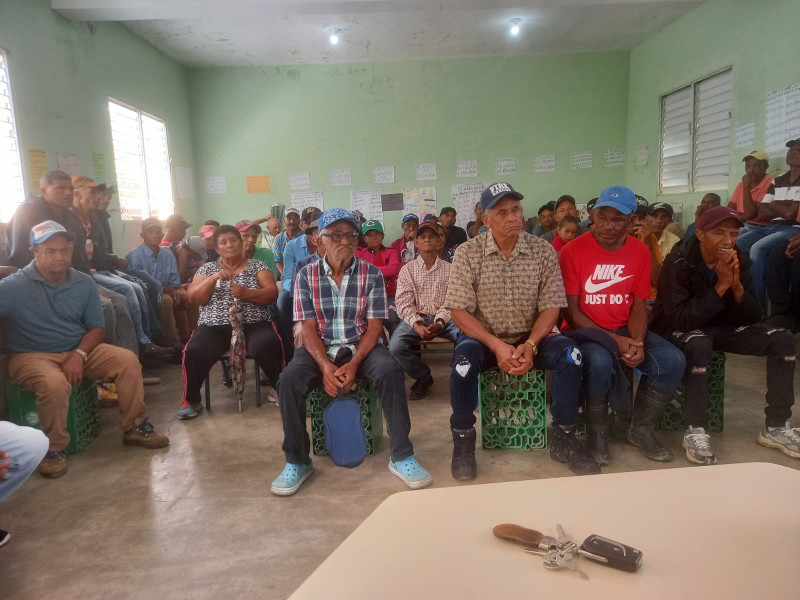
The National Network of Coffee Producers and Entrepreneurs (Reproca) and leaders of the coffee subsector raised their voices in alarm about the contradiction affecting the national coffee industry, because despite the improvement in the quality of Dominican coffee and the registration of historic international prices, between 60% and 70% of the coffee consumed in the country is imported.
Coffee growers asserted that this represents a significant drain on foreign currency, which in 2023 alone reached $54.6 million.
They pointed out that this situation benefits producers in countries such as Brazil, Vietnam, Honduras, and El Salvador.
Enrique Chalas, spokesperson for Reproca, explained that this dynamic is bleeding local producers dry. “It’s true that we export high-quality Dominican coffee, but the coffee imported to supply the domestic market is of poor quality,” Chalas stated.
“The Lost Years”
He indicated that the organizations have advised the Dominican Government to take advantage of market incentives. “Prices quadrupled, rising from 5,500 pesos per quintal in 2021 to 23,000 pesos in 2025. However, this increase has not translated into profitability for local producers due to the stagnation of national production,” Chalas stated.
State inaction is evident.
Reproca pointed out that the Dominican Coffee Institute (Indocafé) has received approximately 350 million pesos annually over the past six years, primarily for payroll expenses. This leaves producers without technical assistance and support in economic and social infrastructure, leading to the migration of young people to the cities.
They argued that the lack of a policy regarding the use of undocumented foreign labor compounds this situation. “We call for coffee farming to be established as a national priority. Dominican producers claim to have the capacity to cultivate 90% of the coffee demanded by the country if appropriate measures are implemented, which in turn will have a positive impact on water production and hydroelectric conservation,” the organization explained.
He notes that there is consensus on the urgency of protecting the ecosystem and producing water for a population that demands it in increasing quantities every day, and that coffee, due to its agroforestry qualities, is a natural water producer.
“Addressing the problems that limit coffee farming in response to rural development and food production, since coffee is developed in association with the production of the food basket,” explained the Reproca spokesperson.