

Dominican Republic opens Latin America and Caribbean Week at UNESCO


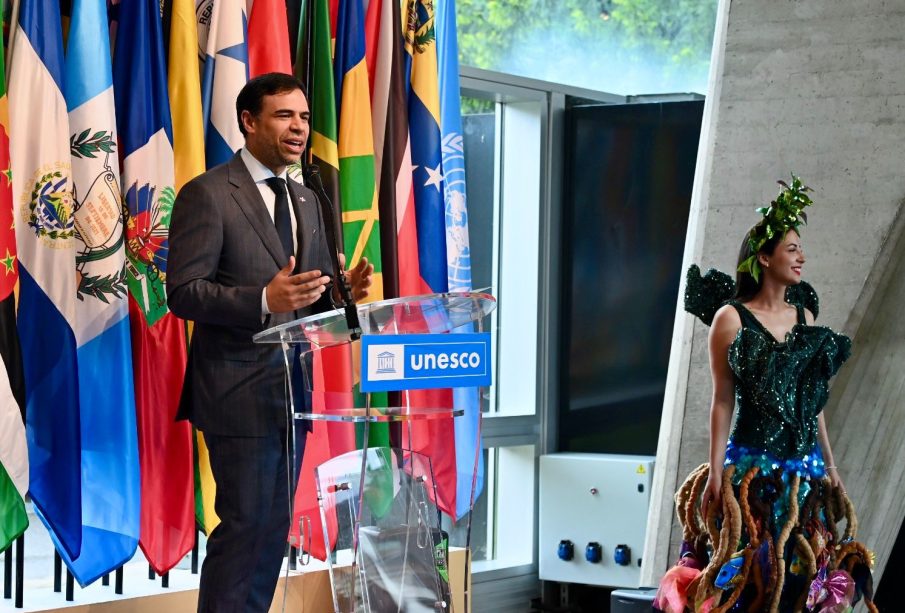
Paris.- Dominican Republic Culture Minister Roberto Ángel Salcedo inaugurated Latin America and Caribbean Week 2026 at UNESCO headquarters in Paris, highlighting the country’s rich cultural heritage and reinforcing its international presence in one of the region’s most important cultural forums.
The event, held from June 2 to 5 under the coordination of the Group of Latin America and the Caribbean (GRULAC), brings together representatives from across the region to promote intercultural dialogue, cultural cooperation, and sustainable development through art, gastronomy, film, academic discussions, and creative industries.
During the opening ceremony, Salcedo emphasized the shared history and diversity of Latin America and the Caribbean, describing the region as a vibrant blend of cultures, traditions, and identities. He also showcased the Dominican Republic’s internationally recognized cultural legacy, highlighting UNESCO-inscribed traditions such as the Brotherhood of the Holy Spirit of the Congos of Villa Mella, the Guloyas of San Pedro de Macorís, merengue, bachata, and the traditional knowledge associated with the preparation and consumption of cassava bread (casabe).
The minister underscored the importance of culture as a driver of peace, social cohesion, and sustainable development, while recognizing UNESCO’s role in protecting cultural heritage around the world. He also promoted the Dominican Republic’s candidacy for a seat on the UNESCO World Heritage Committee for the 2027-2031 term, a body responsible for evaluating World Heritage nominations and overseeing the conservation of globally recognized cultural and natural sites.
As part of the opening activities, the Dominican Republic unveiled an exhibition of traditional carnival masks representing different regions of the country. The display highlights the Indigenous, African, and European influences that have shaped Dominican identity and continue to define its cultural richness.
The event will conclude on June 5 with Caribbean Day, celebrating the region’s music, dance, gastronomy, and creative industries. The Dominican Republic’s participation further strengthens its position as a leading cultural destination in the Caribbean and showcases its growing role in international efforts to preserve and promote cultural heritage.


The UN does not condition the legitimacy of migration upon legality within the host country; rather, it demands that the host country ensure the safety of—and respect for the human rights of—all migrants, whether legal or illegal. In other words, the UN promotes illegal migration. The question is: Does the illegal status of migrants not violate the substantive rights of nationals? The UN never addresses the opinions, sentiments, or rights of nationals. They do not care about them—as if they did not exist. See: Global Compact for Safe, Orderly and Regular Migration.