
Economist calls for new policy toward Dominican diaspora as remittances near US$12 billion


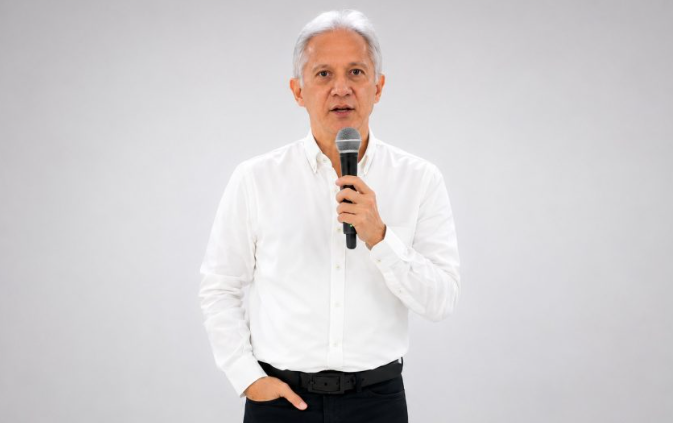
Santo Domingo.- Haivanjoe Ng Cortiñas, Secretary of Economic Affairs of the People’s Force (FP) party, has called for a new approach to the Dominican diaspora as remittances become an increasingly important source of foreign exchange for the country.
During a virtual lecture titled “Remittances and the Dominican Diaspora: From the Importance of Remittances to a Policy of Reciprocity, Investment and Return,” Ng Cortiñas analyzed the growth of remittances and their economic impact, emphasizing that behind the figures are millions of Dominicans working abroad and supporting their families at home.
According to figures presented during the conference, remittances rose from US$3.68 billion in 2010 to US$11.87 billion in 2025, more than tripling over the period. In 2025, they represented approximately 25.1% of the Dominican Republic’s main foreign-exchange earnings and 9.3% of GDP, he said.
The presentation also cited an estimated 3.03 million Dominicans living abroad, based on data from the Institute of Dominicans Abroad (INDEX).
Ng Cortiñas argued that the growth in remittances should primarily be attributed to the efforts of Dominicans overseas rather than government economic policies. He also said remittances have evolved from being viewed as supplementary household income to becoming a major pillar of the country’s external economy.
The economist highlighted the geographic concentration of remittance flows, noting that the National District’s share increased from 26% in 2011 to 49.7% between January and July 2026. He said other provinces, including Santiago, Santo Domingo, Duarte, and La Vega, have seen their shares decline over the same period.
He also pointed to seasonal variations, noting that December accounts for more than 9% of annual remittance transfers, which he associated with the additional financial effort made by Dominicans abroad during the Christmas season.
Ng Cortiñas said the size of the Dominican diaspora should prompt a broader discussion about the country’s ability to generate sufficient opportunities domestically. He argued that government policy should move beyond simply facilitating remittances and instead recognize Dominicans abroad as an important source of human, financial, entrepreneurial, and civic capital.
Among his proposals were a Special Investment Regime for the Diaspora, an investment and savings account for Dominicans living abroad, incentives for returning capital and investment, and a National Pact with the Dominican Diaspora focused on rights, investment, savings, knowledge, return, and protection.
“Remittances are a strength of the Dominican Republic; depending on them to sustain our development would be a weakness,” Ng Cortiñas said.
The lecture was organized by the FP’s Secretariat of Dominicans Abroad, headed by Marco Cross, as part of its training and outreach activities with party organizations outside the Dominican Republic.