
Eighty years after the San Zenón cyclone, the tree deficit in the capital is dramatic.


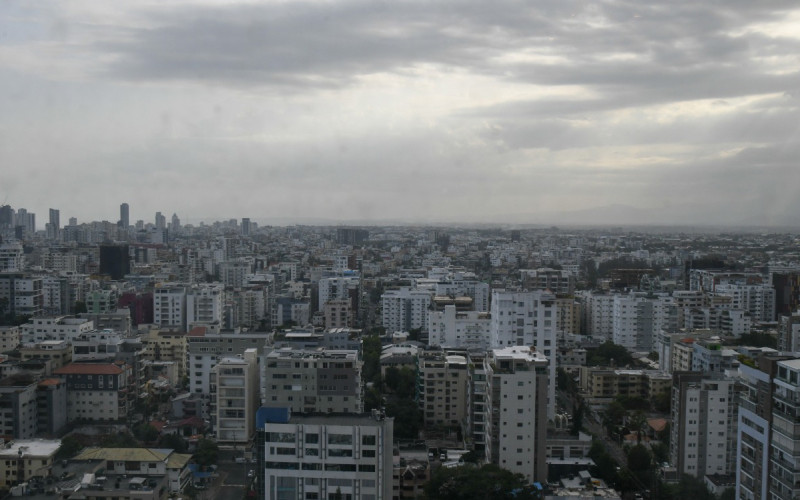
An inventory conducted by researchers from Intec, with foreign support, measured tree cover at only 15.4%, with more than 60% of the soil covered by cement, asphalt, and buildings, leading to increased temperatures and flooding.
Santo Domingo — Looking at photographs of the Dominican capital taken decades ago is surreal. To think that it once had avenues lined with oaks, laurels, mahogany trees, and, in general, a verdant landscape that stood out against the gray is to be transported to a time only past generations experienced.
The book “The Trees of Santo Domingo” lets us remember what the capital once was: Bolívar Avenue was a tunnel of pink oaks; a row of mahogany trees lined Duarte Avenue; and laurel trees shaded Independence Avenue.
All of those trees were planted on purpose, as part of tree-planting projects that, as the publication points out, followed the San Zenón cyclone in the 1930s.
Some 80 years later, the National District is a different city. An inventory conducted by researchers from the Technological Institute of Santo Domingo (Intec), with foreign support, measured tree cover at only 15.4%, with more than 60% of the soil covered by cement, asphalt, and buildings, which has increased temperatures and flooding.
However, the loss didn’t happen all at once. Academic studies, municipal archives, and documented tree removals detail how major road construction projects and high-rise buildings led to the disappearance of yards and gardens. This, combined with the use of poorly chosen species and the failure to implement tree-planting plans, gradually stripped the city of its greenery.
Sowing and loss
The book “The Trees of Santo Domingo” details how the Tree Society was founded in 1908 to plant 300 almond trees. In 1929, a Senate act mandated reserving space for “trees and grass in the streets of the widened areas” more than 15 meters wide.
In 1956, the first Regulatory Plan for Santo Domingo was drawn up, which aimed to protect large green areas, including the current Mirador Sur, but it was never implemented due to a clash of interests with the landowners of the time, including the Trujillo family, causing the city to expand without that green restraint.
Despite this, tree planting peaked between 1966 and 1978. As the population grew from 400,000 to over one million, the city created Mirador Sur, the Zoo, the Botanical Garden, and Mirador del Este.
According to architect Manuel Valverde Podesta, quoted in the book, the green area per inhabitant rose from 3.6 to 13 square meters during that period.
A year later, the blows began. In 1979, Hurricane David and Tropical Storm Federico affected 40% of the trees. In Mirador Sur, the loss was 50%, and along the coast, 60%.
In the eighties, there were planting campaigns, but due to a lack of plants, mainly exotic species with fast growth and short lifespans were used, such as the casuarina, the yellow acacia, and the melina.
In 1993, Decree 183-93 created the Santo Domingo Green Belt, an area of approximately 130 square kilometers surrounding the capital. However, by 2010, calculations compiled in the book show it had lost two-thirds of its territory to urban sprawl.
Rules, plans and gaps
Initiatives in this century have been attempted to address the growing lack of trees in the capital.
In 2004, the National District Mayor’s Office, the National Botanical Garden and the Dominican Environmental Consortium developed the National District Urban Tree Regulations, which regulate the planting, pruning and felling of trees in public spaces and prohibit the planting of species such as the yellow acacia, the casuarina, the neem and the melina.
In 2021, the Mayor’s Office, along with the Minister of the Environment, the Botanical Garden, INTEC (Technological Institute of Colombia), and other organizations, launched the “Plant Your City” tree-planting plan. In July of this year, they reported having planted more than 110,000 trees, shrubs, and ornamental plants since 2020, a figure that does not specify how many are trees.
There are also loopholes. The Ministry of Environment’s cutting permit excludes public green areas, such as sidewalks and parks, which fall under municipal jurisdiction.
In September, councilman Wilkin Martinez submitted a reform to the tree ordinance because he believes it has ambiguous interpretations.
Decree 615-26, with which President Luis Abinader declared the fight against “environmental terrorism” in September, also protects protected areas, watersheds, mangroves, and wetlands. The tree on the sidewalk is not included on the list published by the government.
Unanswered
This media outlet requested the position of the Ministry of Environment and the Mayor’s Office of the National District regarding the loss of trees and recent tree felling, without having received a response from either institution by the time of publication.
The diagnosis of the progressive advance of gray over green in the city is not new. The book consulted includes an assessment by two technicians from Michigan State University who warned that the construction of road infrastructure in the country’s cities “is not accompanied by an adequate tree-planting plan.”
Four decades later, the phrase still describes the reality of the city.