
El Nido: The New Heart of Sustainability in Punta Cana


by Jake Kheel
The most important sustainability investment in Punta Cana this year has nothing to do with solar panels. Or planting trees. It’s a cultural center.
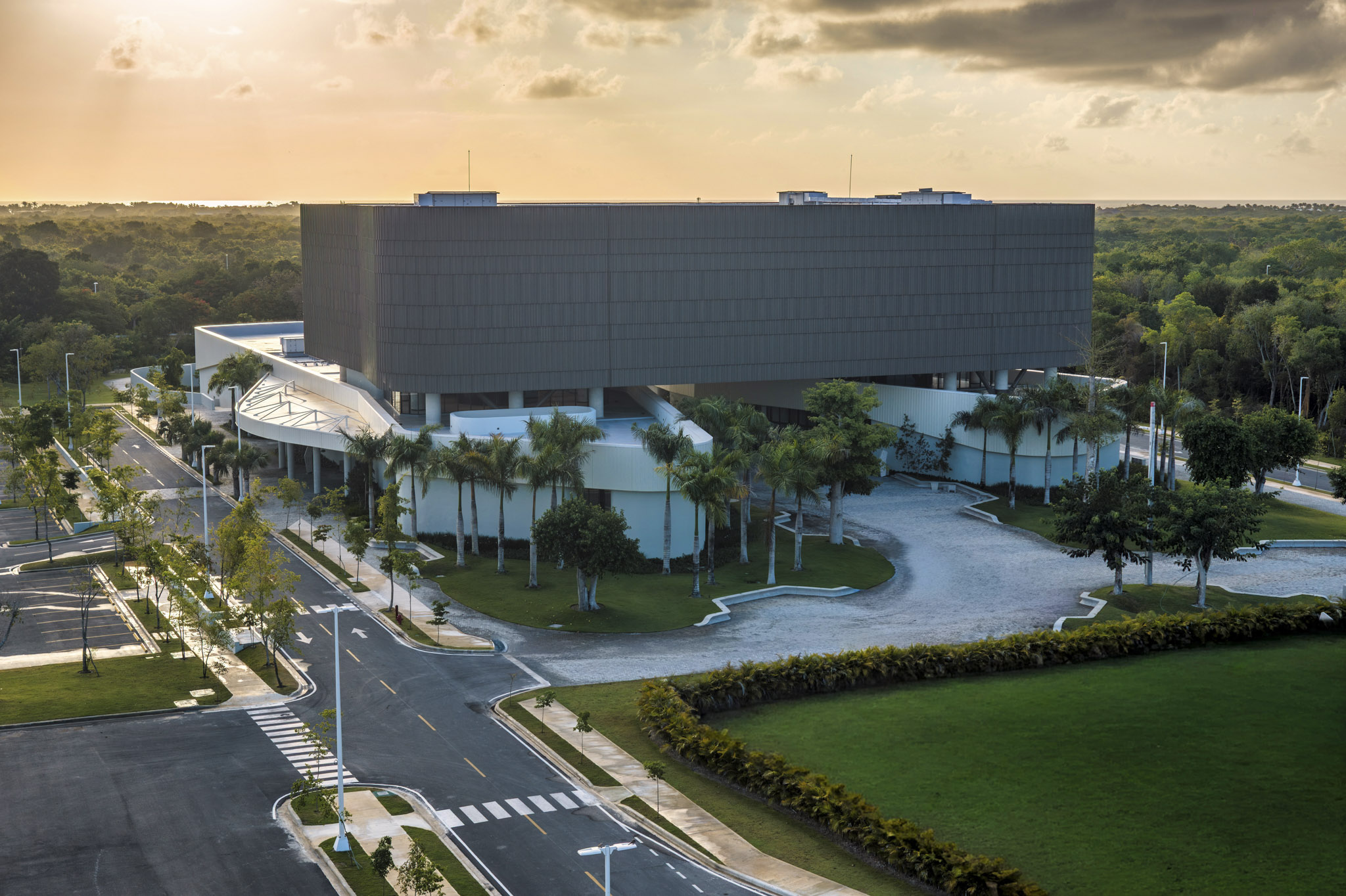
The Centro Cultural Rainieri (Rainieri Cultural Center), already known locally as El Nido (The Nest), just opened in Puntacana Village. It is, without question, the region’s most important sustainability landmark.
What does a cultural center have to do with sustainability? Everything.
In 1968, Senegalese forestry engineer Baba Dioum told an international conservation gathering in New Delhi: “In the end we will conserve only what we love; we will love only what we understand; and we will understand only what we are taught.”
The logic is simple. People don’t protect places by accident. It starts with learning. Understanding builds connection, and that’s what makes people fight for a place. El Nido exists to build that bond and give Punta Cana’s identity a home.
Let’s look at Punta Cana as a community. Today, more than 200,000 people live in the Verón-Punta Cana area, most of them from other provinces or other countries. In 2025 alone, more than five million foreign tourists flew into Punta Cana Airport. Plenty of them go home without realizing they were in the Dominican Republic. They think they went to a place called Punta Cana: white sand, turquoise water, not much else. The Rainieri Cultural Center wants them to discover that Punta Cana isn’t just sun and sand. It’s a community with its own natural history, traditions and collective memory.
A destination this big needs a cultural identity. Without one, its natural resources, language, values, traditions and stories belong to everyone, and to no one. With one, they become a shared legacy.
El Nido’s goal is for foreigners to learn about the country and for Dominicans to be surprised by their own history and see themselves in it. Nature is part of what they see. That’s not decoration. It’s strategy, and it runs through everything from the building’s architecture to the exhibits on the country’s natural history.
The center’s motto is “Un nido abierto para todos,” a nest open to everyone. After traveling the country, the center’s research team landed on “acogida,” the instinct to welcome, as the defining trait of Dominican character. To represent it, they chose the palmchat, the national bird. Fittingly, it’s one of a kind: the only species in its family, found nowhere but Hispaniola. Palmchats build huge communal nests where many birds live together and protect one another, and they even let other species move in. That’s the whole idea behind the center: a home that welcomes.
The architecture takes its cue from the landscape too. Its rounded forms were inspired by the area’s ojos de agua, the freshwater springs found in the Ojos Indígenas Ecological Reserve, one of the region’s most iconic natural sites.
The message is clear: nobody protects a forest, a reef, a mangrove or a lagoon they don’t feel is theirs. Baba Dioum understood this in 1968. Pride of place leads to protection of place.
Punta Cana was built on that idea: creating a community for the people who already lived here, for the Dominicans who moved here from all over the country, and for visitors. It was a belief shared by its two founders, Frank Rainieri and my great uncle, Ted Kheel.
In the early 2000s, toward the end of Ted’s life, I worked closely with him for three years in New York City. One of the ideas he cared about most was giving visitors to Punta Cana real ways to discover, experience and appreciate Dominican culture: exchanges and experiences that showed them the country beyond the beach. For Ted, this wasn’t an afterthought. It was a long-term strategy for the destination’s resilience, the thing that could set Punta Cana apart from every other stretch of Caribbean coastline. During our time together, I watched him pour hours into that idea and talk it through with Frank with the kind of intensity most people save for hotel occupancy numbers. Neither of them saw sustainability as one thing. It was the business, the environment, the community and the culture, all at once.” I think of Ted every time I walk through El Nido.
Years later, I had another experience with the Rainieri’s that stayed with me. In May 2009, Grupo Puntacana won the Destination Stewardship Award at the World Travel & Tourism Council’s Tourism for Tomorrow Awards in Florianópolis, Brazil. We were the first Caribbean organization to win in that category, and as a young director who had helped build many of those sustainability programs, I was there with Frank and Haydée to accept it.
On the way home, we stopped in Curitiba. Beginning in the 1970s, under architect and mayor Jaime Lerner, the city planned its parks, transit, waste and culture as a single strategy. In 2010 it won the Global Sustainable City Award, and the jury singled out exactly that: a vision that tied the environment to culture, the economy and society.
But what I remember most is the Eye. The Oscar Niemeyer Museum, opened in 2002, gets its nickname from a tower shaped like a giant eye. The building is stunning, but the real story was what was happening around it. Its gardens and the woods next door form a large cultural park in the middle of the city. The day we visited, hundreds of kids were playing and families were stretched out on the grass. The Eye isn’t just a museum. It’s where the city gathers, and a symbol of how Curitiba sees itself.
Curitiba has its Eye. Punta Cana now has its Nest, a building that can become the region’s civic heart and its most iconic cultural landmark.
The palmchat has one more lesson for us. No palmchat builds its nest alone. The nest is a group effort, built branch by branch, and it grows with every family that joins. Punta Cana works the same way. A sense of place, a real community and a genuine sense of welcoming can’t be built by one company or one building. We build them together. The Rainieri Cultural Center is the first branch. Thanks to Frank and Haydée’s tireless effort, our nest exists. Now it’s up to the rest of us to keep building.
————————————————–
Jake Kheel is Vice President of Sustainability at Grupo Puntacana and President of the Grupo Puntacana Foundation. He is the author of Waking the Sleeping Giant: Unlocking the Hidden Power of Business to Save the Planet.
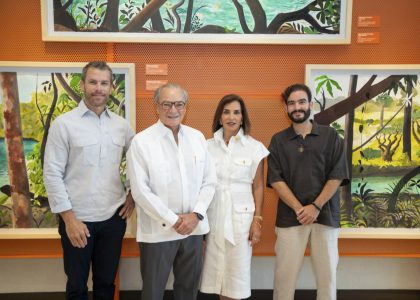
Jake Kheel, Frank Rainieri, Haydee Rainieri y José Carlos Nazario