

How healthcare really works in the Dominican Republic


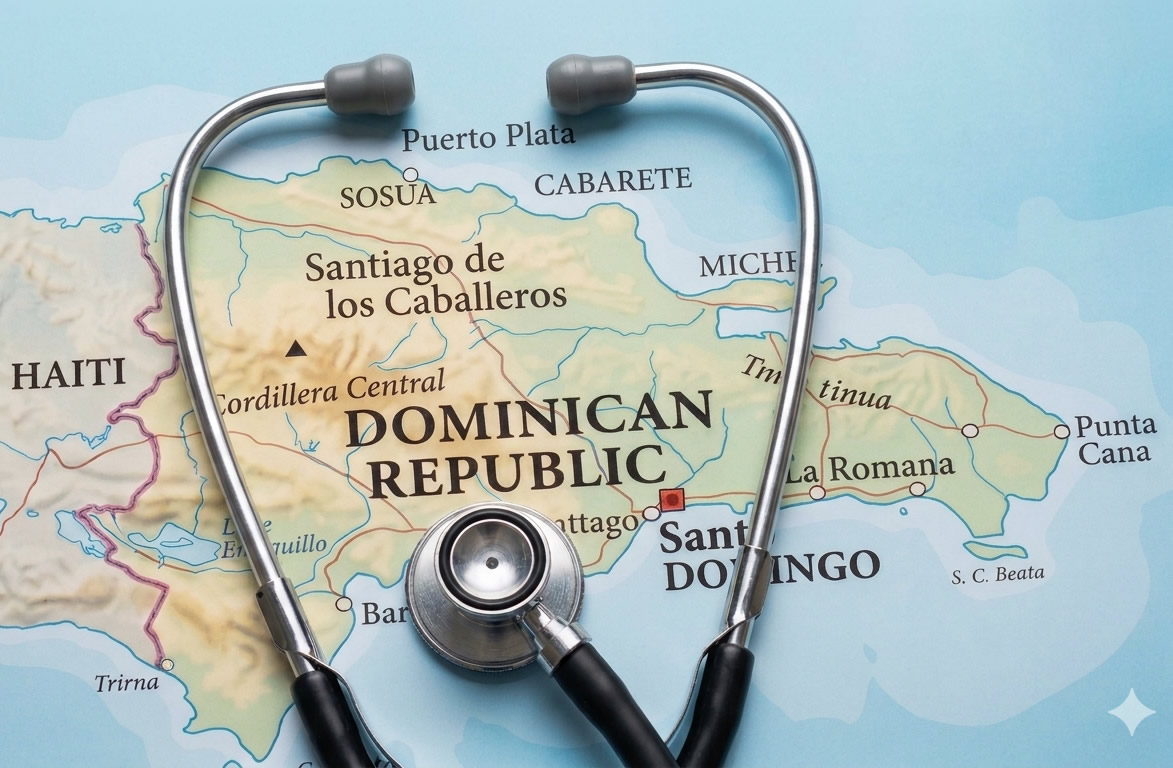
Finding a doctor, choosing a hospital, filling prescriptions, calling an ambulance, seeing specialists, paying medical bills, and understanding what to expect during your first medical visit.
Part 3 of our Expats’ Corner Healthcare Series
In the first two articles of our healthcare series, we looked at health insurance and the particular challenges facing older expats.
Now it’s time to get practical.
What do you actually do when you need a doctor? How do you find a specialist? Where do you go for blood tests? What happens when you need a prescription? And, perhaps most importantly, what should you do if something happens in the middle of the night?
For someone accustomed to the healthcare system in the United States, Canada, Europe, or another country, the Dominican system can initially seem unfamiliar.
But many expats discover that once they understand how it works, everyday healthcare can be surprisingly convenient.
The key is to know where to go, what your insurance covers, and what to have prepared before you actually need medical attention.
Start by Choosing Your Hospital
One of the smartest things you can do after moving to the Dominican Republic is to identify the private hospital or medical center you would use if you needed more than a routine doctor’s appointment.
Don’t wait for an emergency to make that decision.
Your options will depend largely on where you live. Santo Domingo and Santiago offer the widest range of specialties and advanced medical services, while other areas with large expat populations—including Punta Cana, Puerto Plata and La Romana—also have established private healthcare facilities.
The Ministry of Public Health maintains a system for licensing and monitoring healthcare establishments, with different levels of facilities providing services ranging from outpatient specialties and diagnostic imaging to hospitalization, intensive care and highly specialized procedures.
That doesn’t mean every hospital offers the same services.
Before choosing your “home hospital,” consider its distance from your home, emergency department, specialties, diagnostic services, insurance network, and availability of English-speaking personnel.
Expat Tip
Make the trip from your home to your preferred hospital before you actually need it. Save the hospital’s telephone number and location in your phone, and make sure your spouse or another member of your household knows where it is.
Finding a Doctor
You don’t necessarily have to begin with a family doctor.
Depending on your insurance and the provider you choose, you may be able to make an appointment directly with a specialist.
Need a cardiologist? A dermatologist? An ophthalmologist? An orthopedist?
Ask your insurance company, hospital, residential community, friends, or other expats for recommendations.
Personal recommendations can be particularly helpful when you’re new to the country and haven’t yet established a medical network.
And don’t be surprised if your doctor communicates with you through WhatsApp.
WhatsApp is widely used in the Dominican Republic for everyday communication, and many medical offices use it for appointment confirmations and administrative communication. Some physicians may also use it for routine follow-up communication.
Of course, messaging should never substitute for an examination or emergency care when you need it.
What If You Don’t Speak Spanish?
Language is one of the concerns many newcomers have, particularly when dealing with a complicated medical issue.
The good news is that English-speaking medical professionals can be found, especially in private hospitals and areas accustomed to international patients.
Some institutions have dedicated services for foreign patients.
For example, CEDIMAT in Santo Domingo operates an International Unit specifically for patients coming from abroad. Its services include coordinating appointments and medical studies, assistance with registration, billing and hospitalization, and providing medical results in both Spanish and English. The unit also has multilingual personnel.
Still, don’t assume that everyone you encounter will speak English.
Learning a few basic medical terms in Spanish can be extremely useful. Even better, keep a written list of your medications, allergies, diagnoses, and previous surgeries that you can show to medical personnel if necessary.
Your First Doctor’s Appointment
Your first appointment in the Dominican Republic may feel quite different from one back home.
Bring:
- Your passport or Dominican identification
- Insurance information
- A list of your medications
- Information about allergies
- Previous medical records, if available
- Recent laboratory or imaging results
- The name and contact information of your previous doctor, if relevant
If you have a chronic condition, don’t rely on memory.
Having your medical history organized can save time and prevent misunderstandings.
Good to Know
Before moving, ask your current doctors for copies of important medical records, preferably in digital form. Keep them securely stored on your phone or computer so you can access them when needed.
Pharmacies and Prescription Medications
Pharmacies are an important part of everyday healthcare in the Dominican Republic.
You will find them throughout cities and residential areas, and many larger pharmacy chains offer delivery services.
But there is one important rule for newcomers:
Don’t assume that medication regulations are exactly the same as in your home country.
The Dominican Republic has a national regulatory authority, DIGEMAPS, which oversees medicines and pharmaceutical establishments. It also maintains official lists of medicines that may be sold without a prescription; those lists can be updated through official resolutions.
In other words, don’t assume that a medication you could simply walk into a pharmacy and purchase at home will necessarily be treated the same way here.
If you take regular prescription medication, bring a list showing the generic name, dosage, and frequency—not just the brand name.
Brand names can differ between countries.
Expat Tip
Take photographs of your prescription labels and keep them on your phone. If you need to find the Dominican equivalent of a medication, having the active ingredient and dosage readily available can make the process much easier.
Laboratories and Diagnostic Tests
Blood tests, imaging, and other diagnostic services are widely available through private healthcare providers.
Depending on your insurance policy, you may need authorization before certain tests or procedures.
This is one of those details that is much easier to understand before you are standing at the laboratory counter.
Ask your insurer:
“Does this test require pre-authorization?”
Also ask whether the laboratory or diagnostic center is part of your insurance network.
The Dominican health authorities recognize a broad range of diagnostic services within licensed healthcare facilities, including laboratory testing, X-rays, CT scans, MRI, endoscopy and other specialized imaging.
Paying for Medical Care
This is another area where newcomers sometimes need an adjustment.
With insurance, the provider will generally determine what your plan covers and what portion you are responsible for paying.
For routine care, ask about your co-payment before the appointment or procedure if you are unsure.
For more expensive treatment, particularly hospitalization or surgery, ask for an estimate and clarify what it includes.
A hospital bill may involve several different services and providers rather than one simple charge. Depending on the situation, there may be separate charges for the hospital, physician, laboratory, imaging, medications, or other professional services.
If you’re paying privately, don’t be embarrassed to ask about the price.
It is perfectly reasonable to understand the cost before receiving non-emergency care.
What Happens in an Emergency?
This is the number every expat should have saved in their phone:
911
The Dominican Republic’s National Emergency and Security System operates the 9-1-1 service, coordinating emergency responses through participating agencies. The system operates around the clock, and its official site provides current information about its operations and coverage.
If someone is experiencing a serious medical emergency, call 911 rather than trying to organize an ambulance yourself.
Give the operator the exact location and explain what has happened.
If you live in a gated community or condominium complex, make sure you know how emergency personnel access the property.
And if you have a preferred private hospital, keep its emergency department number in your phone as well.
Important: 911 coverage has expanded over time, but service availability can vary by location. If you live in a remote area, find out in advance what emergency services are available locally and which hospital you would use.
What Should Be in Your Emergency Medical File?
This is particularly important for older expats.
Create a simple medical information file and keep both a digital and printed copy.
Include:
Personal information
- Full name
- Date of birth
- Emergency contact
- Blood type, if known
Medical history
- Current diagnoses
- Major surgeries
- Allergies
- Important previous medical conditions
Medications
- Generic name
- Dosage
- Frequency
Insurance
- Insurance company
- Policy number
- Customer-service telephone number
- Emergency assistance number
If you take several medications, consider keeping a current medication list in your wallet as well.
In an emergency, you may not be the person explaining your medical history.
What About SENASA?
If you’ve been living in the Dominican Republic for any length of time, you’ve probably heard of SENASA, the country’s national health insurance provider.
Some expats naturally wonder whether they can simply enroll.
The answer is more complicated.
Eligibility depends on the individual’s circumstances and the applicable health-insurance and social-security rules. Foreign residents should verify whether they personally qualify and, if so, understand the specific coverage and provider network that applies to them.
For many foreign retirees, particularly those who are not employed in the Dominican Republic, SENASA should not automatically be assumed to be their healthcare solution.
Private local insurance, international coverage, or a combination of insurance and personal savings may be more appropriate depending on the person’s circumstances.
The important point is to verify your eligibility rather than relying on what another expat tells you.
Healthcare arrangements are personal, and what works for a legally employed resident may not apply to a retired foreign resident.
Healthcare Isn’t Just About Hospitals
One of the pleasant surprises for many newcomers is that healthcare doesn’t always involve a hospital.
For everyday needs, you may find yourself using several different types of providers:
- General practitioners
- Specialists
- Clinics
- Laboratories
- Diagnostic centers
- Pharmacies
- Dentists
- Optometrists
- Telemedicine services
Some private healthcare organizations also offer services specifically designed to make healthcare easier for international patients.
That means the healthcare experience of an expat can be much more decentralized than the system they may have known back home.
You may see a specialist directly, have laboratory work performed at a separate facility, pick up your medication from a nearby pharmacy, and communicate with your doctor’s office by WhatsApp—all within a very short period of time.
Once you become familiar with the system, this can be remarkably efficient.
Choosing Where to Live? Think About Healthcare
For a young, healthy person, living an hour from a major hospital may not seem particularly important.
For a retiree in their seventies or eighties, it can be a very different calculation.
When looking at a property, don’t consider only the beach, golf course, restaurants, or shopping.
Ask:
Where is the nearest good hospital?
Which specialists are available nearby?
Does my insurance cover the hospitals in this area?
How long would it take to get there in an emergency?
Advanced medical services are not distributed equally throughout the country. For someone with complex medical needs, proximity to Santo Domingo, Santiago, or another major medical center may be more important than it first appears.
The Five Things Every New Expat Should Do
Within your first few weeks in the Dominican Republic, take care of these five things:
- Choose a hospital.
Know where you would go in a serious situation. - Find a doctor.
Don’t wait until you’re sick to begin looking. - Locate your nearest pharmacy and laboratory.
Knowing where they are will save time later. - Organize your medical information.
Keep prescriptions, diagnoses, allergies, and insurance information together. - Save 911 and your insurance emergency number.
You don’t want to search for either one during a crisis.
Expat Tip
Make a simple “Healthcare” contact group in your phone containing your doctor, preferred hospital, pharmacy, insurance company, and emergency contacts. It takes five minutes and can save you considerable stress later.
Frequently Asked Questions
Do I need a family doctor before seeing a specialist?
Not necessarily. Depending on the specialist, hospital, and insurance policy, you may be able to schedule an appointment directly. Check your insurance requirements first.
Can I communicate with my doctor in English?
Often, particularly in private healthcare and areas with large international communities, but it should not be assumed. Ask when making the appointment.
Can I get prescription medication easily?
Many medications are readily available through Dominican pharmacies, but prescription requirements vary. DIGEMAPS maintains the country’s official regulatory framework and lists of medicines authorized for sale without prescription.
What should I do if I have a medical emergency?
Call 911 when emergency assistance is needed. If you already know which private hospital you would use, keep its emergency department information readily available as well.
Should I choose my home based on access to healthcare?
If you’re retired, have a chronic condition, or simply want peace of mind as you get older, absolutely. Healthcare access should be one of the factors you consider alongside housing, transportation, shopping, and lifestyle.
The Bottom Line
Healthcare in the Dominican Republic may not work exactly the way it does in your home country—and that is something worth understanding before you need it.
But once you know how to navigate the system, many aspects of everyday healthcare can be surprisingly straightforward.
Find your doctor. Choose your hospital. Understand your insurance. Know where your pharmacy and laboratory are located. Keep your medical information organized. And save 911 in your phone.
Those simple preparations can make an enormous difference when you’re sick, worried, or dealing with an unexpected situation.
You don’t need to become an expert in the Dominican healthcare system.
You simply need to know where to go, who to call, and what to have ready when you need care.
The Healthcare Series: A Recap
This three-part Expats’ Corner series has covered the questions we hear most often from people considering life in the Dominican Republic:
Part 1 — Health Insurance in the Dominican Republic: What Every Expat Should Know
How local and international insurance differ, what to look for in a policy, and why choosing coverage is about more than the monthly premium.
Part 2 — Healthcare After 70: What Older Expats Need to Know
The special considerations facing retirees, including insurance options, Medicare, planning for later years, and preparing financially for healthcare.
Part 3 — How Healthcare Really Works in the Dominican Republic
The practical side of everyday healthcare—from finding a doctor and filling a prescription to choosing a hospital and knowing what to do in an emergency.
Because moving to another country is a big decision, and knowing how to take care of yourself once you arrive is an important part of making that new life your own.


Expats…lol…They are Imigrants period…