

Human rights groups urge end to migration checks in Dominican public hospitals


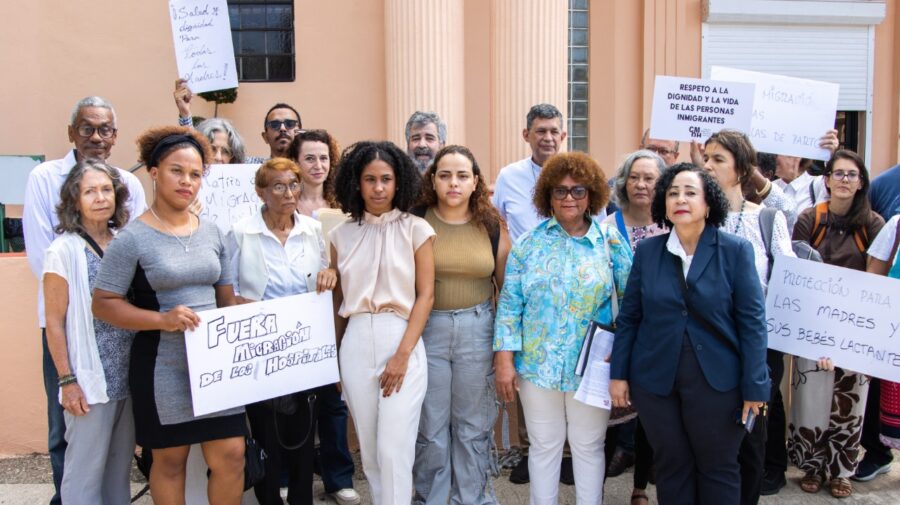
Santo Domingo.- The Migration and Human Rights Collective (CMDH) delivered more than 1,000 signatures to the National Palace on Monday, calling for the repeal of the migration protocol applied in public hospitals in the Dominican Republic, which allows verification of the immigration status of foreign patients in certain cases.
The organization, joined by several civil society and human rights groups, argues that the measure discourages undocumented migrants from seeking medical attention due to fear of immigration enforcement, potentially delaying care and putting public health at risk. They insist that hospitals should remain spaces of universal access, where medical attention is provided regardless of immigration status.
During the delivery of the petition, representatives stressed that the policy particularly affects vulnerable groups, including pregnant women, children, and individuals in emergency situations. The commission that submitted the document included Pablo Mella of the Montalvo Center, Abraham Apolinario of Caritas Archdiocese, Yildalina Tatem, Lía Concepción of CMDH, and journalist Ana Mitila Lora.
The initiative is supported by more than 70 organizations, including Cáritas Arquidiocesana, Participación Ciudadana, Casa Abierta, CIPAF, CONAMUCA, CE-MUJER, Foro Ciudadano, as well as other national and international groups.
CMDH representatives stated that the presence of immigration agents in hospitals creates fear among foreign patients, particularly those of Haitian descent, which may lead them to avoid seeking timely care. “A delivery room is not the place to implement migration policy,” they said, warning that such practices can endanger both individual lives and public health.
While acknowledging the State’s authority to regulate migration, the group urged the government to withdraw the protocol, remove immigration enforcement from public hospitals, and open a dialogue with health professionals and civil society organizations to develop alternatives that balance migration control with the protection of fundamental rights.


These are the people that push abortion for Dominican women, but not Haitian women. I winder why?