
ISFODOSU celebrates Dominican literary heritage and the enduring power of books at FIL 2026


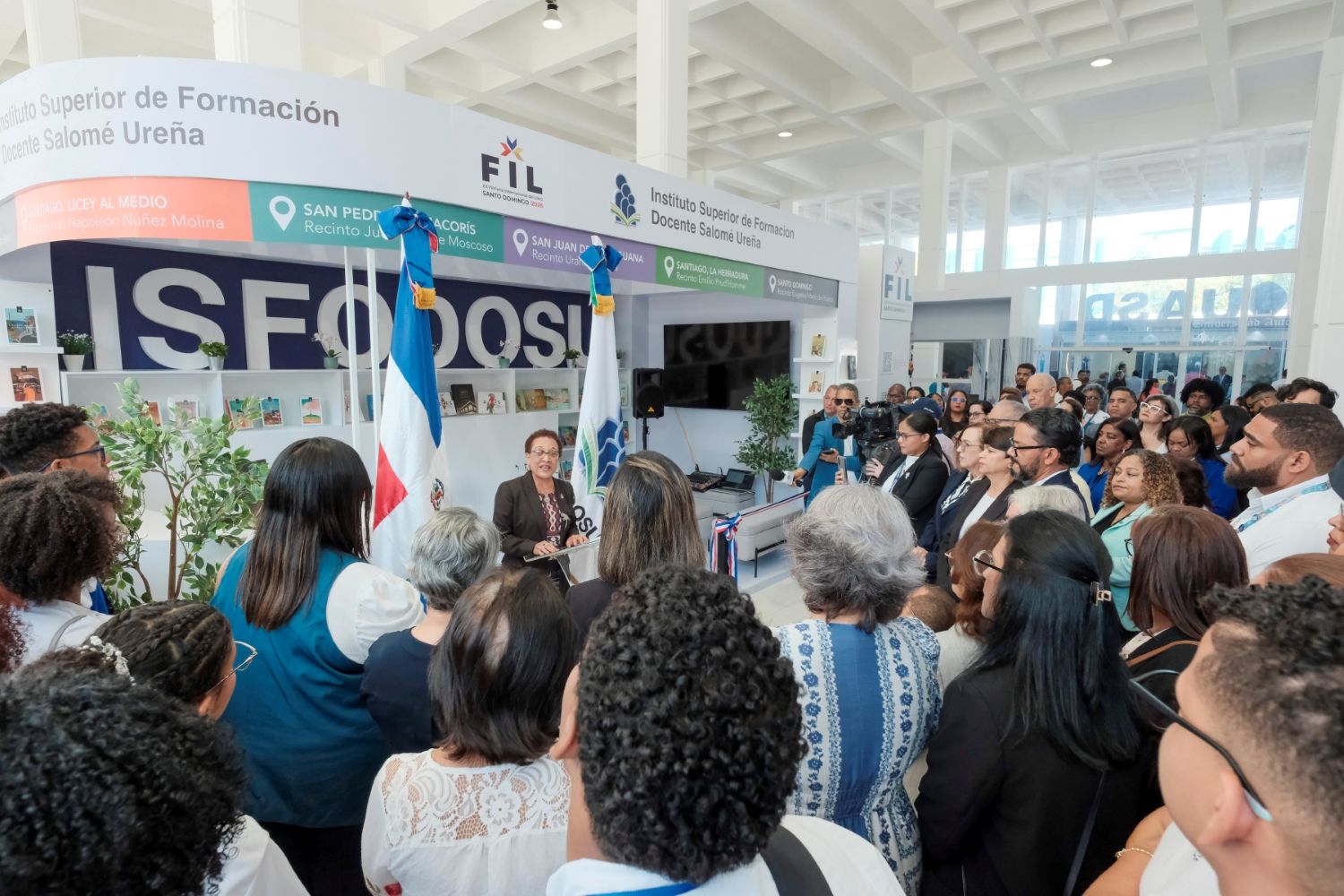
Santo Domingo.- The 28th Santo Domingo International Book Fair (FIL 2026) concluded with the Salomé Ureña Higher Institute for Teacher Education (ISFODOSU) reaffirming a conviction at the heart of its educational mission: books are essential to the formation of thoughtful individuals, the preservation of cultural memory, and the intellectual life of a nation.
Throughout the fair, held at the Plaza de la Cultura, ISFODOSU presented a program that brought together literature, scholarship, historical reflection, and educational technology. At the center of its participation stood the work of its publishing imprint, whose catalog of literary, scientific, and educational titles reflects the institution’s commitment to making knowledge accessible and strengthening the resources available to teachers, students, and the wider public.
The institute’s presence carried particular significance at a time when digital platforms and artificial intelligence are changing how people encounter information. Rather than treating technological progress and reading as opposing forces, ISFODOSU used the fair to reaffirm the value of books as instruments of learning, imagination, critical inquiry, and cultural continuity.
A publishing legacy built for future generations
One of the most significant milestones of ISFODOSU’s participation was the launch of Series 2 of its Dominican Children’s Stories collection, a carefully curated selection of ten illustrated works by prominent Dominican writers. The new series builds on the first installment, presented at the 2025 book fair, and continues an editorial undertaking devoted to preserving the country’s literary heritage and introducing it to young readers.
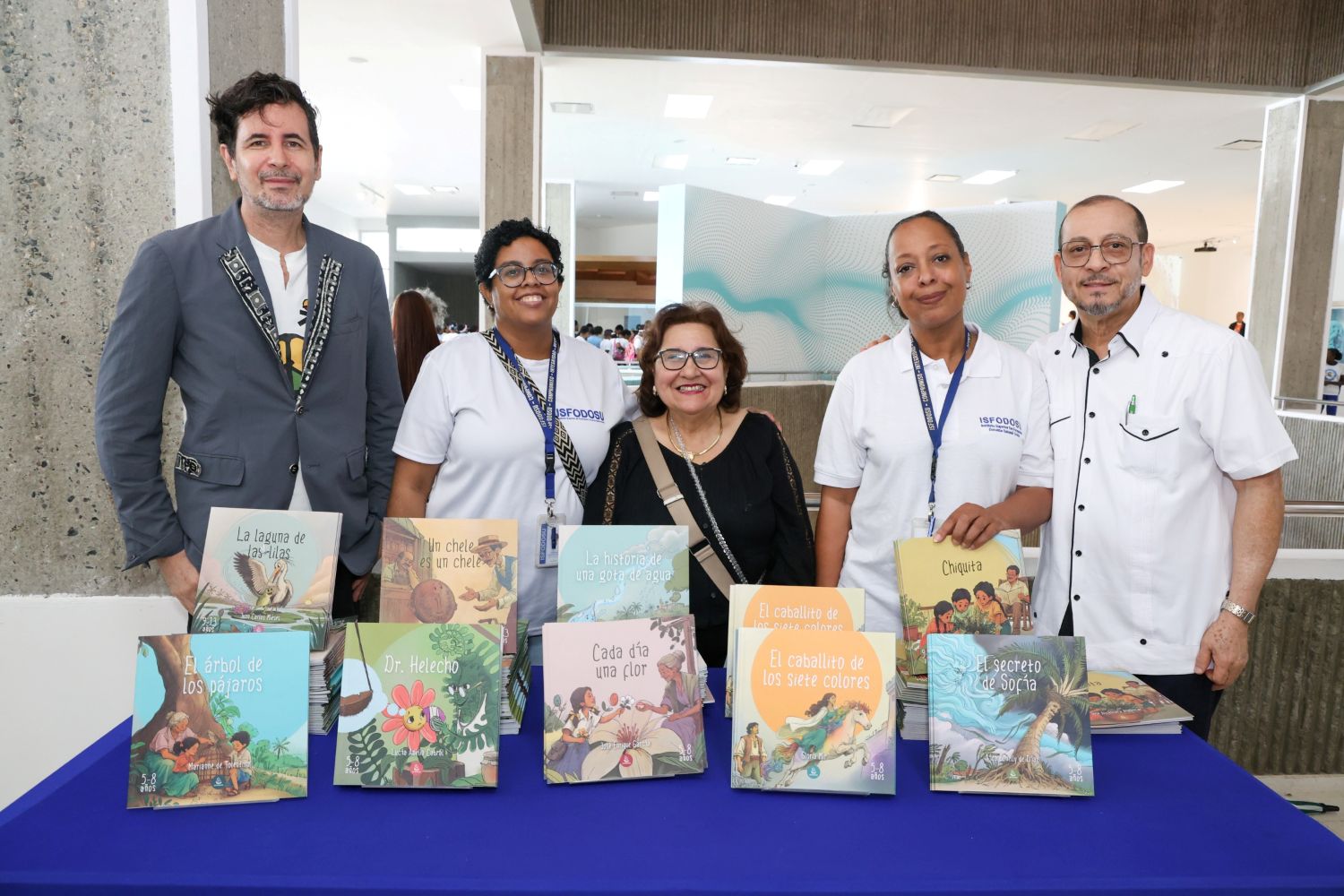
ISFODOSU editorial team responsible for the books and activities presented by the institution each year at the Santo Domingo International Book Fair. From left to right: Adrian R. Morales (copy editor and translator), Yelitza Sosa (graphic designer), Miguelina Crespo (manager and coordinator), Julissa Ivor Medina (graphic designer), and Tulio Cordero (editorial advisor for Series 2 of the Dominican Children’s Story Collection). (Photo: ISFODOSU)
The collection brings together Las huellas secretas, by Julia Alvarez; El árbol de los pájaros, by Marianne Tolentino; Chiquita, by José Alcántara Almánzar; Cada día una flor, by José Enrique García; El secreto de Sofía, by Aída Bonelly de Díaz; Un chele es un chele, by Reynaldo Disla; La laguna de las lilas, by Juan Carlos Mieses; Dr. Helecho, by Lucía Amalia Cabral; La historia de una gota de agua, by Marcio Veloz Maggiolo; and El caballito de los siete colores, by Gloria Mir.
Behind these ten books lies an editorial undertaking whose significance extends beyond the publication of individual stories. The selection, curation, preparation, and illustration of literary works for children require a sustained understanding of language, narrative, cultural context, and the needs of young readers. Through this series, ISFODOSU has helped bring the work of established writers into an educational setting where literature can become a living part of children’s intellectual and emotional development.
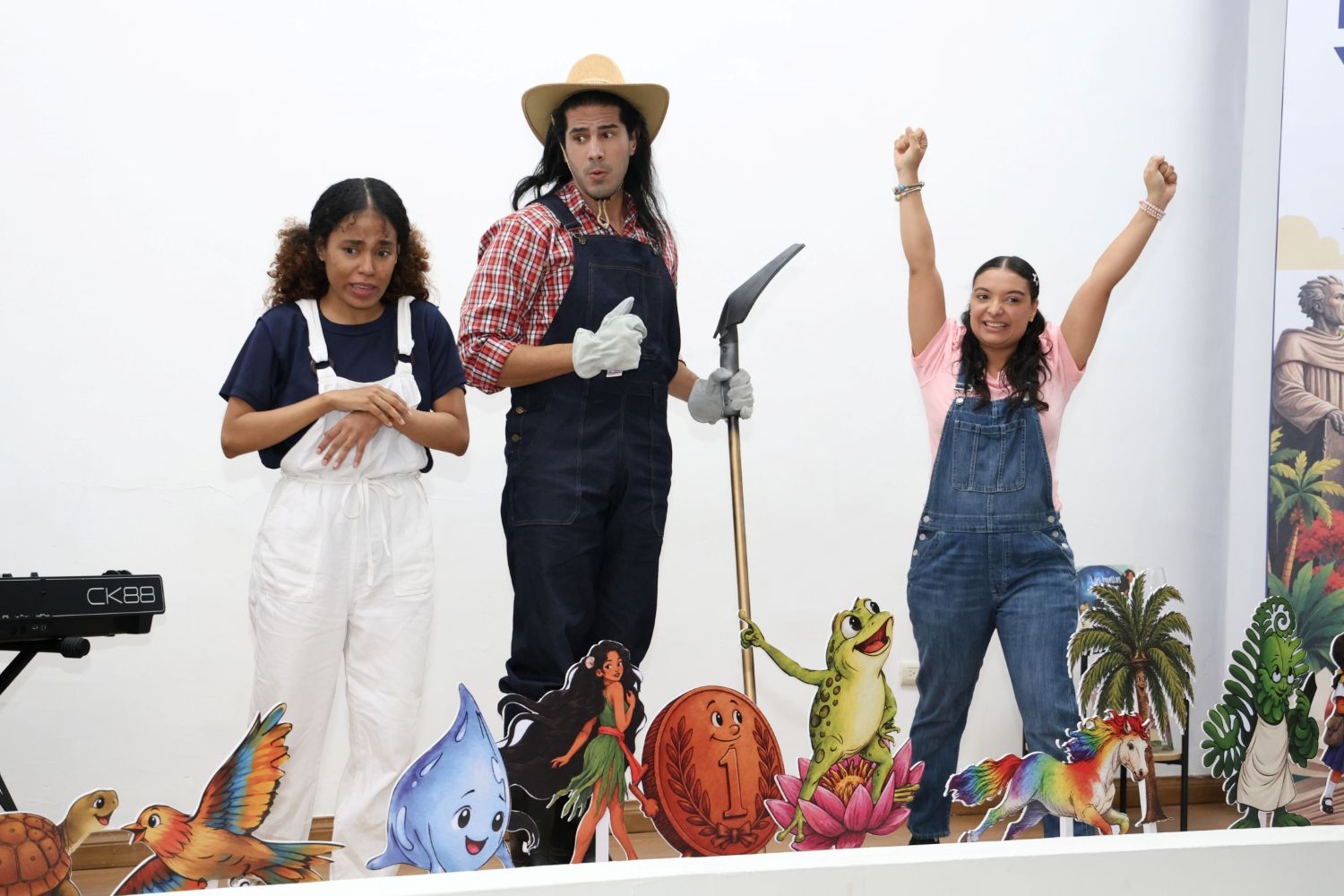
Dominican educator, writer, actor, and cultural manager Patricio León performing alongside fellow actresses in a short theatrical adaptation featuring characters from the 10 stories during the presentation of Series 2 of the Dominican Children’s Story Collection at the Identity and Citizenship Pavilion during the XXVIII Santo Domingo International Book Fair 2026. (Photo: ISFODOSU)
At the collection’s launch, Cristina Rivas, executive vice rector of ISFODOSU’s Eugenio María de Hostos campus in Santo Domingo, emphasized that reading in childhood goes far beyond acquiring a skill. It opens doors to other worlds, deepens children’s command of language, introduces them to their history and culture, and nurtures empathy, creativity, and independent thought.
As the collection’s consultant, writer and priest Father Tulio Cordero played a key role in shaping the second series, working closely with Miguelina Crespo, head of ISFODOSU’s Department of Publications, and the institution’s Editorial Committee to curate the ten titles. Their collaborative work brought together literary judgment and editorial expertise in the selection and preparation of the books. At the launch, Cordero highlighted the literary significance of the selected works and their authors, whom he presented as continuators of the tradition established by the writers featured in the first series.
Together, the two series establish a valuable resource for educators and families while helping ensure that stories rooted in the country’s literary imagination remain available to new generations.
Julia Alvarez’s Las huellas secretas: a new translation for a new generation
Among the titles in the new series, Las huellas secretas (The Secret Footprints), by internationally acclaimed Dominican American writer Julia Alvarez, holds particular editorial and cultural significance. This edition features a new Spanish translation by Adrian R. Morales, commissioned exclusively for ISFODOSU’s publication. Translated directly from Alvarez’s original English text, this version brings the story to Spanish-speaking children while preserving its narrative voice, imaginative qualities, and distinctive connection to Dominican folklore.
The story follows Guapa, a ciguapa from Dominican folklore whose backward-pointing feet leave tracks that mislead anyone who tries to follow her. Through this mythical figure, Julia Alvarez introduces young readers to a distinctive element of the country’s cultural imagination.
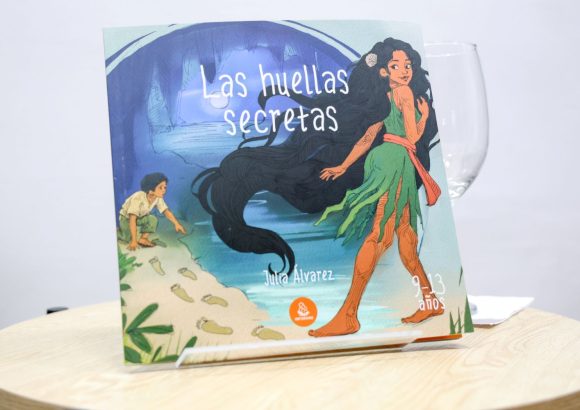
Cover of Las huellas secretas (The Secret Footprints), by Julia Alvarez, one of the most anticipated stories in Series 2 of the Dominican Children’s Story Collection, translated for this edition by Adrian R. Morales. (Photo: ISFODOSU)
For this edition, ISFODOSU commissioned a new Spanish translation by Adrian R. Morales, bringing Alvarez’s original story to Spanish-speaking children in a version that preserves its narrative voice, imagery, and folkloric nuances while reading naturally in Spanish. The book reflects the collection’s commitment to preserving Dominican cultural heritage through literature. It also highlights the importance of literary translation in bringing stories across linguistic boundaries and making them accessible to new generations of readers.
Education, history, and the challenges of a changing world
ISFODOSU’s contribution to FIL 2026 extended well beyond its publishing program. Its schedule of discussions and academic activities addressed questions central to teacher education, the history of Dominican schooling, and the responsibilities of educational institutions in a period of rapid technological change.
A colloquium on the ethical, legal, and academic challenges of artificial intelligence in teacher education brought together faculty members Yoselin Taveras, Rosario Figueroa, and Fidel Fabián. Their participation formed part of a broader institutional conversation about the implications of emerging technologies for academic practice and the preparation of future teachers.
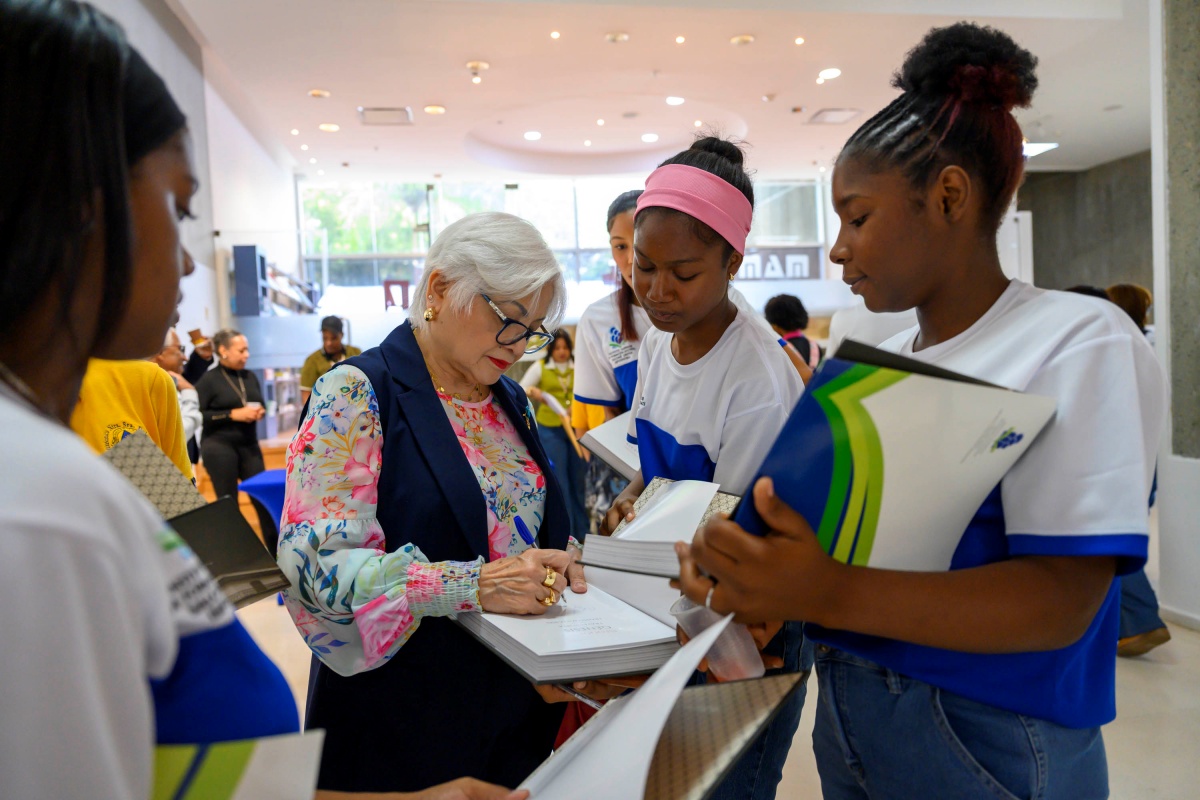
Renowned Dominican historian and educator Mu-Kien Sang Ben signs books during the presentation at the book fair of her research work ISFODOSU: Génesis y trayectoria de una transformación, published by the institution’s editorial imprint. (Photo: ISFODOSU)
The institute also revisited its own institutional history through the panel ISFODOSU: Genesis and Trajectory of a Transformation, featuring Mukien Adriana Sang Ben, Esteban Tiburcio Gómez, and Wilson Enrique Genao. The discussion offered an opportunity to reflect on the institution’s origins and development, situating its present work within the longer history of teacher education in the Dominican Republic.
Literature and history intersected again in a discussion of Over, the landmark novel by Dominican writer Ramón Marrero Aristy, led by social sciences students from ISFODOSU’s Luis Napoleón Núñez Molina campus. The activity demonstrated how literary works can serve as starting points for examining the country’s social experience and historical memory.
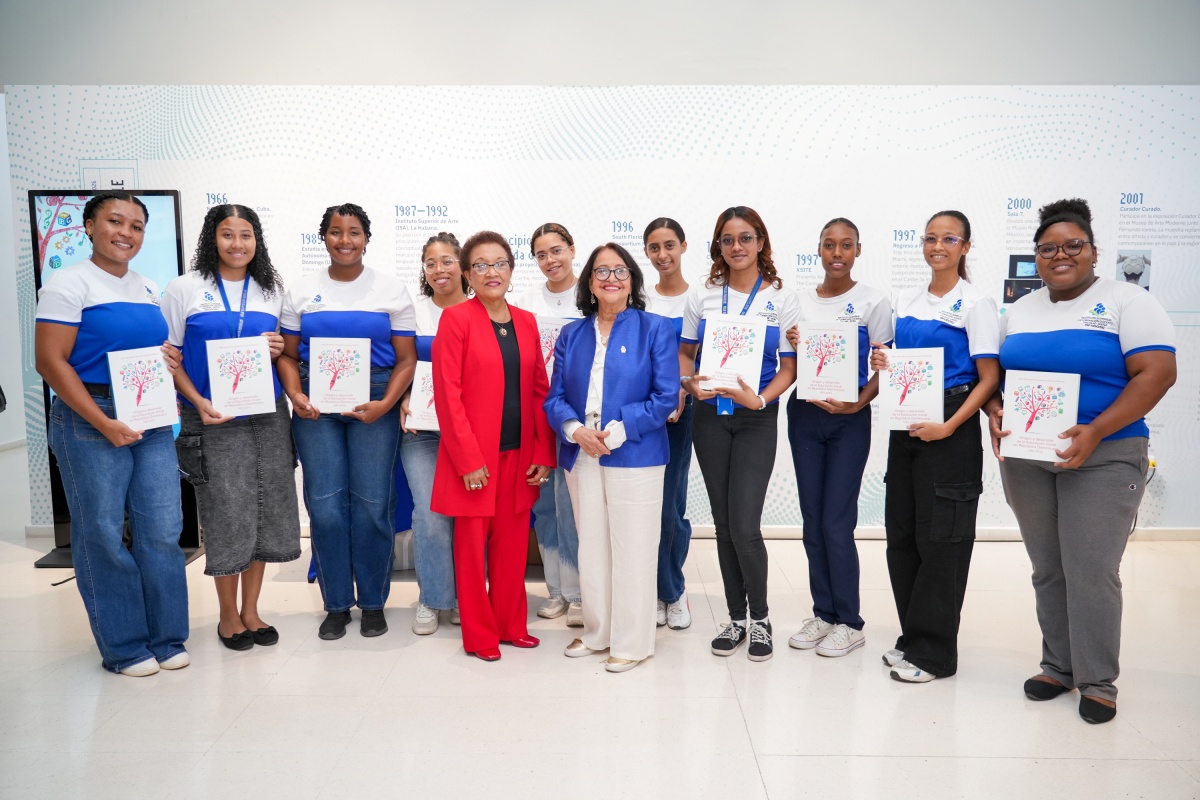
Rector Dinorah García Romero alongside teacher and researcher Mercedes (Mechy) Hernández, author of the book Origen y desarrollo de la Educación Inicial en República Dominicana (1492–2024), published by ISFODOSU, flanked by students proudly posing with copies of the work in the background. (Photo: ISFODOSU)
Another major event explored the origins and development of early childhood education in the Dominican Republic from 1492 to 2024. Rector Dinorah García Romero joined professor Mercedes (Mechy) Hernández Caamaño for a dialogue that connected the evolution of early education with broader questions about the country’s educational development.
Taken together, these activities reflected an understanding of teacher education that encompasses historical awareness, critical engagement with contemporary challenges, and the ability to connect knowledge across disciplines.
Bringing educational innovation to the public
The institute’s booth at the Dominican Museum of Man also offered visitors an interactive introduction to augmented reality and robotics resources designed to enrich teaching and learning. Through immersive, hands-on experiences, the demonstrations illustrated how emerging technologies can support classroom preparation, encourage experimentation, and offer new ways for students to explore and communicate ideas.
These demonstrations complemented the institution’s emphasis on reading and publishing. Books, digital tools, and interactive resources may differ in form, but each can contribute to meaningful learning when used with sound educational purpose. By bringing them together at the fair, ISFODOSU highlighted the importance of preparing teachers who can draw on a range of resources while keeping intellectual development, creativity, and critical thinking at the center of their work.
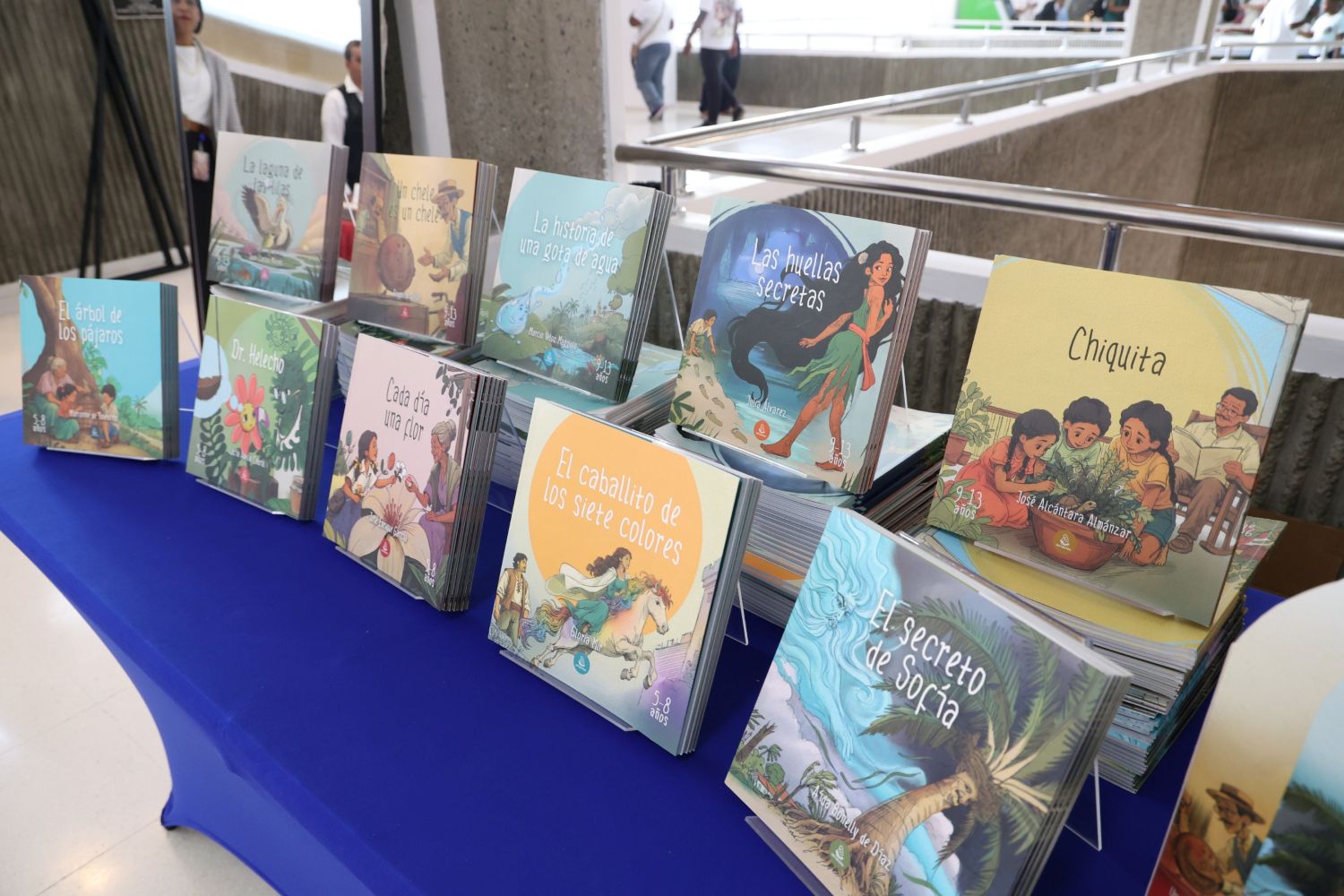
The institutional booth also provided visitors with access to titles from ISFODOSU’s publishing collections, which the institute makes available free of charge through its online portal. This open-access approach extends the reach of its publications beyond the academic community and supports the circulation of educational and literary resources among teachers, students, and readers throughout the country.
An enduring commitment to books and education
ISFODOSU’s participation in FIL 2026 brought several dimensions of its institutional mission into a shared public space. The second series of Dominican Children’s Stories gave new life to an important body of literary work; the new Spanish translation of Julia Alvarez’s Las huellas secretas underscored the intellectual and creative work behind a carefully prepared edition; and the academic program opened conversations about history, literature, and the changing demands of teacher education.
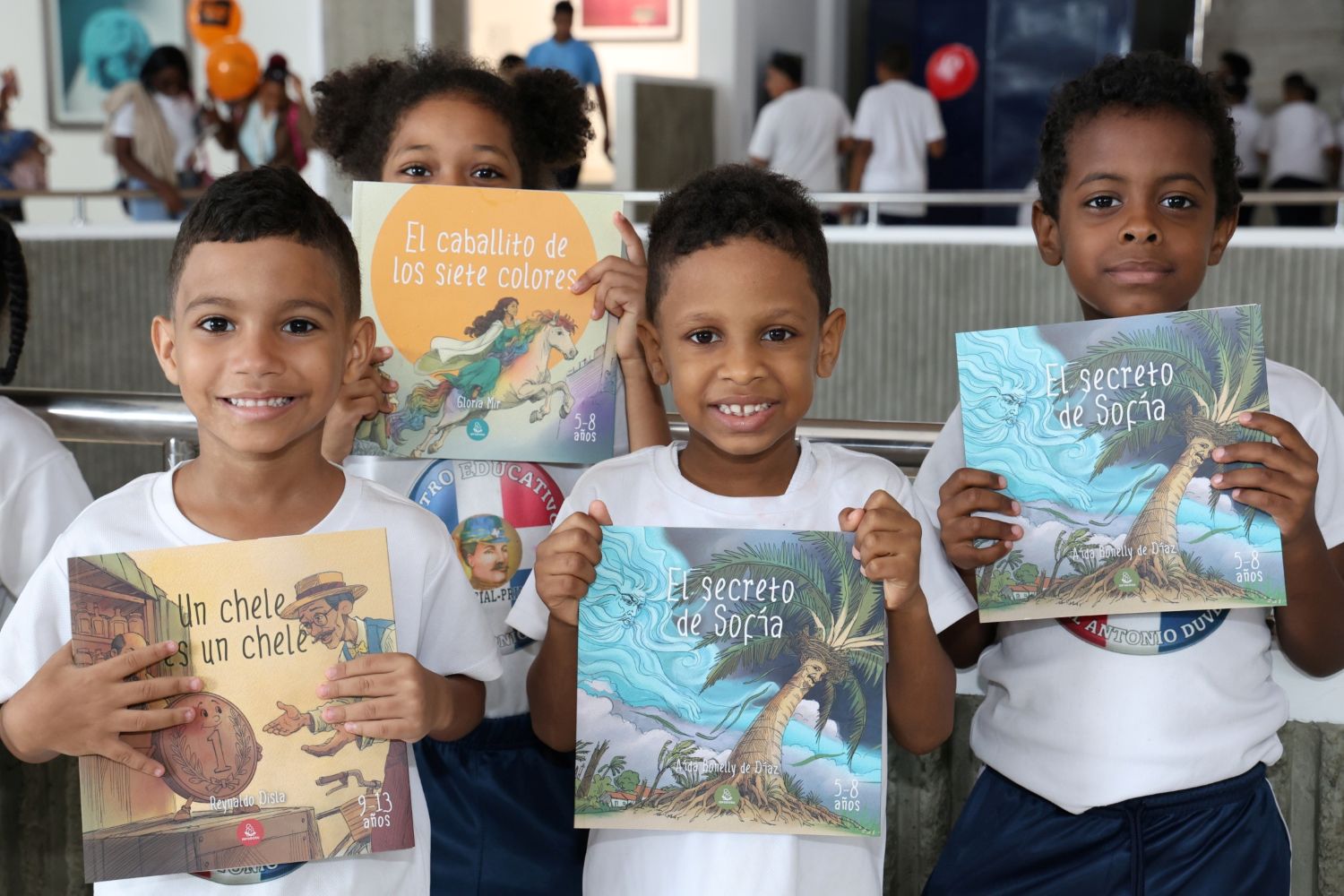
These contributions also pointed to the wider purpose of educational publishing. A book can preserve a story, transmit a cultural tradition, support a teacher’s work, and invite a child to discover the pleasure of reading. When the editorial process brings together literary judgment, linguistic care, illustration, and a clear educational purpose, the published work becomes part of a country’s cultural and intellectual resources.
As the fair drew to a close, ISFODOSU left a record of participation that reached beyond the exhibition of books or the presentation of academic activities. Its work affirmed the lasting place of publishing in teacher education and the responsibility of educational institutions to preserve, enrich, and share the knowledge and stories that connect generations.
For ISFODOSU, the work represented at FIL 2026 continues well after the fair’s closing: in the books that reach classrooms, in the teachers who introduce them to young readers, and in the cultural legacy that those encounters help carry forward.
___________
Adrian R. Morales
Journalist, editor, poet, translator