
Multiple earthquakes strike the Pacific Ring of Fire in 24 hours


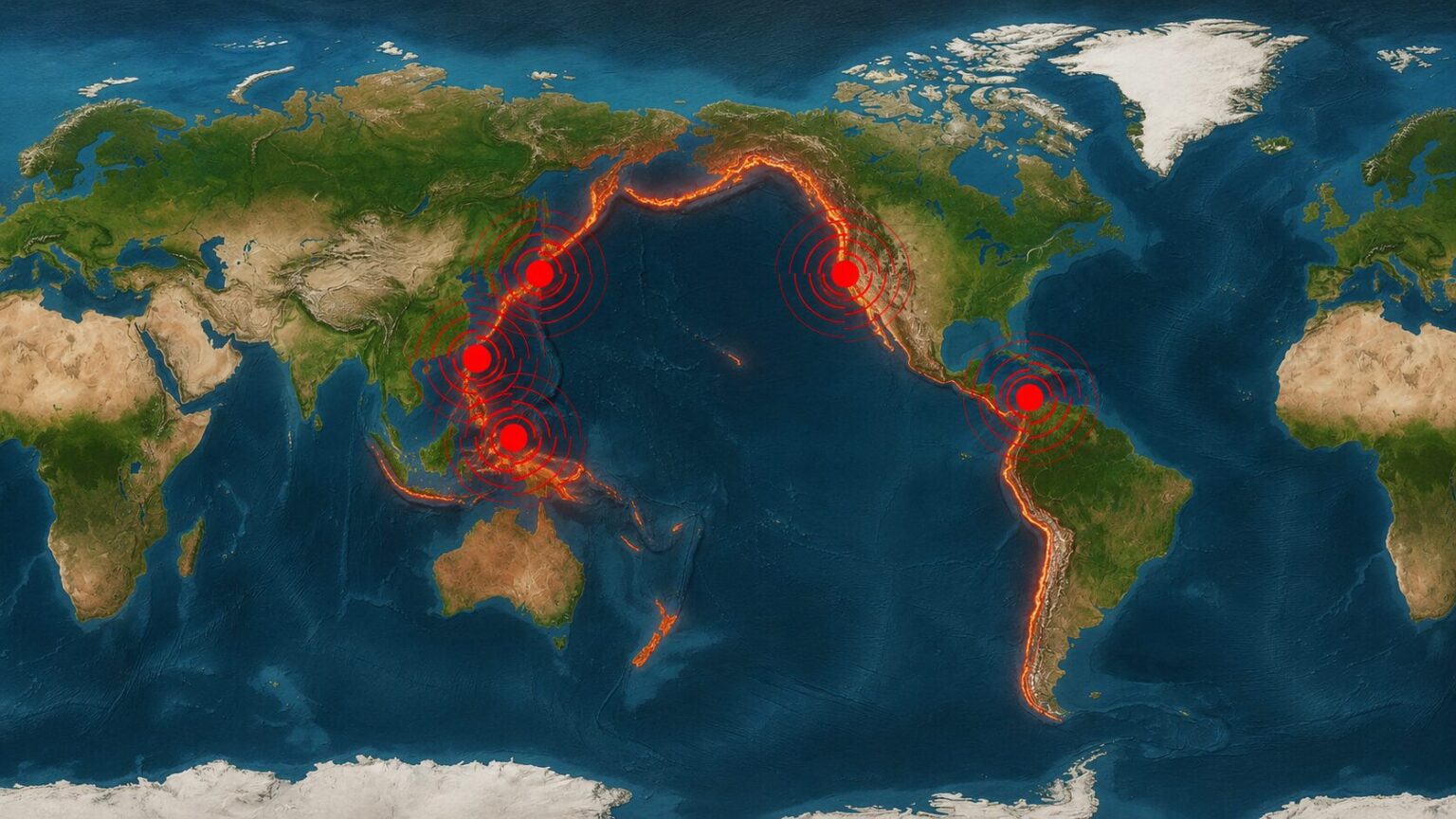
A surge of seismic activity across several regions of the world has captured global attention after at least six significant earthquakes were recorded within 24 hours, including the devastating twin earthquakes that struck Venezuela and caused widespread damage.
The sequence began with a magnitude 5.2 earthquake in China, followed by a 5.6-magnitude tremor in Northern California and a magnitude 4.6 earthquake in Peru. While these events generated concern, authorities reported no major destruction or casualties.
Global attention intensified after Venezuela was hit by two powerful earthquakes measuring 7.1 and 7.5 in quick succession. The earthquakes caused significant damage in several regions, prompting emergency measures and international support efforts. The twin quakes were among the strongest recorded worldwide in recent months and became the focal point of the latest wave of seismic activity.
The tremors continued hours later with a magnitude 6.9 earthquake in Japan, which left several people injured. Additional earthquakes were also reported in the Philippines and Papua New Guinea, both located within the Pacific Ring of Fire, a region known for frequent earthquakes and volcanic eruptions.
Although the concentration of earthquakes within a short period has raised concerns online, experts stress that the events are not necessarily linked. The earthquakes occurred along different fault systems and tectonic plates separated by thousands of kilometers. Seismologists note that while multiple earthquakes can occur around the same time, such clusters do not automatically indicate a global seismic event or chain reaction.
The recent earthquakes have once again drawn attention to the Pacific Ring of Fire, which accounts for roughly 75% of the world’s active volcanoes and about 90% of global seismic activity. As countries continue monitoring aftershocks and assessing damage, the latest events serve as a reminder of the ongoing earthquake risks facing regions located along major tectonic boundaries.