
Ophthalmologists warn that the reduction in natural light during winter impacts eyesight.


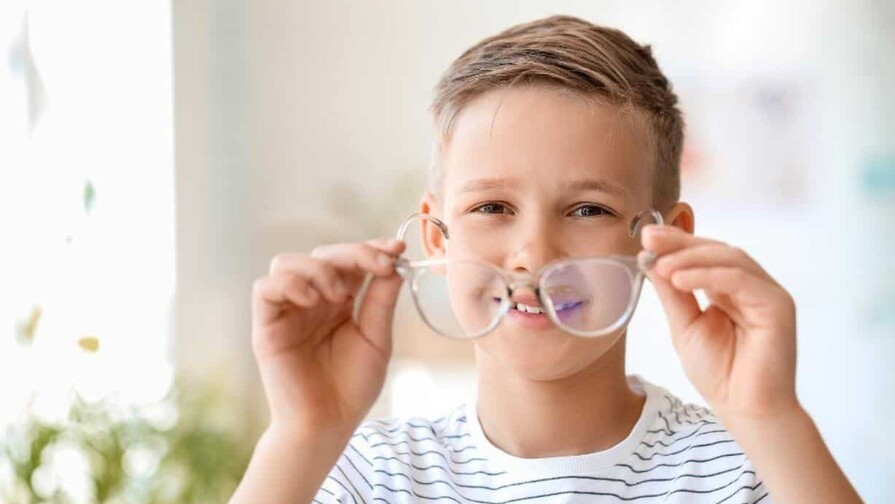
Barcelona – With the arrival of autumn and the start of winter, the gradual decrease in daylight hours not only alters our daily routines and circadian rhythms but also directly, often invisibly, affects eye health.
This lack of sunlight affects the eye both optically and neurologically, directly worsening contrast sensitivity, image sharpness, and the ability to focus effectively in dim environments.
In this context, ophthalmologists from the Ophthalmology Service of the Dexeus University Hospital in Barcelona, Spain, warn that changes in time and reduced natural light diminish visual quality while increasing the risk of childhood myopia developing and progressing.
Experts also recommend at least one hour of outdoor activity daily, especially for children, as an alternative to mitigate this problem.
The sun as a shield against childhood myopia
Direct exposure to sunlight has increasingly been recognized as a key, irreplaceable protective factor against the progression of myopia.
International scientific evidence underlines that “the healthy habit of engaging in outdoor activities counteracts the appearance of this refractive error during critical growth stages.”
A clinical trial published in the scientific journal JAMA (Journal of the American Medical Association) demonstrated the real effectiveness of this measure.
In this study, conducted by the Zhongshan Ophthalmological Center of Sun Yat-sen University with a sample of 1,903 children across 12 schools in Guangzhou, researchers evaluated the direct impact of adding just 40 minutes of outdoor activity at the end of the school day.
After a thorough three-year follow-up, the results revealed a remarkable decrease in the incidence rate of myopia, which fell from 39.5% to 30.4% in the group that received the intervention, meaning a nearly 23% reduction in relative risk and a significantly smaller increase in children’s prescriptions.
For this reason, Dr. Carles Barnés, director of OftalDex at the Ophthalmology Service of the Dexeus University Hospital, recommends that children spend at least one hour a day doing outdoor activities, prioritizing games outside the home and minimizing as much as possible continuous tasks in indoor spaces in front of computer screens, video games, or any other electronic device.
Why does vision deteriorate in the dark?
Insufficient ambient lighting worsens vision problems through several eye phenomena that alter our perception of the environment.
First, in low light, the eye reacts automatically by dilating the pupil (mydriasis) to capture as much light as possible.
As the pupil dilates, light enters through the peripheral edges of the cornea and lens, accentuating the eye’s natural molecular and structural imperfections; this significantly increases light scattering, drastically reduces depth of field, and worsens the annoying sensation of blurred vision at far distances.
Added to this is the well-known phenomenon of night myopia, an involuntary overfocusing response in which the visual system adapts to short distances due to the lack of clear distant references, which drastically worsens the visual acuity of those who already suffer from myopia.
- Similarly, there is a severe loss of contrast sensitivity, caused by the visual system switching from the use of cones—the retinal cells responsible for processing color and high-resolution details—to the exclusive use of rods, which are highly sensitive to low light but offer much lower spatial resolution and detail, making it difficult to clearly distinguish dark figures against nighttime backgrounds.
Warning signs
This drastic reduction in ambient light, combined with poorly corrected refractive errors, triggers a series of common, bothersome symptoms that diminish people’s quality of life.
Common signs include acute glare from artificial light sources, distorted halos or geometric flashes around car headlights and streetlights, profound visual fatigue when driving at night, and progressively slower, more costly adaptation to sudden changes in ambient lighting.
Given this risk, vision professionals advise seeing an ophthalmologist immediately if you notice any of these symptoms.
That is why special attention should be paid in the school environment: if a child has obvious difficulties seeing the blackboard in class, if they squint excessively to try to look at things far away, or if they show constant redness, itching, or pain in their eyes, it is an unequivocal sign that they need a complete ophthalmological examination to stop any complications in their visual development in time.
Winter and shorter daylight hours shouldn’t inevitably lead to a decline in eye health. The key to counteracting the effects of the time change is adopting proactive habits suited to the new season.
- Maintaining a daily routine of natural light exposure, limiting screen use in dark environments, and ensuring proper artificial lighting in workspaces are fundamental steps to mitigate eye strain.
Specialists advise seeking medical advice if you notice any of these symptoms or if a child has difficulty seeing the blackboard, squints a lot to focus on distant objects, or experiences redness or recurring pain in the eye area.