
PUCMM study finds building materials and vegetation drive urban heat in Bayahibe


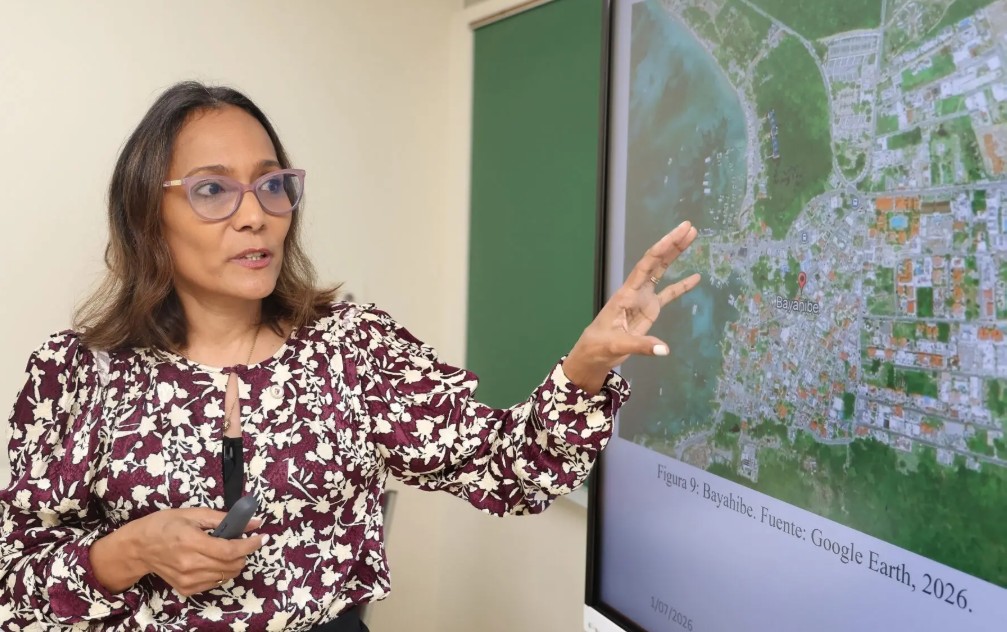
Santo Domingo.- A study by the Pontifical Catholic University Madre y Maestra (PUCMM) found that urban temperatures in Bayahibe are directly influenced by building materials, facade colors, and the amount of vegetation. The research, presented at the 21st International Congress of Scientific Research organized by the Ministry of Higher Education, Science and Technology (MESCyT), examined the Urban Heat Island phenomenon, in which urban areas experience higher temperatures than surrounding rural zones.
Researchers analyzed 355 buildings across 24 city blocks and found that areas dominated by asphalt, concrete, zinc, and limited vegetation recorded the highest temperatures. In contrast, neighborhoods with more trees and permeable surfaces maintained cooler conditions. The study also concluded that light-colored facades, particularly white, reflect more solar radiation and reduce heat buildup, while darker colors absorb more heat, increasing surface temperatures.
The research warns that the Urban Heat Island effect is becoming a major environmental challenge, especially for Caribbean coastal cities that are increasingly vulnerable to climate change, rising sea levels, and more frequent heat waves. The authors recommend expanding urban vegetation, using high-reflectance construction materials, and creating shaded public spaces to improve thermal comfort and reduce energy consumption.