
Results of seismic vulnerability study in the country


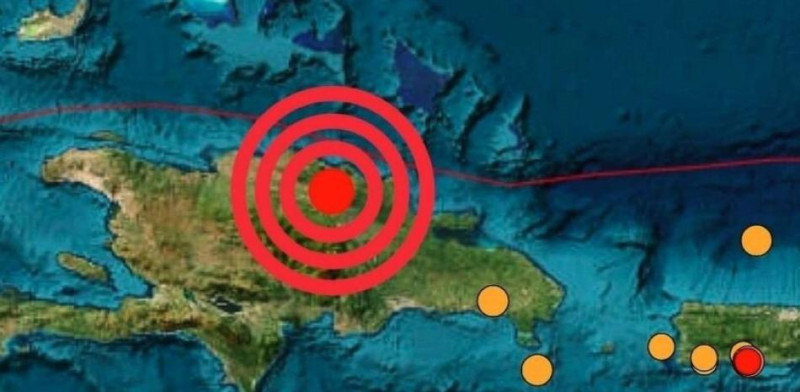
Santo Domingo — In just 50 days, the Andean region of Venezuela and Colombia suffered devastating earthquakes with magnitudes greater than 7.0; in addition to material losses and human lives, which inevitably revive the fear in the Dominican collective of what would happen if these movements were to occur in the country.
According to Leonardo Reyes Madera , director of the National Office of Seismic Evaluation and Vulnerability of Infrastructure and Buildings (ONESVIE) , although no country in the world can be considered prepared to face an earthquake, for the Dominican Republic it is necessary to evaluate and reinforce the buildings that house essential services, such as schools and hospitals, in addition to other strategic infrastructure as a form of prevention.
“The collapses we have recorded in the country in different buildings, even without an earthquake having occurred, allow us to understand the challenge we have ahead of us before facing a major seismic event,” the engineering expert told the media.
In that regard, he emphasized the importance of prevention and noted that studying the seismic vulnerability of national infrastructure remains an active priority in disaster risk management, alongside technical training and raising awareness among the population.
They explained that, to date, 4,718 evaluations have been carried out in the country, covering 3,345 buildings and 833 road infrastructures, mainly bridges, as part of the transport and connectivity infrastructure, during June 2024 and June 2026.
They explained that, of the 3,345 buildings analyzed, the highest concentration is in provinces with urban centers and territories with high infrastructure intensity, including the National District and the 31 provinces, and that the buildings were divided into public (2,853) and private (492).
These include health facilities, educational centers, Government buildings, security facilities, fire stations, public service facilities, administrative buildings, institutional and community facilities, housing, and universities.
Structures with higher risks
For this reason, Madera has repeatedly called for a culture of seismic awareness, given the nation’s location in an area of active interaction between tectonic plates, such as the Caribbean Plate and the North American Plate.
During a past visit to Listín Diario, he warned that the buildings most likely to suffer serious damage or collapse are those with structural deficiencies, built with unsuitable materials, or located on unstable soils, such as hospitals and educational centers.
Among the most frequent damages found at that time were leaks due to concrete deterioration, coating detachment, exposed steel, and undermining.
He pointed out that the educational centers studied had captive columns whose length was restricted by a superior element, making them weaker during an earthquake.
During the meeting, he expressed his disagreement with the popular belief that ignores the possibility or threat of an earthquake, without accounting for the constant activity recorded by tectonic plates.
“That’s our first obstacle. The fact that, since earthquakes aren’t frequent, we think the earth won’t shake here,” he warned at the time.
He also proposed creating a more advanced system to minimize the damage that an earthquake could cause in the country, as well as strengthening the training of professionals in the Dominican Network of Structural Evaluators (REED), which currently has 950 professionals certified by ONESVIE, in order to expand the country’s capacity to identify and determine the vulnerability of buildings.