
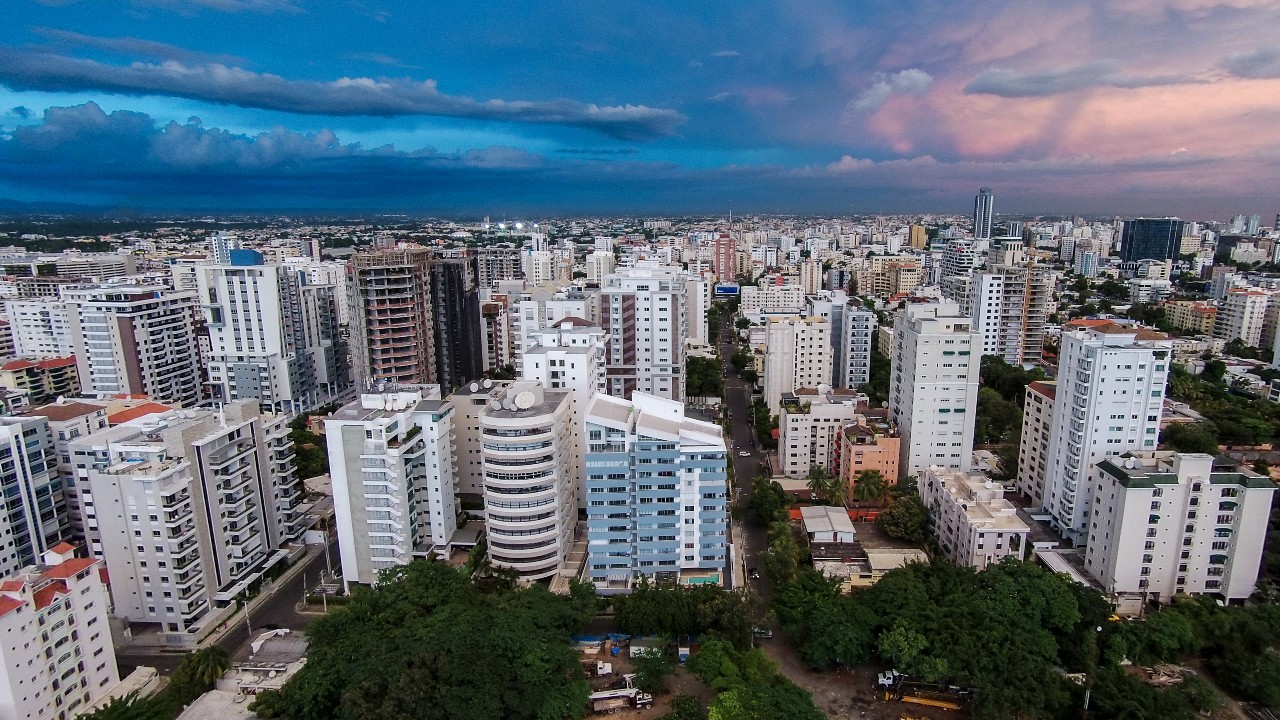
Santo Domingo can become the Deal Room for LATAM & The Caribbean


By Jonathan Joel Mentor | @jonathanjmentor
There is a moment in every emerging market when the conversation starts to change.
At first, people ask whether there is really an ecosystem.
Are there founders?
Is there talent?
Is there capital?
Do institutions care?
Can startups actually come from here?
Can innovation become more than a slogan?
For a long time, those were fair questions in the Dominican Republic.
But they are no longer the most interesting ones.
The country now has entrepreneurs building across sectors. It has universities producing talent. It has corporate groups paying closer attention to technology and modernization. It has public institutions speaking more seriously about competitiveness, digital transformation, exports, and investment attraction. It has a diaspora with capital, expertise, and emotional proximity to the country’s future. It has international attention from people who no longer see the Dominican Republic only as a place to visit, but as a place to connect, work, build, invest, and operate.
That does not mean the ecosystem is mature.
It means the question has changed.
The question is no longer whether the Dominican Republic has innovation potential.
The question is whether the country can organize that potential before someone else organizes the regional opportunity around us.
The Caribbean Still Has an Open Seat
Across Latin America, certain cities have already claimed strong positions in the innovation economy.
Miami has become a capital of capital, migration, media, technology, and Latin American ambition. Mexico City has scale. Medellín has narrative momentum. Bogotá has institutional depth. São Paulo has market gravity. San Juan is trying to position itself around tax incentives, capital migration, and U.S. access.
The Caribbean, however, remains less clearly defined.
There are talented founders across the region. There are serious operators, investors, public servants, diaspora leaders, and institutions trying to modernize their economies. But there is not yet one city that the region instinctively treats as the natural room where Caribbean innovation, capital, talent, mobility, policy, and business development come together.
That is the opening.
And Santo Domingo should be looking at it directly.
Not with insecurity. Not with imitation. Not by pretending to be Miami, Medellín, or Panama.
Santo Domingo has its own logic.
It sits close to the United States. It has a large and economically important diaspora. It has tourism infrastructure that already brings the world to its doorstep. It has private-sector groups with regional ambition. It has a services economy that can evolve. It has talent that is increasingly digital, bilingual, mobile, and commercially aware. It has a culture that understands movement, connection, improvisation, negotiation, and survival.
Those are not small advantages.
But advantages do not become strategy by themselves.
They have to be organized.
Visibility Was the First Battle
The Dominican Republic has spent years trying to make innovation more visible.
That work mattered.
Startups needed visibility. Founders needed legitimacy. Investors needed to see that entrepreneurship was not just a passion project. Corporations needed to understand that innovation was not a department or a campaign, but a competitive issue. Public institutions needed to see that digital transformation, talent, exports, and investment attraction all belong in the same national conversation.
Visibility helped open the door.
But visibility is not the same as conversion.
A founder can be visible and still underfunded.
A country can be praised and still under-positioned.
An event can be well attended and still produce no pipeline.
A policy conversation can sound sophisticated and still fail to reach the people building on the ground.
That is the trap many emerging ecosystems fall into.
They become good at talking about innovation before they become good at converting innovation into economic relationships.
The Dominican Republic now has to avoid that trap.
The next stage is not more noise.
It is coordination.
What a Serious Room Actually Does
A serious innovation room is not just a place where people gather.
It is a place where the market becomes easier to read.
Founders see which investors are actually looking. Investors see which founders are actually prepared. Corporations see which technologies could become procurement, distribution, data, logistics, customer experience, or new revenue. Banks begin to understand new categories of risk. Policymakers hear from operators before designing frameworks in isolation. Diaspora actors find structured ways to participate beyond nostalgia and goodwill.
That kind of room matters because trust is still the scarcest currency in emerging markets.
Capital follows trust.
Partnership follows trust.
Policy follows trust.
Sponsorship follows trust.
Procurement follows trust.
And trust is rarely built through announcements.
It is built through repeated proximity between serious people with something to lose and something to build.
This is why the Dominican Republic should think less about “events” and more about market rooms.
An event fills a calendar.
A market room organizes attention.
That difference matters.
Santo Domingo’s Role Can Be Bigger Than Its Geography
The opportunity is not simply to make Santo Domingo a better local startup city.
That would be too small.
The larger opportunity is to make Santo Domingo a serious regional meeting point for people building around the Caribbean economy: founders, investors, tourism groups, financial institutions, universities, public agencies, diaspora operators, technology companies, remote workers, venture builders, and global brands looking for credible access to the region.
The Dominican Republic already knows how to attract attention.
Tourism proved that.
The next question is whether the country can attract commitment.
Commitment is different. Commitment means capital, partnerships, headquarters, pilots, procurement, platforms, talent pipelines, exportable services, and long-term institutional relationships.
That is where the real game begins.
Because countries do not win the future by being admired.
They win by being useful.
Useful to capital.
Useful to talent.
Useful to companies.
Useful to institutions.
Useful to founders.
Useful to the region.
Santo Domingo can become useful in precisely this way if it positions itself as the place where Caribbean opportunity becomes easier to understand, easier to trust, and easier to enter.
The Room Is Already Forming
Some of this is already beginning to happen.
You can see it in the growing seriousness of conversations around digital mobility, startup finance, venture capital, diaspora participation, innovation policy, corporate transformation, and nearshore opportunity. You can see it in the way more international operators are looking at the Dominican Republic with curiosity instead of only leisure in mind. You can see it in the way founders are beginning to think beyond the local market. You can see it in the way institutions are slowly realizing that innovation is no longer optional language.
Platforms such as Digital Nomad Summit Santo Domingo are part of this broader shift, but the point is larger than any one summit.
The real story is that the room is forming.
The country now has to decide who will be in it, what standards it will set, and whether it will become a room of spectators or a room of builders.
That distinction is important.
Spectators attend because something is happening.
Builders attend because something can be shaped.
The Dominican Republic needs more builders in the room.
Before the Market Becomes Obvious
The most important moment in an emerging market is not when everyone agrees that the opportunity is real.
By then, the best positions are usually taken.
The important moment is earlier, when the signals are still scattered. When the talent is visible but not yet fully organized. When the capital is curious but not yet committed. When institutions are interested but not yet aligned. When international attention is present but not yet captured.
That is where the Dominican Republic is now.
Not finished.
Not fully coordinated.
Not yet mature.
But clearly in motion.
The country can either wait for others to define the Caribbean innovation agenda, or it can begin to define the room where that agenda is negotiated.
Santo Domingo has the ingredients to do it.
The question is whether we have the discipline to move from visibility to coordination, from conversation to conversion, from ambition to architecture.
The future of Dominican innovation will not be decided only by who has the best ideas.
It will be decided by who builds the rooms where ideas become trusted, financed, partnered, and commercially real.
That is the real opportunity before Santo Domingo.
Not to host more conversations.
To become the room the region cannot ignore.
——————————————————————————-
Jonathan Joel Mentor is the CEO of Successment and architect of the Digital Nomad Summit™, scaling startups and challenging institutions to evolve. UN World Summit Award Nominee & ADOEXPO National Excellence in Exportation Award Winner www.jonathanjmentor.co | digitalnomadsummit.co