
Santo Domingo’s startup ecosystem can be measured. The regional GEIAL report shows the real numbers.


By Jonathan Joel Mentor | @jonathanjmentor
A woman starting a business in Santo Domingo can find successful entrepreneurs to look up to. Finding the time to become one is another matter.
In the new GEIAL report on Santo Domingo, women entrepreneurs who serve as role models score 87 out of 100. The availability of time for entrepreneurship alongside family care responsibilities scores just 12. Neither figure is a percentage of women who succeed or fail. They are assessments of different conditions in the local entrepreneurial ecosystem.
Together, they reveal something that gets lost when we describe a city simply as friendly to startups. An ecosystem can celebrate entrepreneurship while leaving people to confront very different obstacles to actually doing it.
For a founder relocating to the Dominican Republic, that distinction matters. The energy of a startup event, the visibility of successful companies and an encouraging first meeting are real attractions. They cannot tell you whether the conditions needed to build your particular business are in place.
A better diagnosis than another startup ranking
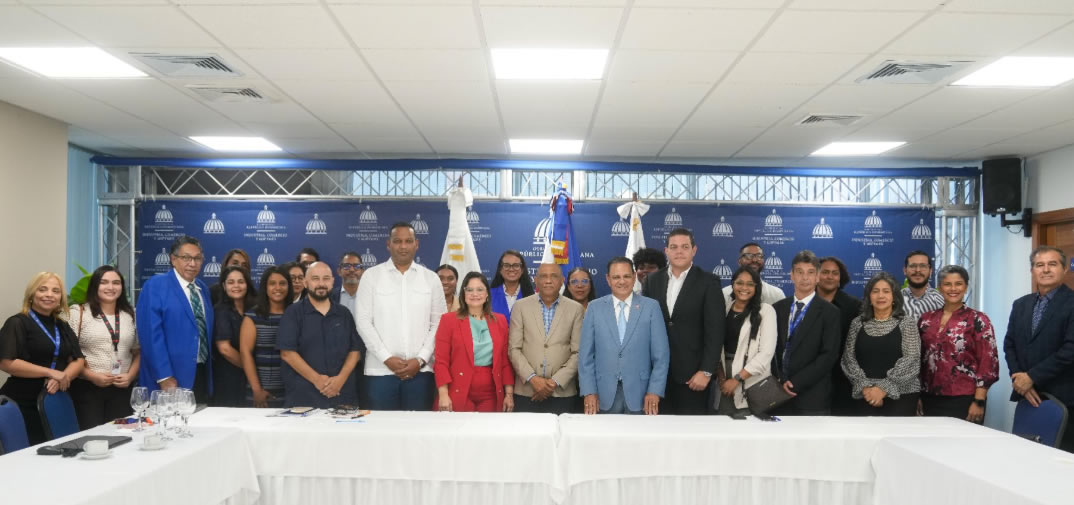
GEIAL, the Grupo de Ecosistemas Inteligentes de América Latina, examines the conditions and recent progress of entrepreneurial ecosystems across the region. Its Santo Domingo 2026 report was coordinated locally by the Ministry of Industry, Commerce and MSMEs (MICM). The research draws on assessments by a panel of local ecosystem actors and, for certain indicators, complementary data.
Its findings are not an audit of company performance. They do not prove that a particular government program succeeded or failed, or tell us what share of founders secure investment. They are valuable because they expose where the environment looks stronger and where the obstacles remain stubborn.
Consider six of the report’s scores:
| Theme | GEIAL indicator | Score /100 |
| Women | Women entrepreneurs as role models | 87 |
| Women | Time available alongside care responsibilities | 12 |
| Science-based ventures | Conditions supporting their creation | 28 |
| Science-based ventures | Access to private financing | 19 |
| AI | Perceived organizational results | 79 |
| AI | Maturity of organizational adoption | 40 |
Source: GEIAL, Santo Domingo report (2026), pp. 28, 31, 33 and 39. Scores are on a 0–100 scale and describe different assessed conditions or results; they are not percentages or directly comparable business success rates.
Recognition without room to operate
The contrast in women’s entrepreneurship is especially striking. GEIAL also assigns 30 points to equal access to financing and 48 to equal access to networks. A visible role model can help someone imagine a future. She cannot, by herself, create spare hours in a crowded week or change lending requirements.
In a commentary I contributed to the same report, I argued that women’s entrepreneurship requires “differentiated diagnoses, not symbolic categories” (translated from Spanish). This is not an argument against leadership programs or celebrating successful founders. It is an argument for measuring whether programs confront the barriers their intended participants actually face.
A working parent trying to start a design studio may need different help from a scientist commercializing a university invention. A freelancer who has relocated to Santo Domingo faces a different set of decisions again. A single entrepreneurship program cannot be expected to solve each problem simply by attracting more participants.
The laboratory has a different problem
For science- and technology-based enterprises, GEIAL gives Santo Domingo 28 points for conditions supporting their creation and 19 for access to private financing. The report also identifies weak university rules around the time researchers can devote to new ventures, their participation in ownership and the treatment of intellectual property.
A promising technology can therefore face obstacles before it ever reaches a customer. Researchers may need permission to use facilities, clarity about who owns an invention, patient development capital and a partner willing to test the product. Treating this as the same problem faced by a consumer-facing startup mistakes the nature of the work.
The accompanying contribution makes a related point: “technical capacity does not guarantee market access” (translated from Spanish). That is a commercial interpretation of the constraints, not a claim that GEIAL counted failed sales. It tells us where universities, investors, companies and policymakers may need to coordinate, without assuming any single institution can do everything.
AI enthusiasm is not yet organizational maturity
The report also contains a revealing AI contrast. The perceived results of AI use score 79, while organizational maturity in adopting it scores 40. The sophistication of solutions used scores just 29.
Imagine a small company whose team uses AI to produce drafts or answer routine questions. It may already be saving time. That does not necessarily mean its data are ready, its staff are trained, or its processes have been redesigned around reliable tools.
It would be wrong to dismiss reported benefits simply because adoption remains immature. It would be equally wrong to treat promising early results as evidence that the entire business community has become technically sophisticated. Those are different stages of change.
For entrepreneurs entering the market, this distinction is practical. They may find receptive customers for a new tool, but still need to budget for training, integration and changes in how a client actually works.
Who is responsible for the missing conditions?
GEIAL recommends stronger financing, better connections among ecosystem actors, more tailored support for women-led and science-based ventures, and deeper AI adoption. Those priorities are sensible. The harder next step is to distinguish the obstacles that each institution is equipped to remove.
A university can clarify the rules for researchers starting companies. A financial institution can examine the risks it is willing to finance. A large business can make its pilot requirements understandable. Public programs can evaluate whether the people they intend to support have the time, access and resources to participate.
None of these interventions guarantees a thriving enterprise. Nor does the report show that one change would automatically lift another score. But it gives decision-makers a more disciplined starting point than counting events, announcements or promising ideas.
Santo Domingo’s entrepreneurial ambitions are not misplaced. Its role models, networks and business appetite are real assets. The GEIAL findings show why progress will depend on more than celebrating those assets: different founders need different conditions, and somebody must be accountable for improving them.
The measure of a maturing ecosystem is not whether every indicator rises at once. It is whether its institutions can identify the barriers that matter, act on the ones they can change and recognize when those changes have made a difference.
————————————————————————
Jonathan Joel Mentor is CEO of Successment and founder of Digital Nomad Summit Santo Domingo, working across revenue systems, innovation architecture and economic modernization. A UN World Summit Award nominee and ADOEXPO National Export Excellence Award winner. successment.co | digitalnomadsummit.co