
Spain: What’s at stake for Dominicans in the November 29 elections?


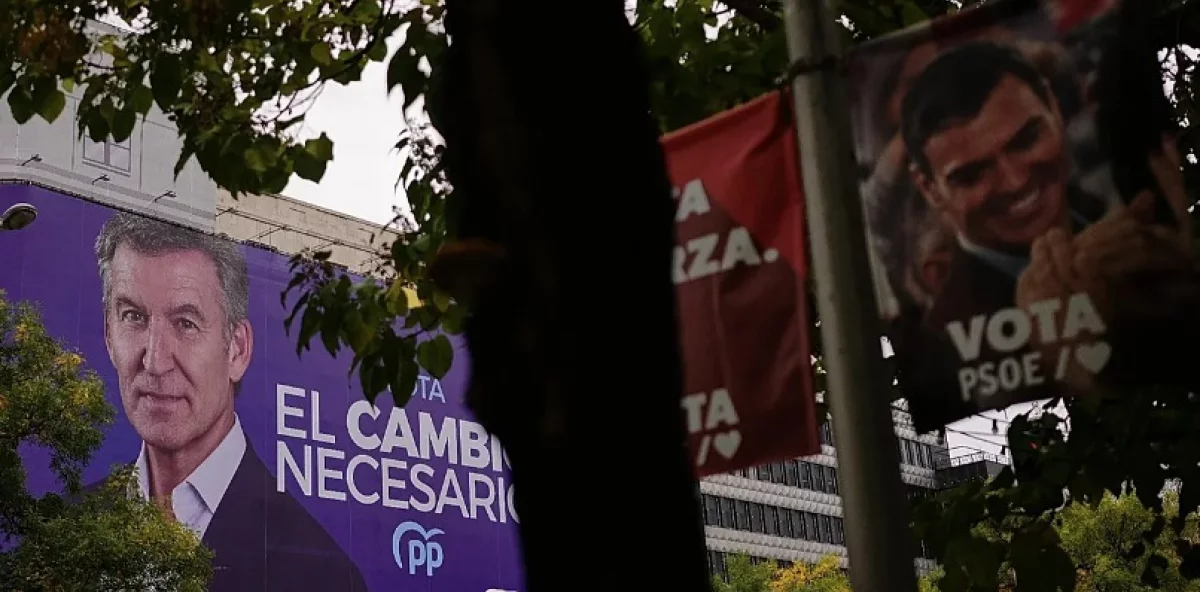
Spain’s general election this Sunday, November 29, better known as 29N, will be marked by a debate that transcends its borders: the direction of migration policies, the advance of right-wing and far-right forces, and the future of social rights in the country.
The contest pits political models with substantial differences in immigration, the economy, taxes, and social assistance against each other—issues that could have direct and indirect repercussions for the more than 207,000 Dominicans residing in Spain (almost 70% of the Dominicans in Europe).
Progressive forces advocate for policies of integration, social protection, and openness to migration. Conservative sectors, by contrast, propose stricter border controls, restrictions on certain benefits, and changes to immigration policies. This is particularly relevant because the election results would have significant implications for the Dominican community, which is substantial in sectors such as healthcare, hospitality, media, and other parts of the Spanish economy.
The newspaper Hoy spoke with international analyst and communicator Óscar Alejandro Guédez, who offered his opinion on what would be at stake for Dominicans in the Spanish elections and the possible implications of a far-right advance for policies aimed at the migrant population.
Guédez considered that one of the main elements in dispute is the expansion of a political current that, in his opinion, has gained ground in different countries and whose main characteristics include a discourse against immigration.
“In Spain, what is at stake is the expansion of the right-wing and far-right wave and of anti-immigration politicians and policies that reached their peak in 2024 with the election of Donald Trump and that have had three expressions in different countries of the world, such as the election of Javier Milei, such as that of Abelardo de la Espriella, I am talking about Argentina and Colombia, or such as the election in Germany, where just a few months ago the far-right party Alternative for Germany (AfD) did not obtain a victory, but rather a substantial improvement in its results in several German states,” he said.
Regarding the Spanish political scene, he argued that Vox has gained considerable strength on the conservative spectrum, even against the historic People’s Party (PP), since its proposals intensify polarization and political confrontation.
“In Spain, Vox seems to have even more strength than the historic People’s Party itself because, well, it is precisely one of those political currents that tend to polarize and make the political debate and discussion much more fierce and much more extreme,” he considered.
The analyst pointed out that the election results could represent both the expansion of these movements and an opportunity to curb their growth and assert Spanish citizens’ social demands.
“So, what’s at stake is whether this wave expands or whether the slowdown in these political movements is confirmed. This slowdown began with Lula da Silva’s victory in Brazil, has spread to the United States with the Democratic Party’s midterm elections, and in Spain could reaffirm the struggles of workers and ordinary people demanding access to housing, improvements in the healthcare system, and, above all, an immigration policy that continues to represent the values of 21st-century Spain and late 20th- and early 21st-century Europe: an open and welcoming Spain for Latin American migrants, friendly and welcoming to Latinos, South Americans, Central Americans, Caribbeans, and especially Dominicans. Despite what has happened to Latin American migrants and, above all, Dominican migrants in Spain, I believe that Spanish society, for the most part, continues to value migration positively.” “Latin American,” Guédez explained.
In his analysis, Guédez also warned about the nuances that have historically marked the Dominican community’s relationship with Spanish society and that, in his view, could become more relevant if political forces opposed to immigration were to strengthen.
“We cannot forget that Dominican migration in Spain has and has had symbolic and extreme nuances and cases that could cause friction in the relationship between the Dominican people and a far-right Government in Spain,” he noted.
Among these incidents, he mentioned Lucrecia Pérez, a Dominican woman murdered in Spain in 1992 for racist reasons, a case that became a symbol of the fight against racism and xenophobia. He also referred to the presence of young Latin Americans, including Dominicans, in groups linked to criminal activity, a situation that, he warned, could be used to fuel rhetoric of rejection and persecution against migrants.
“The case of Lucrecia, the Dominican woman murdered for racial reasons many years ago, in the 1990s, is relevant in Spain. But, at the same time, on the other side there are gangs of young men who commit crimes and acts of vandalism in Spain and who have a significant Latino presence, specifically Dominicans, and who could then be an excuse used by these far-right governments to victimize, attack, and persecute Dominican migrants, who are by far among the best migrants in Spain,” he argued.
Guédez also defended the Dominican diaspora’s contribution to Spanish society and highlighted that its participation in different productive activities is fundamental to understanding the importance of the migratory relationship between the two countries.
“In the health sector, in the media sector, in the workplace, in restaurants, in the hospitality industry, and in many, many, many other sectors of daily life, Dominicans play an important role in the Spanish economy, contributing their labor, their skills, their talents, their effort, their daily work, their perseverance, and their ability to adapt to a society so different from the Dominican one, and yet so close due to the historical ties that bind Spain and the Dominican Republic,” he concluded.
Political scientist and international relations expert Luis González added his perspective, suggesting that the election results could have different consequences for Dominicans residing in Spain, depending on their immigration status. In his view, those with legal residency and documentation would have no reason to anticipate changes that would jeopardize their stay, while those without legal status could face greater difficulties if a coalition Government formed by the People’s Party (PP), led by Alberto Núñez Feijóo, and Vox, led by Santiago Abascal, were to take shape.
“Now, the most important thing for Dominican migration—organized migration, legal migration, the migration that is contributing—is that it will not have problems. Now, illegal, irregular migration could have serious problems if the Popular Party, the PP, the already famous traditional party, joins forces with Vox, Abascal, to form a Government,” González stated.
The political scientist said he agrees with establishing stricter immigration controls and organizing entry flows, arguing that open-border policies should include mechanisms to identify who is entering the country. In this regard, he argued that control measures should distinguish between those who comply with legal requirements and contribute to Spanish society and those who engage in criminal activity or remain in the country without regularizing their status.
“If you ask me, I agree, and that’s one of the positions of Feijóo’s PP: migration will be organized, it will be timed, but those who are contributing… Those who make mistakes, commit human rights violations, crimes and, in addition, are illegal, well then they won’t have any chance,” he said.
González also identified the housing crisis as another major issue shaping the Spanish election campaign. She noted significant differences between progressive and right-wing parties on this issue, saying the PSOE and the Broad Front take a more favorable stance toward public intervention to address rising rents and improve access to decent housing.
“So, that’s what’s being debated, and it seems that’s the big issue. But the other issue is housing. There, the PSOE and the far left, with the Broad Front, have more support, because what the right wants is to keep housing prices high, and that’s hurting the Spanish people,” he stated.
The international relations expert added that the housing problem also affects Dominican migrants, albeit indirectly, due to the difficulties in finding accommodation and conflicts related to property occupation. He warned that the next Government’s decisions on this matter could affect both Spanish citizens and foreigners, regardless of immigration status.
The four main candidates for the Spanish presidency closed their election campaigns this Friday with separate events in different cities across the country, where they asked citizens for their vote on the last day allowed to do so ahead of the elections on Sunday, November 29.