
Strong economic growth of 5.6% in September


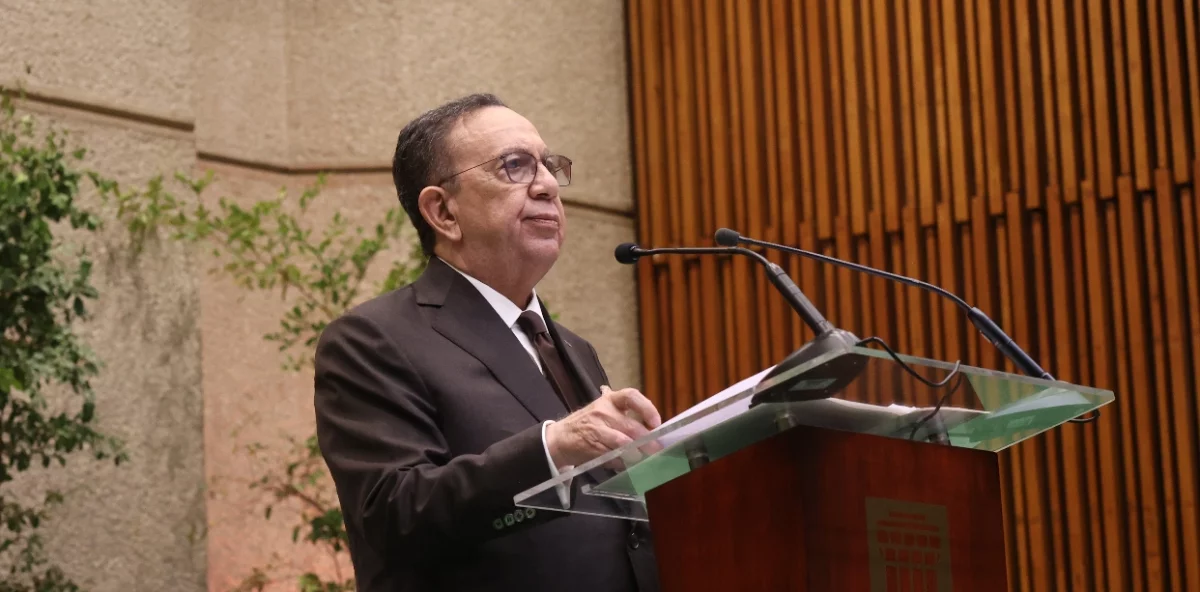
The governor of the Central Bank of the Dominican Republic (BCRD), Héctor Valdez Albizu, reported that the Dominican economy saw a notable boost in September, growing 5.6% and reaching 4.6% accumulated growth in the first nine months of 2026.
Furthermore, projections for the end of the year indicate the economy will close with a 4.5% expansion.
Speaking during the mass marking the institution’s 79th anniversary, Valdez Albizu noted that year-on-year inflation has moderated to 5.12% after peaking at 5.67% in June, and that it will fall within the target range in the last quarter.
It also reported that total goods exports amounted to approximately US$13.2 billion in January-September 2026.
He said the country received about US$9.7 billion in tourism revenue and more than US$9.4 billion in remittances in the first nine months of the year.
Foreign direct investment also reached approximately US$4.5 billion in January-September.
He added that “by the end of 2026, the Dominican economy would generate foreign exchange of about US$50.7 billion, with remittances of around US$12.6 billion, total exports of more than US$17.2 billion, tourism revenue of around US$12.2 billion and foreign direct investment flows of about US$5.3 billion.
This last one, he pointed out, would cover approximately four times the current account deficit of the Balance of Payments, projected at 1% of GDP.”
In addition, the governor offered encouraging news on a topic that has raised concerns
He said the BCRD’s quasi-fiscal deficit has steadily declined over six years, from 1.4% of GDP in 2020 to 0.5% in 2025, the lowest since the 2003 financial crisis.
Growth by sector
According to Albizu, the sectors driving growth from January to September are construction (0.2%), mining and quarrying (0.2%), local manufacturing (3.4%), free zones (2.8%), and services as a whole (4.6%).
Among the latter, he added, financial services (7.8%), hotels, bars and restaurants (5.6%) and other services (5.4%) stand out.
On the labor market, he said, figures from the National Continuous Labor Force Survey show that in the second quarter of 2026, employment reached 271,005 workers, a year-on-year increase of 2.9%, or about 147,000 new jobs. As a result, the informal employment rate stood at 53.8%, below the national American regional median. The open unemployment rate was 5.3% in April-June 2026, lower than the historical average of 6.0%.