
Thousands of Haitians rally in support of Bukele’s anti-gang operation


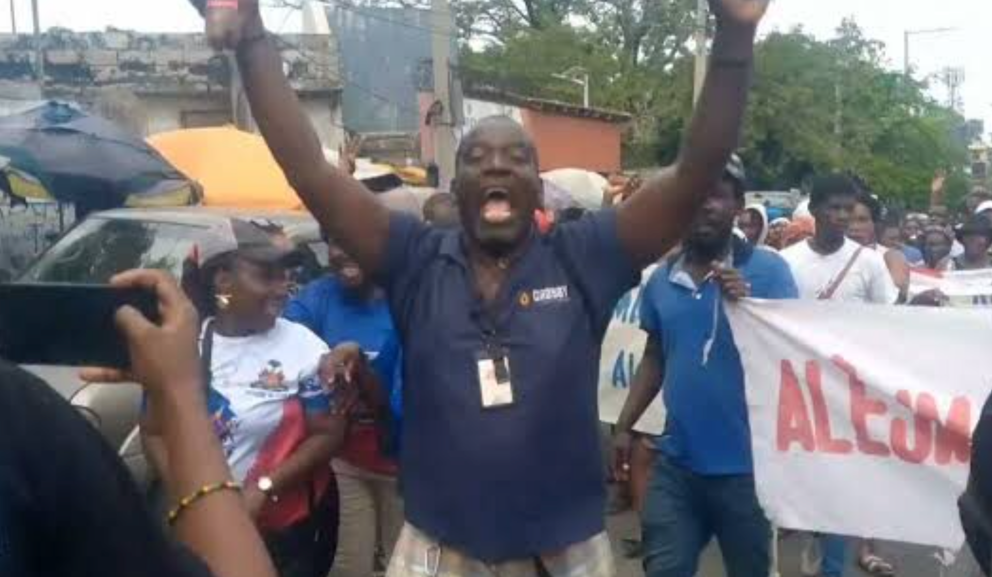
Port-au-Prince.- Thousands of Haitians took to the streets of Port-au-Prince on Tuesday to express support for Salvadoran President Nayib Bukele and his decision to send troops to Haiti to fight armed gangs.
Demonstrators waved Haitian flags, raised their fists and called for greater use of drones and other technology against gang-controlled areas. Bukele deployed about 2,500 Salvadoran troops to Haiti last month following an attack on four Salvadoran personnel who remain missing.
The deployment has intensified clashes between gangs and Haitian and foreign forces, but security experts warn that the intervention lacks a long-term strategy for maintaining stability once international forces leave.
In a report released Tuesday, the International Crisis Group said Haiti needs a national security strategy capable of coordinating police, military and international efforts. The organization warned that foreign forces can weaken gangs but are unlikely to dismantle them permanently without stronger Haitian institutions.
Haiti’s security response currently involves the national police and military, a UN-backed multinational force, armed civilian groups, private security personnel and Salvadoran troops. The International Crisis Group said the absence of a unified strategy has contributed to different police units operating under varying guidelines, often influenced by foreign donors.
The organization also highlighted longstanding weaknesses within the Haitian National Police, including limited staffing, inadequate training, low salaries and promotion systems that are not consistently based on merit. It called for better pay and facilities, specialized training and a clear performance-based promotion system.
The report also examined the growing use of helicopters and explosive drones against gangs. Although the technology initially appeared to undermine gang leaders’ confidence, the International Crisis Group said its effectiveness has diminished and has not significantly changed territorial control.
The organization nevertheless said an immediate ban on explosive drones would be unrealistic, while emphasizing the need for greater attention to civilian casualties. More than 20,000 people have been killed in Haiti over the past five years, according to the report.
Despite the concerns, Bukele has gained support among some Haitians who view the Salvadoran deployment as a stronger response than previous international missions. Port-au-Prince resident Cliford Vital said the arrival of Salvadoran troops had changed the balance of fear between residents and gangs.
Haiti’s Justice Minister Patrick Pélissier traveled to El Salvador this week for an international conference and was expected to hold talks with Salvadoran officials. Salvadoran Vice President Félix Ulloa said the bilateral security agreement with Haiti would remain confidential.
Salvadoran officials have said their troops will return once the four missing Salvadoran aviation technicians are found. Security Minister Gustavo Villatoro said the broader goal should be to help Haiti establish functioning institutions and a lasting rule of law.