

Users can demand financial compensation for blackouts


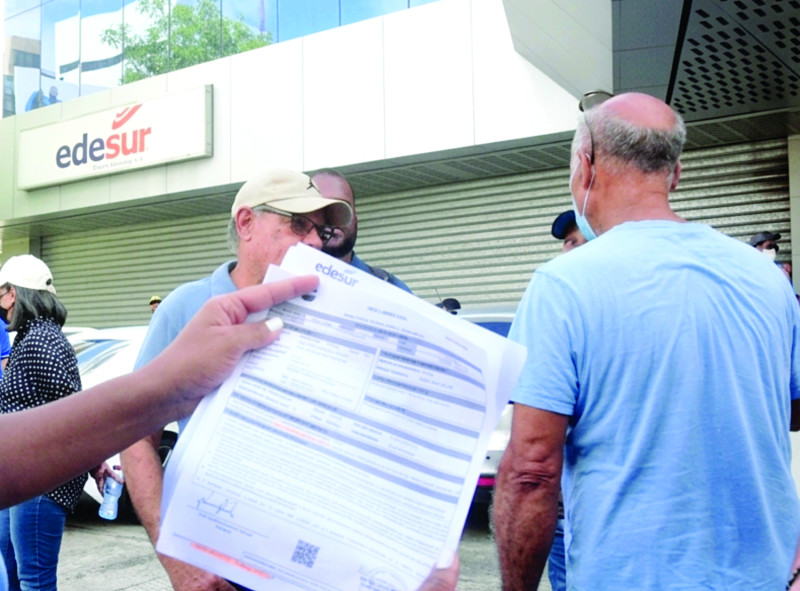
Santo Domingo — Law number 186-07 directly addresses users’ rights in the electricity service to regulate the electricity market.
In principle, this law modifies the previous legislation number 125-01 and maintains a more specific focus on criminalizing and harshly punishing electricity fraud; the responsibilities that energy distribution companies must have, such as users’ obligations, continue to be established.
However, paragraphs I and II of Article 93 state that energy suppliers are obligated to compensate regulated users for service interruptions attributable to company or system failures, using the term “unserved electricity”, and add that the compensation will not be less than 150% of the tariff.
“Distribution companies shall be obliged to compensate regulated users for unserved electricity, in accordance with the technical standards of quality of service established for such purposes by the Superintendence of Electricity by resolution. This agency will also set by Resolution the amount to be compensated to such users for the unserved energy, which, in no case, will be less than one hundred and fifty percent (150%) of the price of the corresponding tariff,” reads the regulation.
For this process, an agent of the Wholesale Electricity Market (MEM) responsible for unserved energy will be necessary to carry out the compensation and will be in charge of a Failure Committee dependent on the Coordinating Body. Likewise, the Superintendence of Electricity will establish the form and conditions of how such compensation will be made.
Claims
On the other hand, Decree No 555-02, in its Articles 443 to 450, addresses the rights of the customer or user holder in the electricity service, from the claim procedure to the response time.
In the case of claims and complaints, Article 445 provides that the owner shall have the right to demand from the Distribution Company the due attention and processing of the claims or complaints he or she deems appropriate to make, to receive a written response, and to communicate them monthly to the Consumer Protection Office.
“The Distribution Company must strictly comply with the analysis and response to the claims made by the customer or user who owns the supply according to current regulations,” it adds.If there is a claim pending resolution, the energy distributor may not suspend the service for reasons of the disputed bill(s), as long as the claim is made as established.
For the claim, article 445 states that it must be made to one of the EDES by letter, telephone, or in person, with the receipt or claim number, and that the response must be provided within 3 to 10 days for billing problems.
The techniques take 8 to 16 hours, depending on the area; up to two days for equipment changes and a maximum of three days for meter calibration, without cutting off service.
Article 448 says that, if the customer is not satisfied with the results of the EDES in the first instance, he can go to the Office of Consumer Protection of Electricity (Protecom), maintaining his energy service
If it was suspended, it must be reconnected immediately upon receiving notification from Protecom.


Does this legislation include private distributors of electricity service?
Sounds like Catch-22 to me …