 Smaller
 Bigger
Crisis in the Strait of Hormuz: Economists warn of risks for the Dominican Republic
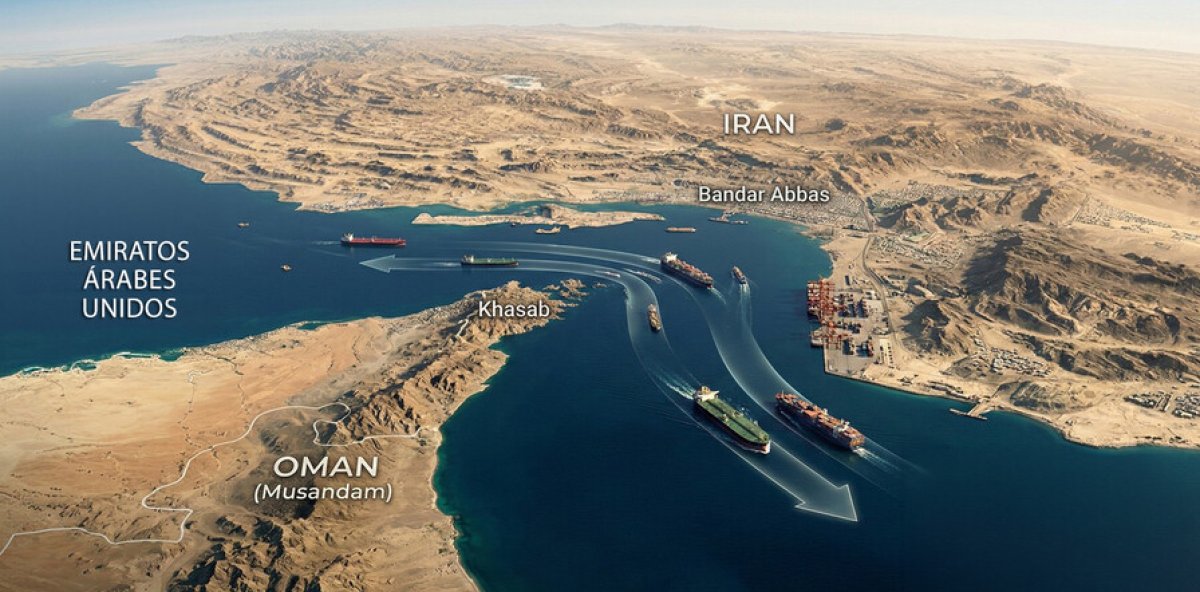
Growing geopolitical tensions in the Strait of Hormuz, one of the world’s main energy corridors, could have significant impacts on the Dominican Republic’s economy, due to rising oil prices, increased logistics costs, and inflationary pressures, according to an analysis prepared by the Economics and Business Area of the Technological Institute of Santo Domingo (INTEC).
The report warns that this strait, through which nearly a quarter of the world’s traded oil passes, has become a critical point for international economic stability. Hence, any disruption, or even the perception of risk, has immediate effects on energy prices and market expectations.
Direct impact on the Dominican economy
The document points out that, for the Dominican economy, which is highly dependent on energy imports, the impact of these external events is transmitted relatively quickly through multiple channels. The increase in fuel prices directly puts pressure on inflation, while the rise in maritime transport costs increases the price of imported goods.
This is compounded by a possible tightening of international financial conditions and a slowdown in the global economy, with effects on key sectors such as tourism and remittances.
The document indicates that, in quantitative terms, a $10 increase in the international price of oil could generate inflation increases of between 0.4% and 0.7%, as well as a deterioration in the current account and a slowdown in economic growth of up to 0.3 percentage points. These effects reflect the simultaneous interaction between the increased energy bill, higher logistics costs, and the indirect impact on external financing conditions.
The analysis also highlights that the Dominican State would face increased fiscal pressures due to higher electricity subsidies, in a context where tariff stability is crucial to mitigating the social impact of rising energy costs. This situation could strain public finances and necessitate adjustments to economic policy.
At the international level, the study identifies different scenarios for the evolution of the crisis, ranging from a gradual stabilization with transitory effects to a scenario of global energy fragmentation characterized by high price volatility and structural disruptions in trade. This latter scenario would represent the greatest risk for small, open economies like the Dominican Republic, not only because of oil prices but also because of the persistence of their instability.
Opportunities for the Dominican Republic during the crisis
However, the report also underscores that this context presents strategic opportunities for the country, especially in areas such as the development of renewable energy, strengthening its position as a regional logistics platform, and attracting investments linked to production relocation processes across the hemisphere.
The analysis document prepared by the Economics and Business Area of INTEC argues that energy volatility will consolidate as one of the main determinants of Dominican macroeconomic stability in the coming years. It therefore emphasizes the need to strengthen strategic planning, diversify the energy matrix, and improve the institutional capacity to anticipate and manage external shocks in an increasingly uncertain global environment.
With this analysis, INTEC makes an academic contribution in response to President Luis Abinader’s call to seek consensus that leads to a great national agreement to face the current global crisis.
In that regard, the Dean of the Economics and Business Area, Manuel Santana, as well as the coordinator of the Economics program, Vladimir Pimentel, indicated that INTEC’s doors are open to be the stage for debate among the various national productive, political, and social sectors, culminating in an action plan to address the crisis with the least possible impact.