 Smaller
 Bigger
Isfodosu unveils first series of Dominican children’s stories at FIL Santo Domingo 2025
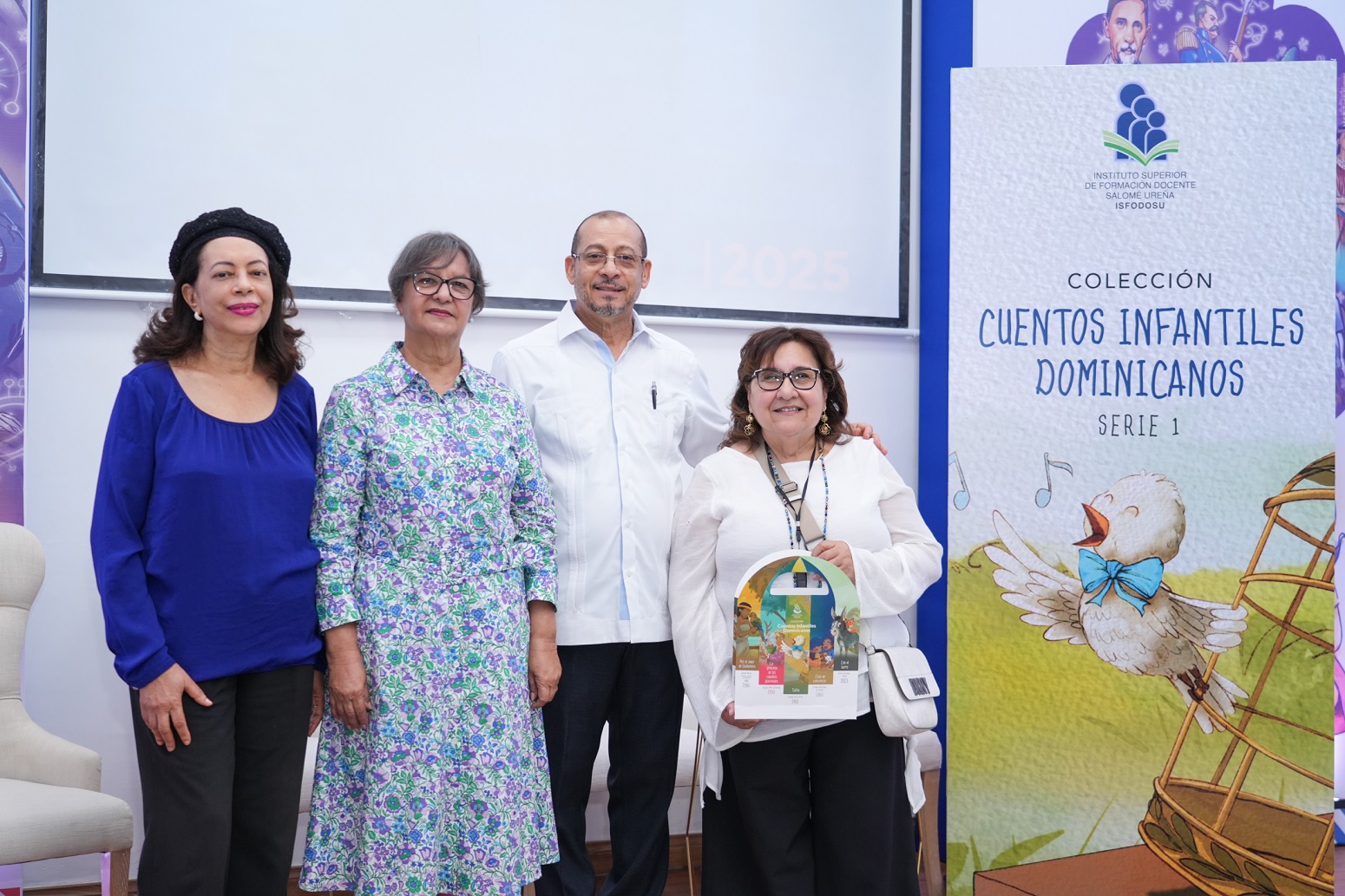
Emilia Pereyra, Nurys del Carmen González, Tulio Cordero and Miguelina Crespo. (Photo: Isfodosu)
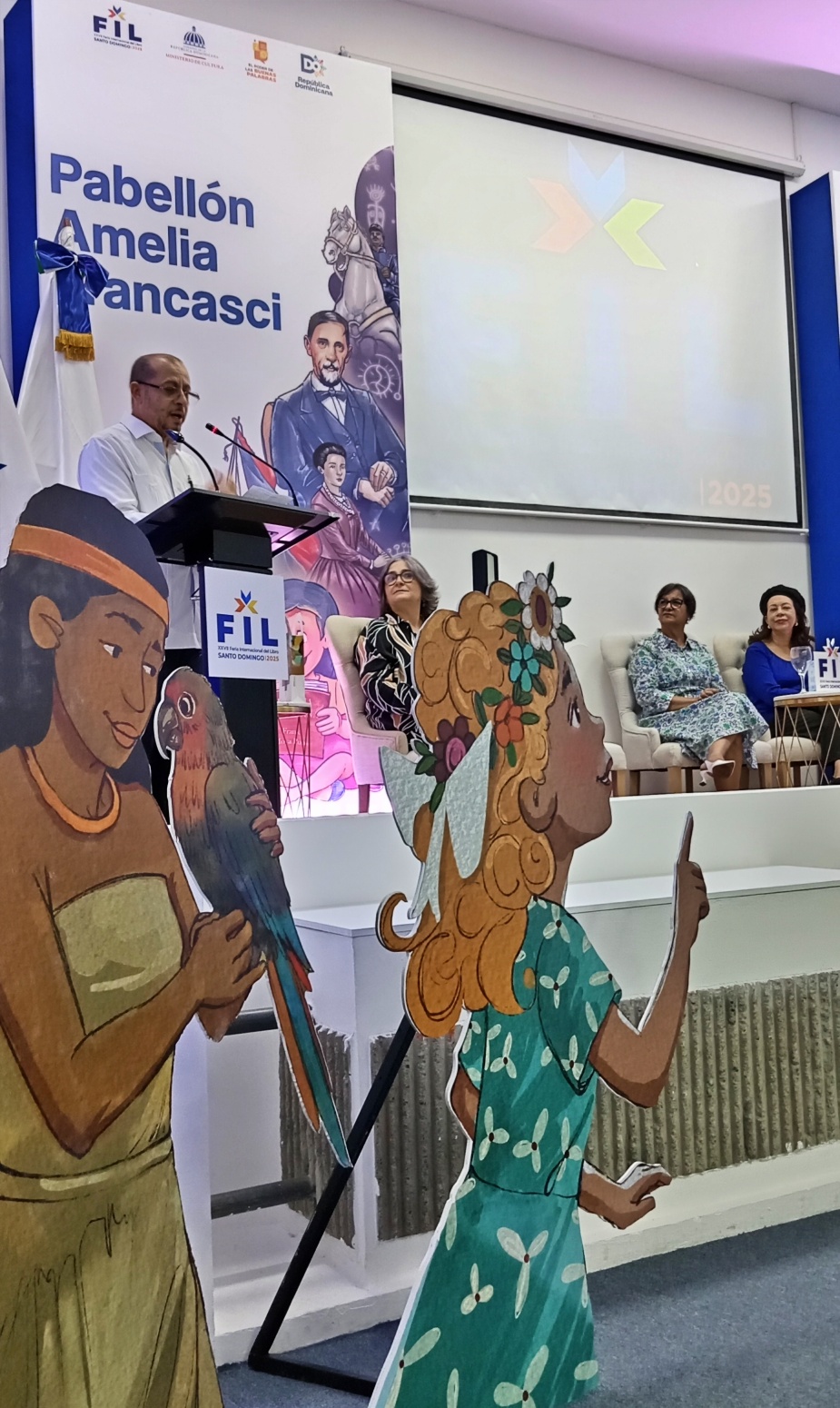
Santo Domingo.- The Instituto Superior de Formación Docente Salomé Ureña (Isfodosu) unveiled its inaugural Colección de Cuentos Infantiles Dominicanos — Serie I at the XXVII Feria Internacional del Libro Santo Domingo 2025, bringing ten restored and reissued classics of Dominican children’s literature back into print for a new generation.
The launch, held in the auditorium of the Museo de Arte Moderno, was led by Isfodosu Rector Dr. Nurys González Durán, who praised the editorial and production team for rescuing works that helped define the country’s literary imagination for young readers. The volumes — carefully selected, edited, and illustrated — showcase stories that range from Taíno legends to intimate family adventures, all intended to strengthen reading habits at home and in the classroom.
“These books are more than nostalgia,” Dr. González Durán said during the presentation. “They’re tools for learning, windows into our culture, and invitations to curiosity for children and educators alike.” She singled out the collaborative effort behind the project, noting the role of José Segura, coordinator of the Education Arts area at the Ministry of Education (Minerd), whose illustrations help give the series a fresh visual voice.
Renowned writer and poet Tulio Cordero, who oversaw the selection of the texts, described the collection as what he called “the spirit’s odyssey” — a literary journey that invites families and teachers to join children in the adventure of reading. “Though written for young readers, some of these texts preserve a cultivated register; occasionally archaic words enrich a child’s vocabulary,” Cordero added, urging adults to read alongside children and treat the books as shared experiences rather than simple bedtime stories.
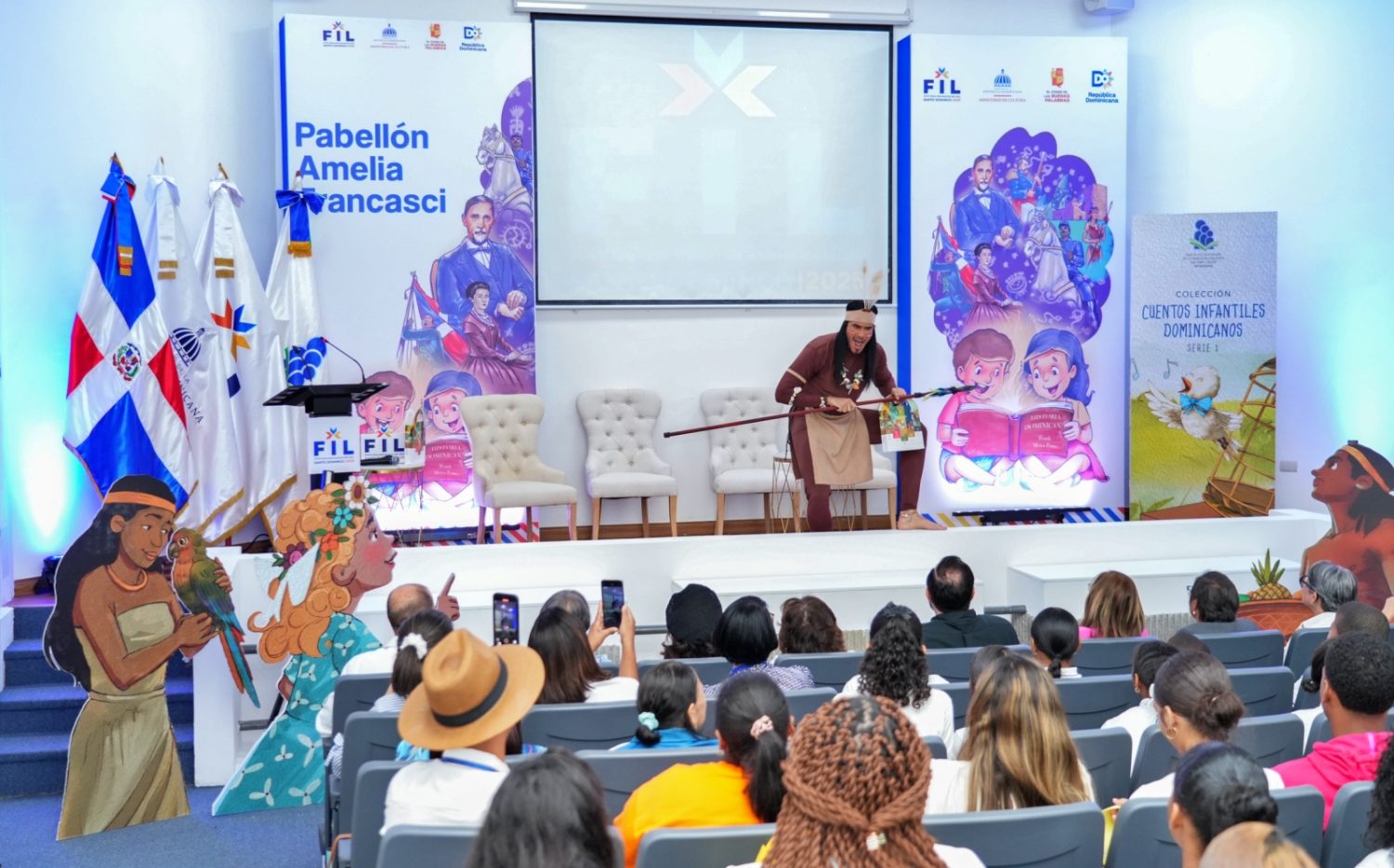
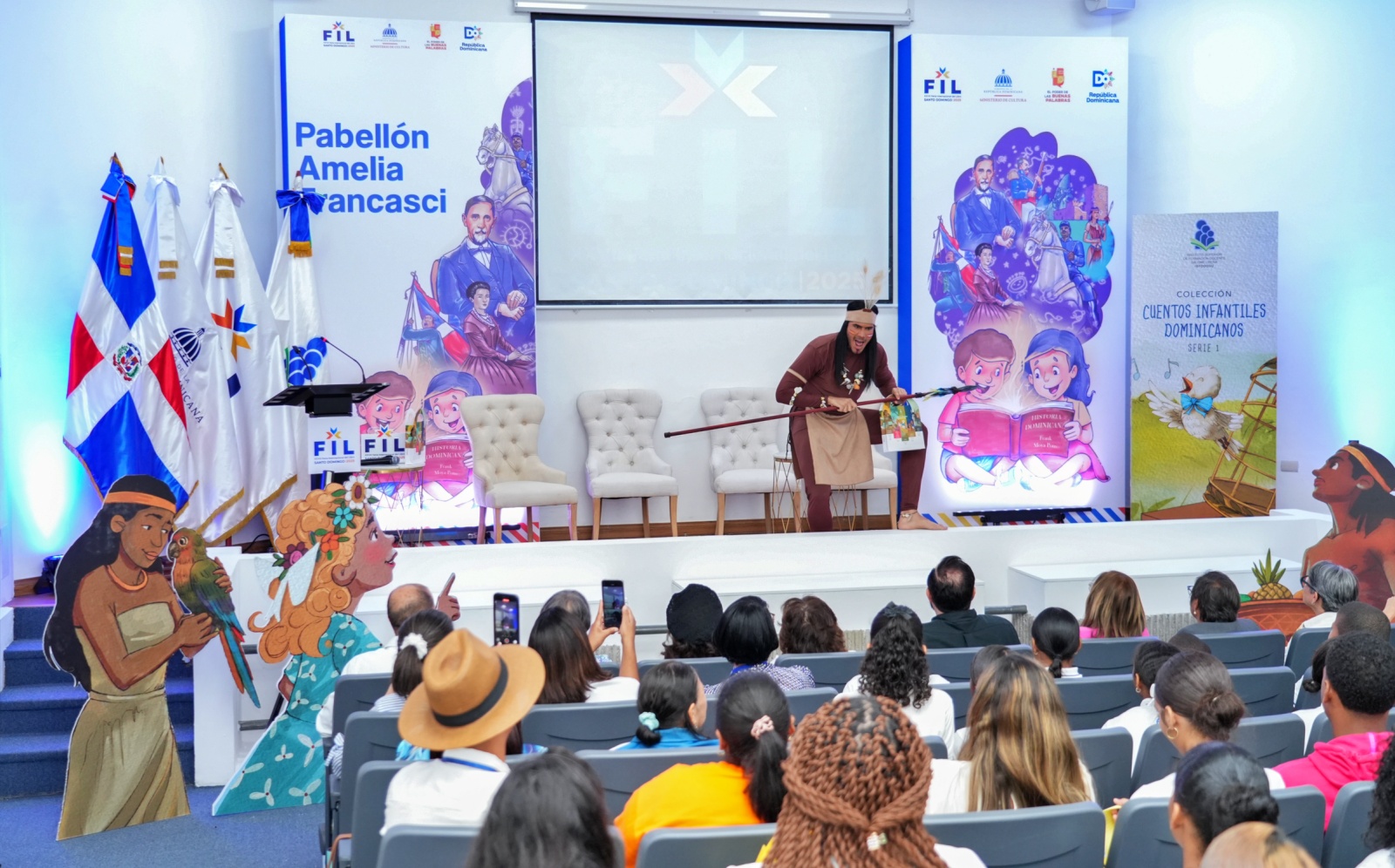
Patricio León brings the ISFODOSU children’s stories to life through a dynamic dramatization. (Photo: Isfodosu)
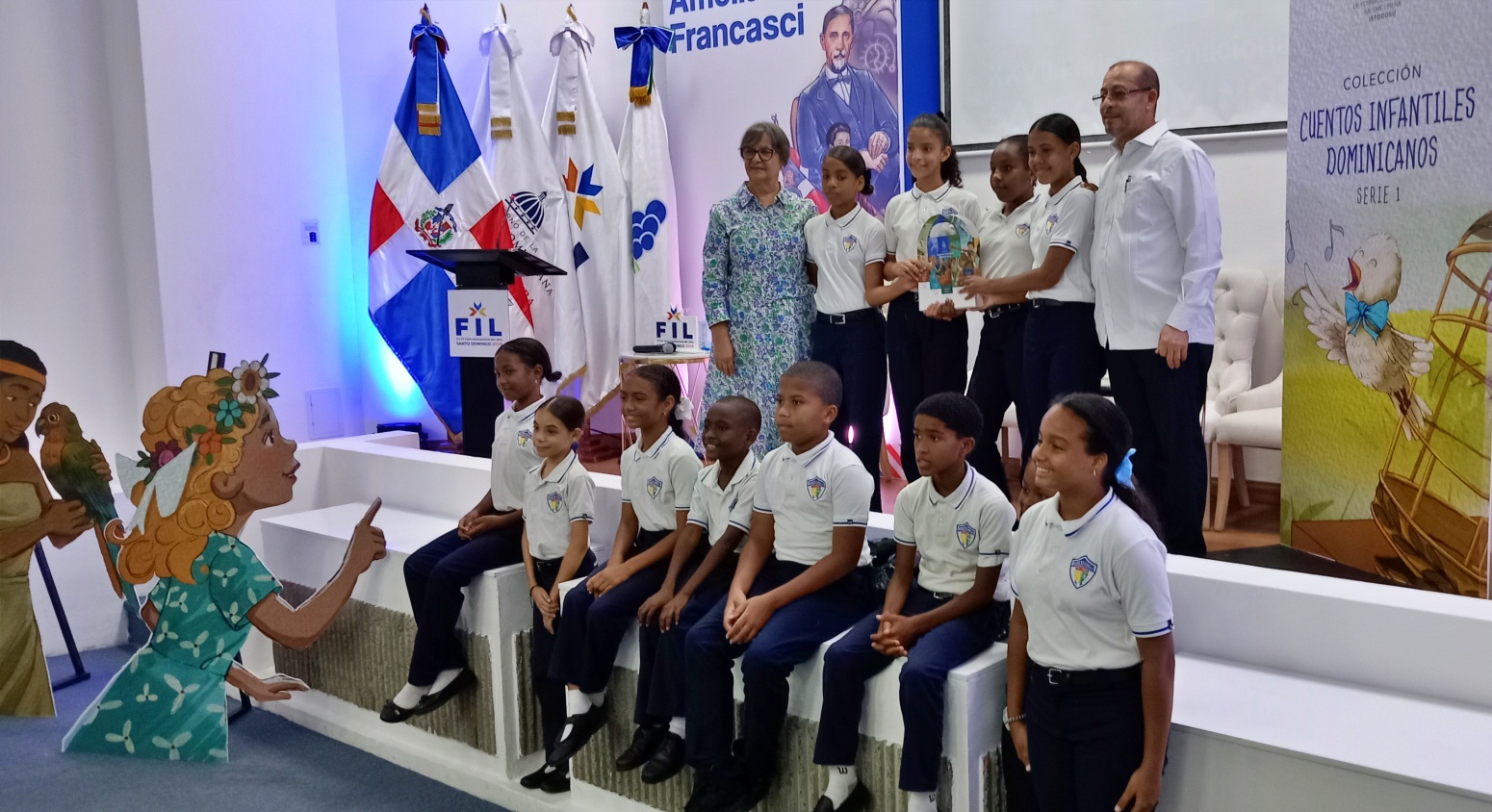
The launch mixed celebration with performance. Playwright Patricio León staged a short enactment drawing on indigenous cultural themes from the books, interacting with children in the audience and reinforcing the living ties between the stories and Dominican cultural memory. The event also included students of Language and Literature, Isfodosu faculty and staff, and a visiting delegation from Centro Educativo Madre María Mazzarello, joined by prominent voices from the island’s literary and academic communities.

The student delegation from Centro Educativo Madre María Mazzarello poses with Dr. Nurys del Carmen Durán, Rector of ISFODOSU, and writer Julio Cordero. (Photo: Adrian R. Morales)
Series I — Restored titles
The ten books included in Serie I are a deliberate homage to authors who helped build the foundations of Dominican children’s literature:
-
Por el amor de Guabonita — William Mejía (1984)
-
La princesa de los cabellos platinados — Virginia Peña de Bordas (1950)
-
Toñín — Virginia Elena Ortea (1901)
-
Caso de conciencia — Carmita Henríquez de Castro (1960)
-
Con el burro — Pedro Henríquez Ureña (1923)
-
La ignorancia de doña Gallina Pinta — Juan Bosch (1934)
-
Estrellas y flores — Virginia Elena Ortea (1901)
-
La eracra de oro — Virginia Peña de Bordas (1950)
-
Con el corderito — Pedro Henríquez Ureña (1923)
-
El Quijote vuelve — Carmita Henríquez de Castro (1960)
Organizers emphasized that the collection was curated to reflect the breadth of Dominican storytelling: from indigenous legend and historical memory to humor, moral dilemmas, and flights of imagination. The project aims to place these works into classrooms and family bookshelves, using readable editions and evocative illustrations to entice young minds.
“Recovering these texts is a cultural responsibility,” said one member of the editorial team. “We want children to meet the voices that shaped our stories, and for teachers to find reliable, beautifully produced resources for literacy and cultural education.”
Julio Cordero presenting the Dominican Children’s Stories (Series I). Also pictured: Vice-Rector of Research and Postgraduate Studies Andrea Paz, ISFODOSU Rector Dr. Nurys del Carmen González, and writer Emilia Pereyra. (Photo: Adrian R. Morales)
A cultural and pedagogical mission
Isfodosu framed the collection not merely as a publishing milestone but as part of a broader pedagogical mission: to strengthen reading culture across the Dominican Republic and to provide teachers with attractive, locally rooted texts. By pairing updated design and illustration with historical works, the series aims to offer books that are both accessible and respectful of their original language and context.
The launch drew praise from educators and parents in attendance, who underscored the potential of the series to re-center Dominican storytelling in early childhood reading lists and curricula. Plans were announced to distribute copies to schools and educational centers, and to organize reading activities that connect the books’ themes to classroom learning.
Authors
William Mejía — Born in San José de Ocoa in 1950, Mejía is a writer, dramatist and educator. Por el amor de Guabonita revisits Taíno legend through a contemporary retelling drawn from early colonial accounts, adapting names and details to suit narrative and linguistic conventions.
Virginia Elena Ortea — A native of Santo Domingo (1866–1903), Ortea was a pioneering narrator, poet and playwright, and one of the country’s earliest women journalists. Her stories, collected in Risas y lágrimas (1901), remain touchstones of turn-of-the-century Dominican literature.
Pedro Henríquez Ureña — (1884–1946) A towering intellectual of the Americas, Henríquez Ureña was a scholar, critic and educator as well as a writer of children’s tales. Born in Santo Domingo and later active across Latin America, his essays and pedagogical work shaped 20th-century literary thought.
Juan Bosch — (1909–2001) From La Vega, Bosch was a novelist, essayist, historian and one-time president of the Dominican Republic. Celebrated for his short stories, he is regarded as one of Latin America’s foremost masters of the genre.
Virginia Peña de Bordas — (1904–1948) Born in Santiago de los Caballeros, Peña de Bordas was a multifaceted artist — dancer, painter and writer — whose stories appeared in local newspapers and were published posthumously, contributing to the island’s mid-century literary landscape.
Carmita Henríquez de Castro — (1894–1970) A lifelong teacher from Santo Domingo, Henríquez de Castro used storytelling as a classroom tool. Her Cuentos para niños (published in 1969) and other tales highlight her commitment to education and to narratives that engage young learners.