 Smaller
 Bigger
Nearly 30 skeletons found in colonial church ruins in Azua
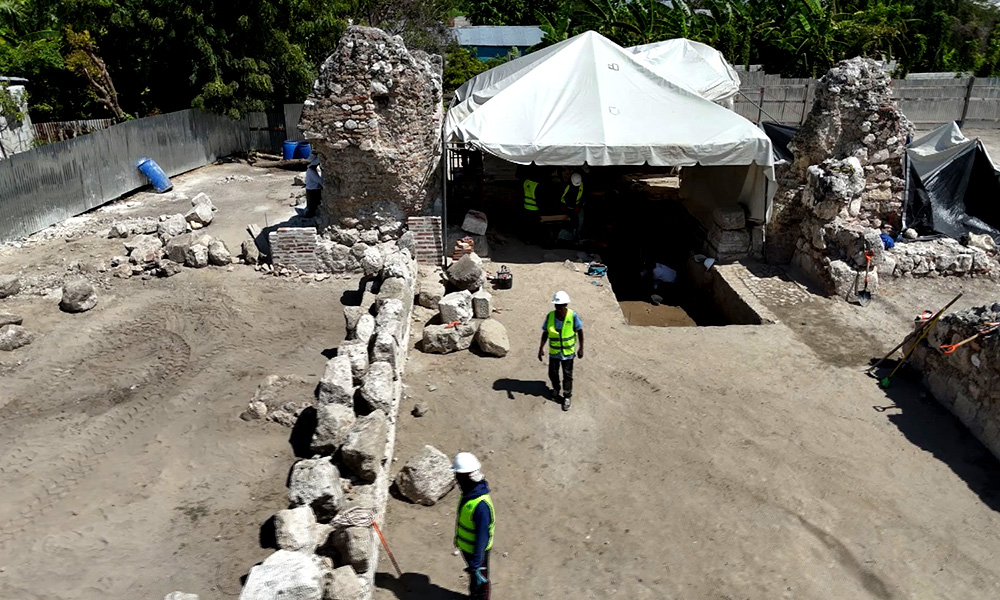
Azua.- Nearly 30 human skeletons have been uncovered in the ruins of a colonial-era church in Pueblo Viejo, a discovery that could include the remains of the legendary Taíno leader Enriquillo, who led resistance against Spanish colonization in the 16th century.
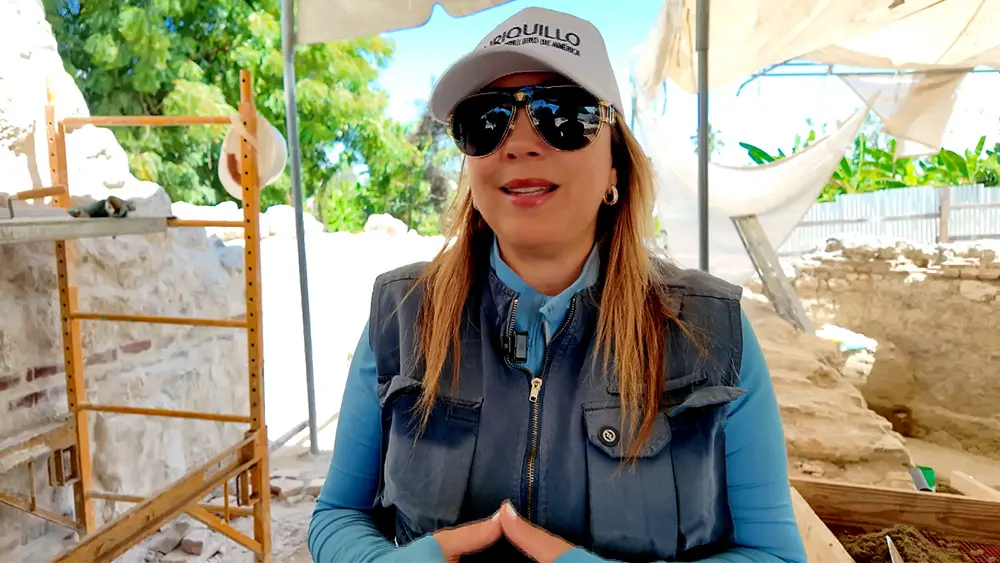
The archaeological mission, now nearing the end of its excavation phase, is led by a multidisciplinary team of international experts coordinated by renowned Dominican archaeologist Kathleen Martínez. Martínez explained that the team employed deep-penetrating ground radar technology from Israel to identify specific subsurface anomalies, which were then excavated with precision.
“Archaeology is a multidisciplinary science,” Martínez said in an interview with CDN, noting that specialized equipment was also brought from Egypt to meet the project’s technical requirements.
The remains were recovered from the ruins of the Las Mercedes Church, where researchers are now creating detailed osteogeological profiles of each individual. These profiles include sex, physical measurements, and other biological indicators. Once completed, the team will move on to DNA analysis to determine genetic origins and assess whether any of the remains correspond to Enriquillo.
“We will analyze whether the DNA shows European or Caribbean ancestry,” Martínez explained. “That will allow us to reach definitive conclusions.”
Beyond excavation, the project also includes the restoration of the church ruins. More than 240 original stone blocks from the nave and surrounding areas were carefully removed, catalogued, and reassembled using the anastylosis method, which restores structures with their original materials.
Restoration specialist María Luz Carretel detailed the process, explaining that lime mortar and stone—materials consistent with the original construction—are being used. “Cement is strictly prohibited. Nothing new is added,” she emphasized.
The scientific work builds on more than a decade of historical, documentary, and archaeological research, sponsored by the Macarrulla Foundation.
With the excavation phase now complete, the project enters its most anticipated stage: DNA identification, with results expected to be released later this year—findings that could reshape the understanding of indigenous resistance in the Caribbean.