

 Smaller
 Bigger
The naked truth: Cuba’s collapsing safety net and the rise of homelessness
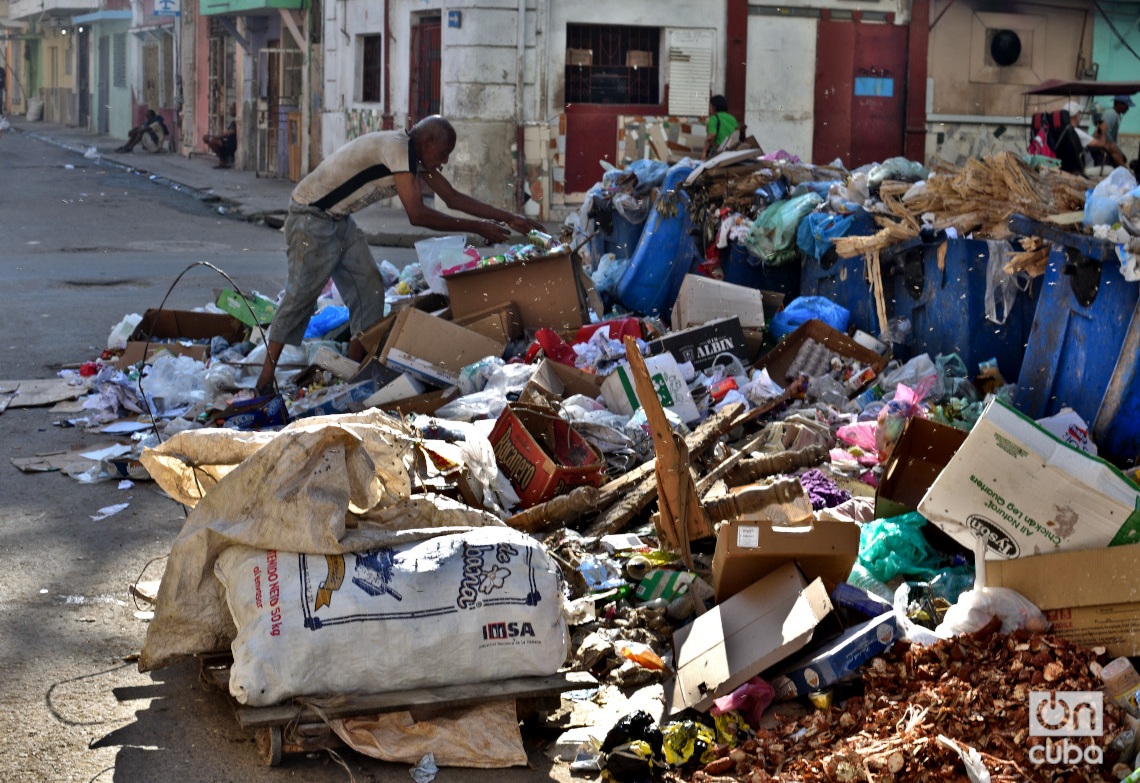
A "buzo" – a term for a trash scavenger – on a Havana street. (Photo: OnCuba/Otmaro Rodríguez)
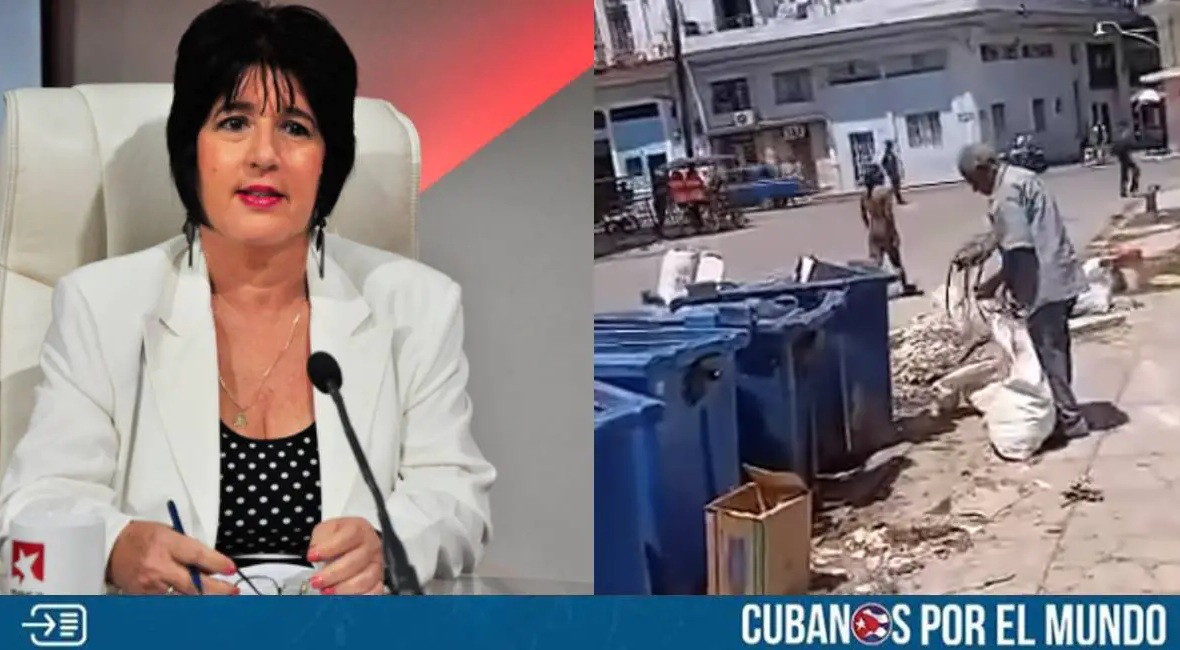
When Cuba’s Minister of Labor, Marta Elena Feitó, insisted that “in Cuba, there are no beggars” during a live parliamentary session on July 17, she didn’t merely deny a growing social ill—she laid bare an elite divorced from reality. Within hours, state media announced her resignation for “lack of sensitivity and objectivity.” Social networks erupted: while Feitó’s son lives comfortably in the United States, ordinary Cubans rummage through garbage for scraps. Her claim exposed a chasm between official narratives and the island’s mounting desperation.
A denial that cost a Minister her job
Feitó’s declaration—“They are dressed up as beggars… in Cuba, there are no beggars,”—came amid inflation soaring past 190 percent since 2018 and chronic shortages of food, medicine and electricity. Independent outlets swiftly captured the backlash. In a report for Martí Noticias, journalist Mario Pentón noted that thousands “reacted with indignation” online, mocking a country where a state pension of 1,500 pesos barely buys a carton of eggs.
Havana resident Daniela Valle asked, “How can she say that to an elderly man who taught all his life and now survives on 1,500 pesos, when eggs cost twice that?” She added, “Many would die of hunger without remittances from relatives abroad,” highlighting the irony of Feitó’s family comfort abroad.
Minister of Labor Marta Elena Feitó Cabrera made a controversial statement during her intervention in the National Assembly, highlighting a stark disconnect between official rhetoric and everyday Cuban life. She said: “When you look at their hands, you look at the clothes those people wear, they are disguised as beggars, they are not beggars. In Cuba there are no beggars.” (Photo via Cubanosporelmundo.com)
OnCuba observed that Feitó’s “unfortunate intervention” broke a long‑standing taboo by forcing homelessness onto the national agenda. Even Cubadebate—quoted by OnCuba—defines indigence as a “multi‑causal human behavioral disorder,” effectively medicalizing poverty. “Poverty is not a choice; it’s the result of a deep economic crisis,” writer Boris Luis Cabrera countered on CiberCuba, warning that “misery can’t be solved with harsh words—it requires justice.”
Artists and comedians joined the outcry. Filmmaker Ian Padrón told CiberCuba that the real ones in disguise were officials “pretending to represent the people while defending the indefensible.” Ulises Toirac deemed Feitó’s claim “legally questionable,” and actor Lieter Ledesma summed it up: “Cuba: the country where we all beg.” Images of people sleeping on sidewalks and scavenging through trash—shared widely online—drove the point home: no propaganda can hide a nation’s suffering.
The human toll: Homelessness and health
A CiberCuba special on homelessness reports that nearly 96 percent of Cuban families struggle to secure enough food, with state rations covering just 20 to 30 percent of daily calories. Chronic blackouts, sometimes 20 hours a day, force residents to sleep outside in sweltering heat, and videos of infants on sidewalks went viral, labeled “brutal, inhumane.”
Healthcare has collapsed: free clinics often lack basic medicines, and fuel shortages cripple ambulances and public transport. Independent monitoring shows that inflation continues to erode savings and wages.
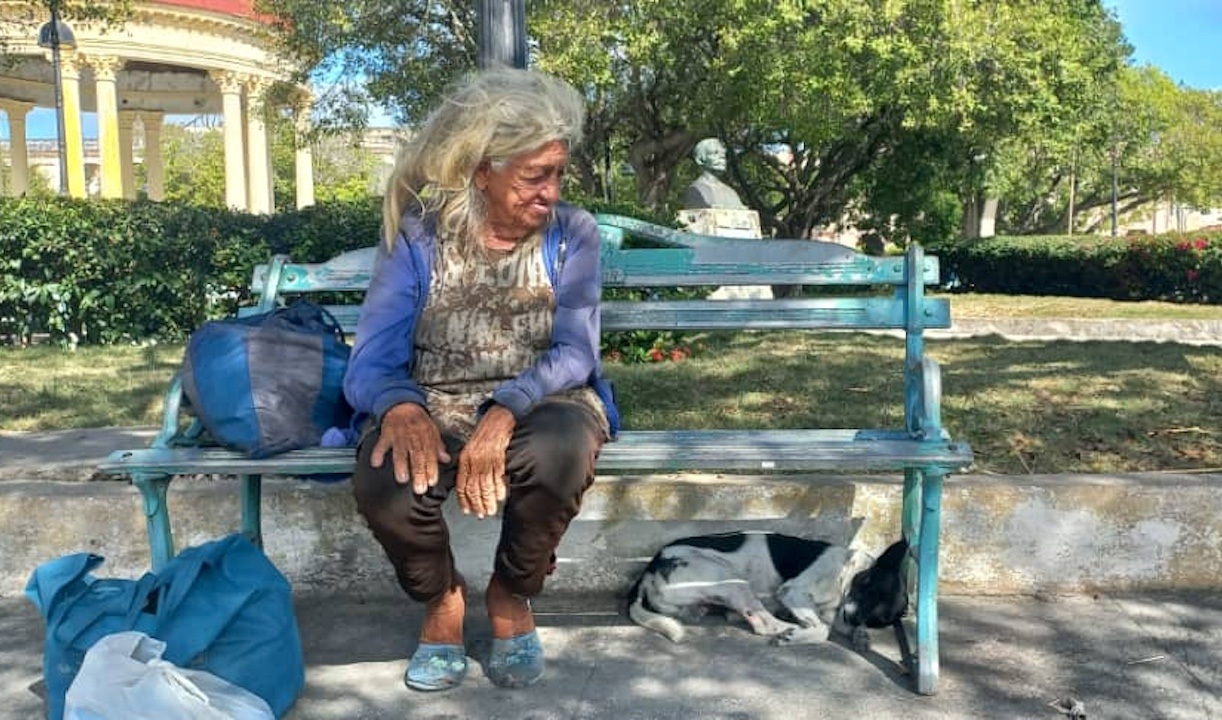
Ana Rosa Moreno Pérez and her dog share a bench in La Libertad Park. (Photo by Pedro Manuel González for Diario de Cuba).
Long before Feitó’s comments, health experts were raising alarms. According to OnCuba, homelessness in Cuba isn’t simply sleeping on the street—it’s living at the margins of fundamental rights like health, housing and dignity. Cubanet data show over 3,000 people officially identified as “deambulantes” between 2014 and 2023. Doctors watch helplessly as basic public‑health gains evaporate:
- Respiratory infections surge among those exposed to Havana’s damp winters or humid summers, said doctors, noting spikes in pneumonia and chronic bronchitis among street dwellers.
- Malnutrition and scavenging scraps from garbage undermine immunity, turning minor wounds into dangerous infections.
- Dental decay runs rampant when preventive care vanishes, and mental‑health conditions—depression, anxiety, addiction—soar when psychiatric support disappears.
The result: life expectancy falls by up to a dozen years for Cubans without a roof overhead. Men and women in their prime now spend their final chapters in doorways and under overpasses, their plight ignored by state media.
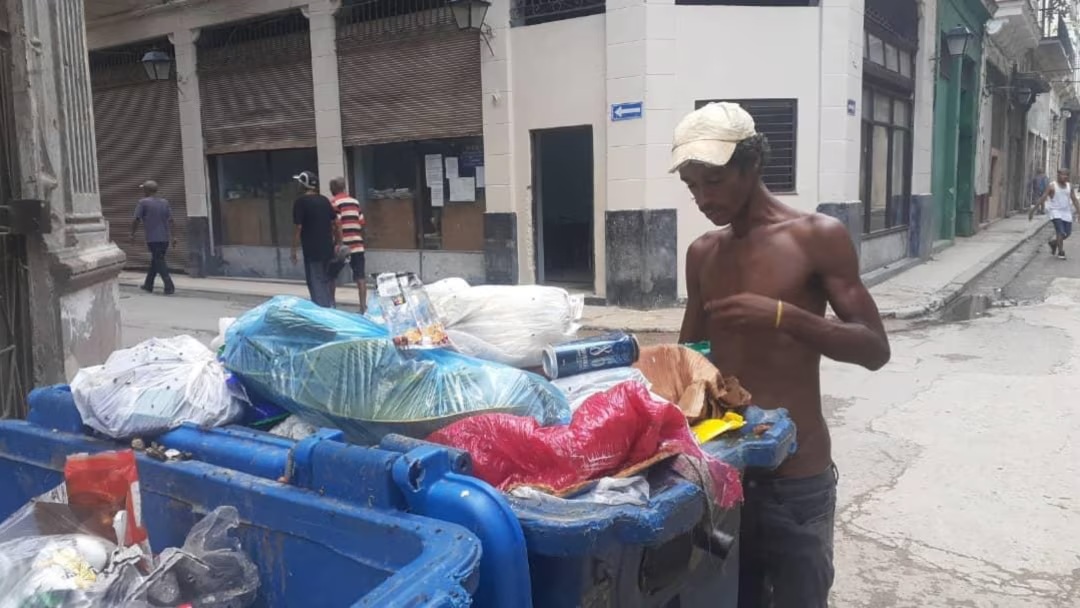
On a Havana street, a homeless person is seen rummaging through trash. (Photo: latijeranews.org Facebook profile)
In 2024, the Cuban government reported that over 189,000 families—roughly 350,000 individuals—benefited from state social assistance programs out of the island’s 9.7 million inhabitants. These figures, published by Escambray, a state‑run paper in Sancti Spíritus, drew on data from the National Office of Statistics and Information (ONEI). Yet these programs have proved insufficient to halt the tide of destitution.
Elite hypocrisy: A nation apart
Meanwhile, the privileged class lives in stark contrast. El País documented how Raúl Castro’s grandson, “El Cangrejo,” flaunts wealth while the rest of the island suffers. Sandro Castro, Fidel’s grandson, owns private jets, luxury cars and a VIP nightclub. He even celebrated a birthday party amid Havana’s power outages, toasting with imported liquor as many survive on two meals a day. An El País columnist quipped that Sandro bathes in Cristal beer while ordinary Cubans can’t afford a single bottle.
“While the common citizen endures blackouts, shortages of medical supplies and censorship, this scion of the elite positions himself as a post‑revolutionary influencer,” Anay González Figueredo told El País. “Sandro is not an error of the regime, but its synthesis: the inherited face of a caste that appropriated the language of social justice to erect dynastic privilege,” dissident Juan Pablo Peña told Martí Noticias. After 66 years of one‑party rule, impunity is institutional.
Digital platforms have become Cuba’s only real public squares. YouTubers posting footage of families sleeping on sidewalks—wrapped in cardboard or using trash as beds—have drawn hundreds of thousands of views. One viral clip challenges officials: “Come and sleep one night on the pavement.” The man in the video describes the heat as “hurting your bones.”
Journalist Mario Pentón told Martí Noticias, “Our influencers lift the curtain that state media fiercely guards.” The regime’s attempts to intimidate or censor netizens are failing; fear no longer outpowers truth.
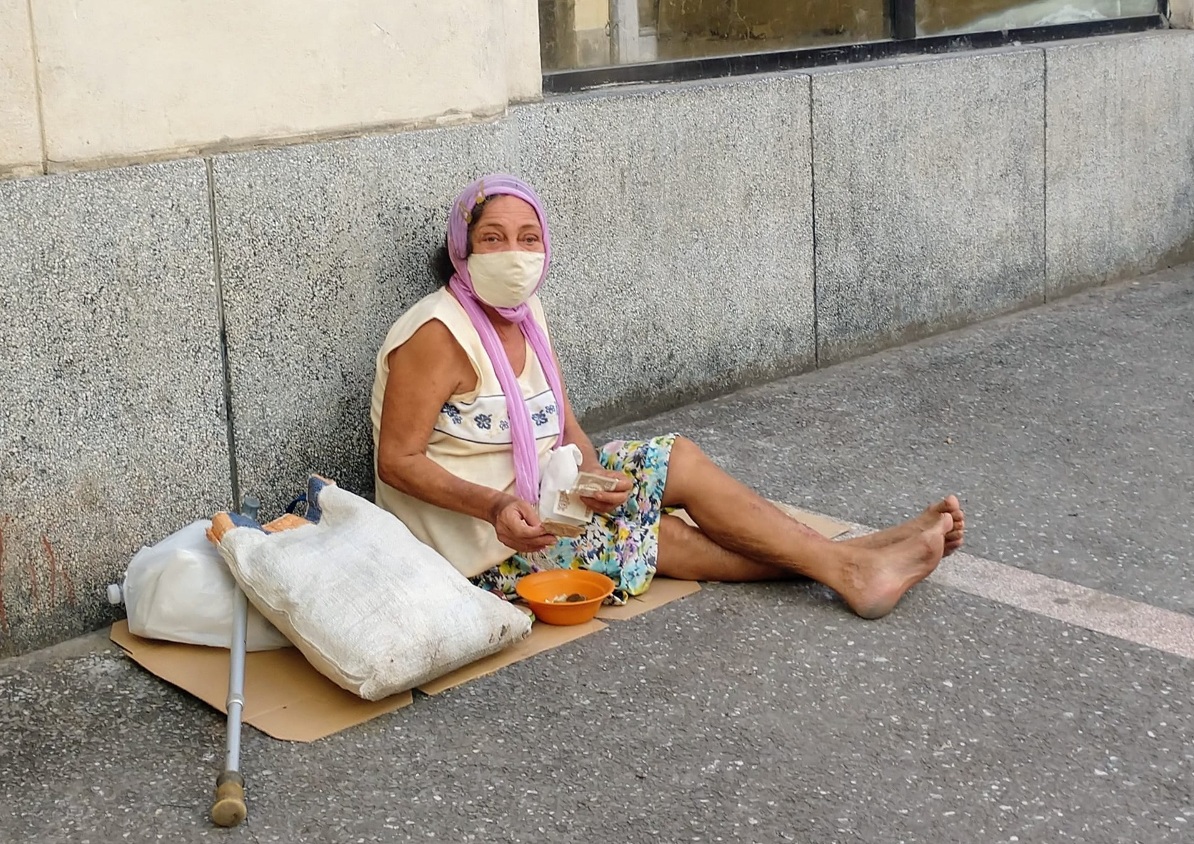
Homelessness in Cuba isn’t simply sleeping on the street—it’s living at the margins of fundamental rights like health, housing and dignity. (Photo via Diario de Cuba’s Facebook profile)
Implications for Cuba’s future
Cuba’s homeless crisis underscores a widening gap between propaganda and lived reality. When President Miguel Díaz‑Canel called for “greater sensitivity,” he refused to name any culprits—a response many saw as tacit approval of the status quo. Public protests now feature signs reading, “We don’t beg for crumbs; we demand dignity.” If crisis continues unchecked, several outcomes loom:
- Erosion of public trust: After decades of broken promises, Cubans will no longer accept euphemism from technocrats.
- Accelerated migration: The largest Cuban exodus since 1959 continues, driven as much by hunger as by repression.
- Youth radicalization: With unemployment high and services collapsing, young people feel they have nothing left to lose.
- Elite fracturing: Privileged insiders may distance themselves from state failures, creating fissures in the ruling class.
- International embarrassment: Viral videos and independent reports create diplomatic pressure, undermining alliances with Venezuela and others.
The homeless are not merely a social issue, they are living, breathing symbols of a nation in crisis. Until official narratives change and genuine reforms arrive, Cuba’s humanitarian collapse on the streets will only deepen, no amount of spin can disguise that reality.











The government of Cuba is a joke. They need a real revolution and to get on the good side of the rest of the world.